


Listen to the article
Former President Bill Clinton’s decades-long history of alleged sexual improprieties has returned to the national spotlight as lawmakers questioned him Friday about his connections to Jeffrey Epstein, the disgraced financier who died in 2019 while facing sex trafficking charges.
Though Clinton has not been implicated in any wrongdoing related to Epstein, the questioning adds another chapter to a long list of controversies and allegations that have followed the former president for nearly three decades.
Clinton has vigorously denied most allegations over the years, but questions about his character and behavior have repeatedly commanded national attention, often overshadowing his political achievements and post-presidential humanitarian work.
The allegations against Clinton began surfacing prominently in 1992 during his first presidential campaign when Gennifer Flowers, a former television reporter, claimed she had maintained a longstanding affair with Clinton from the late 1970s through 1989. Flowers later characterized Clinton’s initial advances as sexual harassment by today’s standards.
“He proceeded to come on to me for three months before I decided I wanted to have a relationship with him which at that point was consensual,” Flowers said in a 2018 interview on Fox News’ Ingraham Angle.
The story broke just weeks before the Iowa caucuses, threatening to derail Clinton’s presidential ambitions. In a subsequent “60 Minutes” interview, Clinton stopped short of confirming the allegations but acknowledged causing “pain” in his marriage to Hillary Clinton.
Shortly after Clinton assumed office in 1993, “Troopergate” allegations emerged when The American Spectator magazine reported that Clinton had used Arkansas state troopers to arrange sexual encounters during his time as governor. Several troopers, including Larry Patterson, Roger Perry, and Danny Ferguson, claimed Clinton instructed them to facilitate these meetings and help cover up his activities.
According to Time magazine’s reporting on the original allegations, the troopers were “instructed by Clinton to drive him in state vehicles to rendezvous points and guard him during sexual encounters… and to help Clinton cover up his activities by lying to Hillary.” These allegations would later become part of independent counsel Ken Starr’s broader investigation.
In a more serious accusation, Paula Jones filed a sexual harassment lawsuit against Clinton in 1991, claiming that while she was working at a governor’s quality management conference in Arkansas, Clinton had her escorted to his hotel room where he exposed himself to her.
“We did some small talk, and then he started kinda getting a little comfortable. He said he liked my curves and then I’m like — I didn’t know what to do. It was him and me in the room,” Jones later recounted. She claimed she rebuffed his advances, telling him, “I’m not that kind of girl.”
Jones’ lawsuit led to the appointment of independent counsel Ken Starr, whose investigation uncovered the Monica Lewinsky scandal that ultimately resulted in Clinton’s impeachment by the House of Representatives. Jones herself received an $850,000 settlement from Clinton.
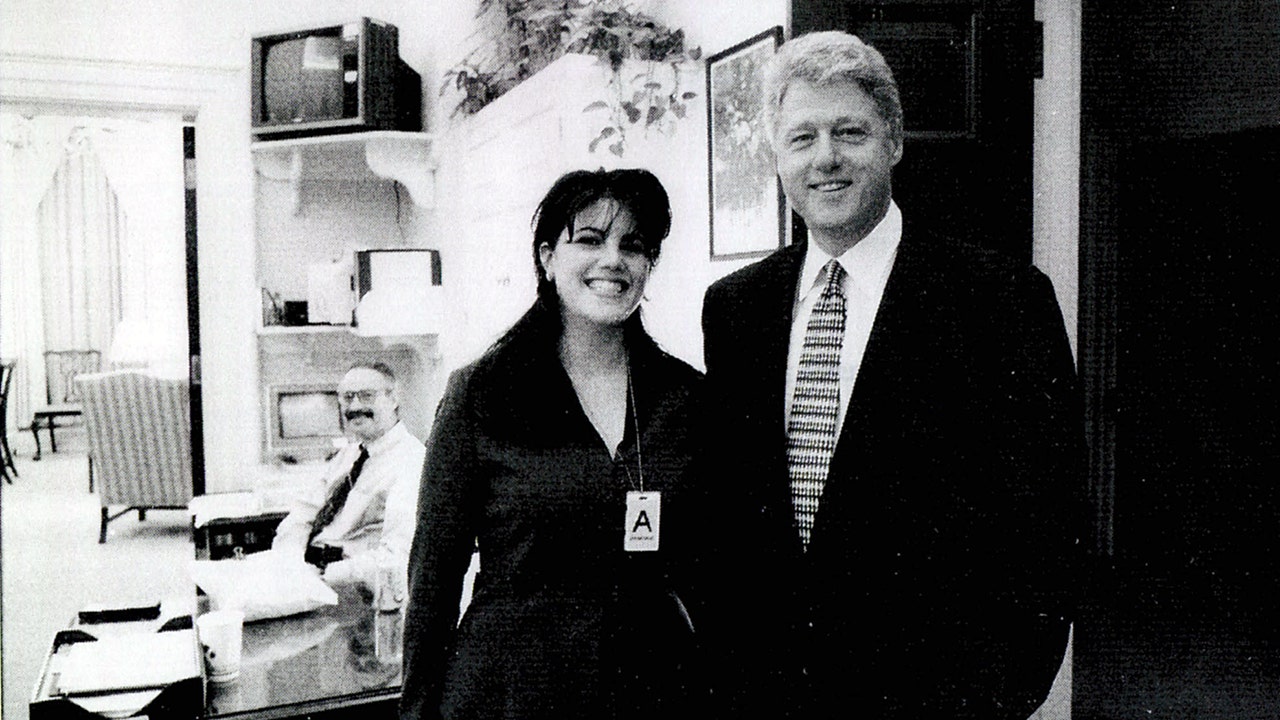
The Lewinsky affair became public in 1998 when the Drudge Report published a story that Clinton was having a relationship with a White House intern. Clinton famously denied the allegations under oath during Starr’s investigation, declaring, “I did not have sexual relations with that woman.”
The truth emerged after a friend of Lewinsky recorded her discussing the affair and turned the tapes over to Starr. Clinton’s subsequent admission that he had misled the public damaged his credibility, with one voter telling NBC at the time, “What else has he lied about?”
In 1998, Juanita Broaddrick made perhaps the most serious allegation against Clinton, accusing him of raping her in 1978 during his campaign for Arkansas governor. Broaddrick has also described what she believes were intimidation efforts by Hillary Clinton to keep her silent. By the time Broaddrick’s allegations became public, the statute of limitations protected Clinton from prosecution.
Kathleen Willey added to the list of accusers in 1998, claiming that Clinton had made unwanted advances toward her in a study adjacent to the Oval Office when she sought employment help during a time of financial difficulty.
“He had me backed into a corner, hands all over me, trying to kiss me,” Willey said in describing the alleged incident. Clinton has consistently denied this accusation as well.
As lawmakers continue to probe Clinton’s ties to Jeffrey Epstein, these decades-old allegations provide context for the ongoing scrutiny of the former president’s personal conduct and associations, reflecting a complex legacy that balances significant political achievements against persistent questions about his character.
Fact Checker
Verify the accuracy of this article using The Disinformation Commission analysis and real-time sources.

8 Comments
The allegations against Clinton are certainly serious and deserve to be thoroughly investigated. However, I would caution against assuming guilt before all the evidence is examined. Politicians of all stripes should be held to high standards, but the process must be fair and unbiased.
While the Epstein scandal is deeply troubling, I think it’s important to wait for all the facts to emerge before rushing to judgment. Clinton has a long history in public service, and his humanitarian work should also be considered in this context.
I agree that we need to be careful about jumping to conclusions. These types of allegations can become politically charged, so it’s crucial that any investigation is conducted impartially and with due process.
This story highlights the importance of maintaining a healthy skepticism towards claims made about public figures, especially those with a long history of controversies. While the Epstein connection is concerning, I think it’s wise to withhold judgment until more facts come to light.
Agreed. It’s crucial that any investigation into Clinton’s ties to Epstein is conducted with the utmost rigor and impartiality. Partisan politics should not be allowed to cloud the pursuit of the truth.
This is a concerning development if the allegations against Clinton are true. As a prominent political figure, he should be held to a high standard of conduct. I hope the full truth comes to light through a thorough and impartial investigation.
It’s critical that any potential wrongdoing by public officials is addressed, regardless of political affiliation. Transparency and accountability are essential for maintaining trust in our democratic institutions.
The ongoing scrutiny of Clinton’s connections to Epstein is a sobering reminder of the need for accountability and transparency in public life. While the former president has denied wrongdoing, these allegations deserve careful and impartial examination.