


Listen to the article
Climate Activist Finds Hope in Solar as Electricity Costs Rise Under Trump
RIPTON, Vermont — As electricity prices climb across the United States, veteran climate activist Bill McKibben is finding optimism in an unexpected source during these frigid Vermont days: sunshine.
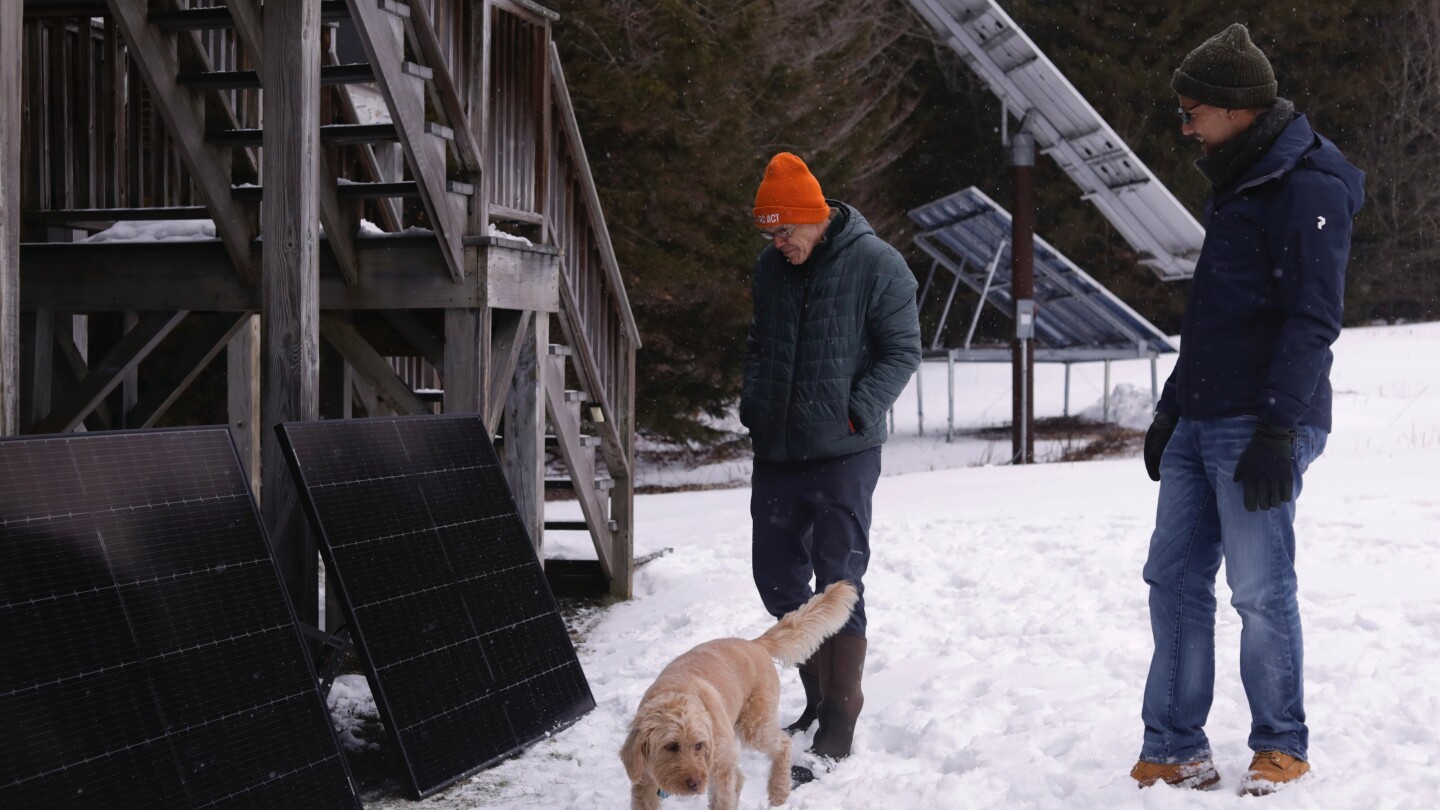
Despite single-digit temperatures, McKibben recently installed his fourth generation of solar panels on his Vermont home, continuing a 25-year commitment to renewable energy. In a recent interview, he predicted that rising electricity costs under the Trump administration’s fossil fuel-focused energy policies could become a significant political liability in upcoming elections.
“I think you’re starting to see that have a big political impact in the U.S. right now,” McKibben said. “My prediction would be that electric prices are going to be to the 2026 election what egg prices were to the 2024 election,” referencing how everyday inflation challenged Democrats in the previous presidential race.
The Trump administration has actively worked to reverse clean energy momentum gained during previous administrations. Federal clean energy tax incentives, including those for home solar panel installations, expired on December 31. Additionally, the administration temporarily froze five major offshore wind projects last month, though courts have since allowed three of these projects to resume development.
Amid these policy shifts, electricity prices have surged nationwide. When Trump took office in January 2025, the national average electricity cost was 15.94 cents per kilowatt-hour. By October, it had climbed to 17.98 cents—a 12.8% increase in just ten months, outpacing the rise of the previous two years. For the average household using 900 kilowatt-hours monthly, this translates to approximately $18 more on monthly electric bills compared to January 2025.
The increases have been particularly severe in Mid-Atlantic states, with Maryland, New Jersey, and Maine experiencing price hikes at three times the national average since October 2024.
The White House has attempted to address the issue. “Ensuring the American people have reliable and affordable electricity is one of President Trump’s top priorities,” White House spokesperson Taylor Rogers said as the administration joined a bipartisan group of governors pressing the nation’s largest electric grid operator to boost power supplies.
Democrats on Capitol Hill have been quick to connect rising utility bills to the administration’s energy policies. “From his first day in office, he’s made it his mission to limit Americans’ access to cheap energy, all in the name of increasing profits for his friends in the fossil fuel industry,” Illinois Rep. Sean Casten said at a Wednesday news conference.
Hawaii Senator Brian Schatz went further: “Donald Trump is the first president to intentionally raise the price of something that we all need. Nobody should be enthused about paying more for electricity, and this national solar ban is making everybody pay more. Clean is cheap and cheap is clean.”
Meanwhile, the global renewable energy landscape continues to evolve rapidly. The United Nations has documented plummeting prices for wind and solar power, now often cheaper than fossil fuels. China has emerged as the global leader in renewable energy technology, with one of its electric vehicle manufacturers recently surpassing Tesla in annual sales.
“We can’t economically compete in a world where China gets a lot of cheap energy and we have to pay for really expensive energy,” McKibben noted while demonstrating his newest solar technology—plug-in panels from California-based Bright Saver that can be installed on balconies with minimal effort.
McKibben, whose home nestled in Vermont’s Green Mountains has become what he calls a “museum of solar technology,” highlighted the excessive bureaucracy surrounding residential solar in the United States. “Americans spend three or four times as much money as Australians or Europeans to put solar panels on the roof. We have an absurdly overcomplicated permitting system that’s unlike anything else on the rest of the planet.”
He pointed to Australia’s government program that provides citizens with three hours of free electricity daily due to the country’s abundant solar capacity. “I’m almost certain that’s an argument that every single person in America would understand,” he said. “I don’t know anyone who wouldn’t say: ‘I’d like three free hours of electricity.'”
As national debates over energy policy intensify, McKibben continues sending excess electricity from his solar array back to Vermont’s grid—now generating more than ever before, even on the coldest winter days.
Fact Checker
Verify the accuracy of this article using The Disinformation Commission analysis and real-time sources.

8 Comments
The Trump administration’s attacks on green energy seem short-sighted if they lead to higher electricity prices that hurt consumers. McKibben’s personal commitment to solar power is admirable, even in the harsh Vermont climate.
This is a complex issue with political implications on both sides. While I respect McKibben’s environmental advocacy, I’m curious to see how voters will weigh the tradeoffs between energy costs and climate policies in the coming elections.
The Trump administration’s efforts to undermine clean energy incentives could certainly backfire if it leads to higher electricity bills for consumers. McKibben’s solar installation is a great example of individuals taking action on renewable energy.
Agreed. Policies that hurt the pocketbooks of voters tend to have political consequences, as we’ve seen with issues like inflation. Renewable energy may gain more public support as a result.
McKibben’s prediction about electricity prices being a key political issue is thought-provoking. It will be interesting to see how the public responds to rising costs and the competing visions for energy policy from different political factions.
Well said. Voters often prioritize pocketbook issues, so the political dynamics around energy costs could play out in unexpected ways in future elections.
It’s interesting to see how rising electricity costs could become a political issue in the coming elections. McKibben’s optimism about solar power despite the cold climate is quite inspiring.
You raise a good point. The political impact of energy prices is often overlooked, but can be significant for voters concerned about their household budgets.