


Listen to the article
Cancer Patients Urge Senator Sanders to Support Life-Saving Pediatric Cancer Bill
Cancer patients across the country are calling on Senator Bernie Sanders of Vermont to reverse his position on a critical piece of legislation that could provide access to life-saving treatments for children battling cancer.
Jacob Knudsen, who was diagnosed with osteosarcoma at age 12, is among those advocating for the Mikaela Naylon Give Kids a Chance Act. Knudsen has endured nearly two dozen surgeries and multiple rounds of chemotherapy after tumors were discovered on his organs.
“There is something currently in my lung, and there’s a 50-50 chance that it’s cancer,” Knudsen, now a college student from California, told the New York Post. “I’m willing to bleed, I’m willing to lose limbs, I’m willing to lose organs, I’m willing to do anything just to survive.”
The bipartisan bill is named after Knudsen’s friend, a fellow osteosarcoma patient who died last year at age 16. If passed, the legislation would allow pediatric cancer patients to participate in clinical trials and ensure their access to cutting-edge treatments. It would incentivize the Food and Drug Administration (FDA) and pharmaceutical companies to conduct more pediatric cancer studies and invest in treatments for rare pediatric diseases.
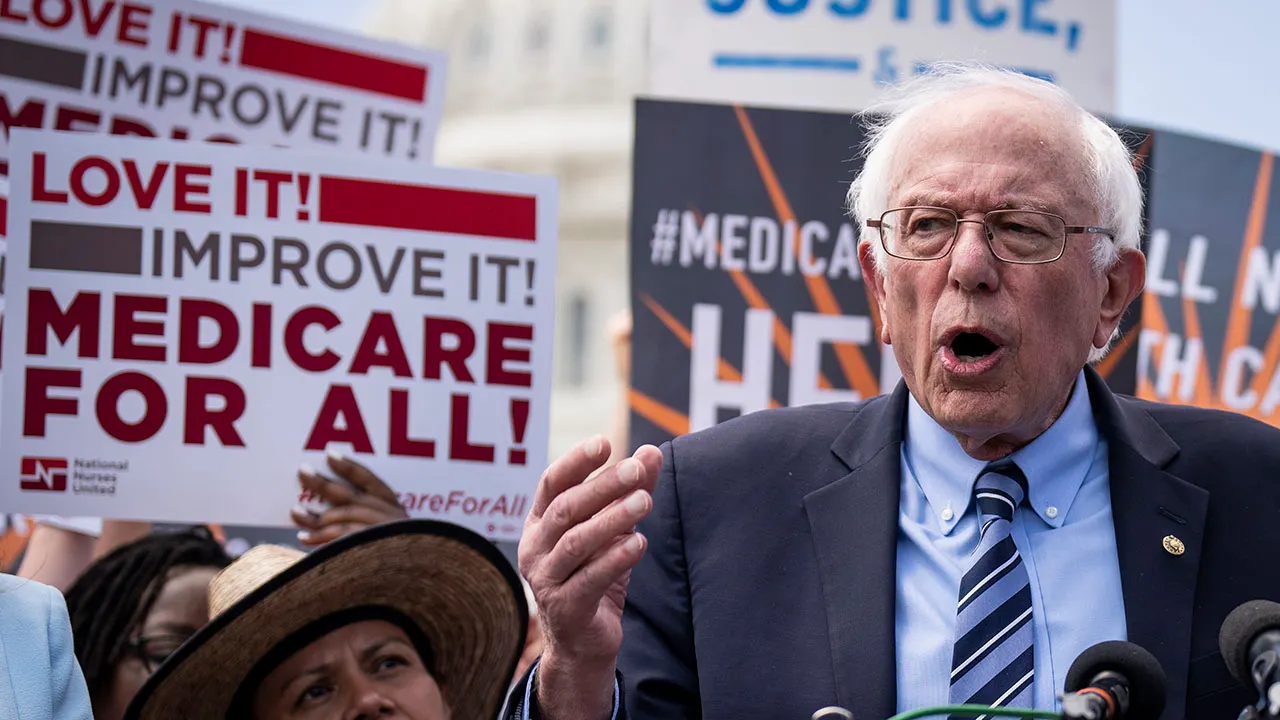
While the bill passed unanimously in the House of Representatives, its progress stalled in the Senate when Senator Sanders objected. Despite his long history of advocating for improved healthcare, Sanders demanded additional provisions be attached to the bill, including funding for community health centers.
Senator Markwayne Mullin (R-Oklahoma), who brought the bill to the Senate floor, accused Sanders of playing politics with children’s lives. “Everything their senator from Vermont just talked about was political,” Mullin said. “I’m talking about giving kids a chance to live an extra day or a lifetime. This has nothing to do with politics.”
Sanders defended his position, stating that he had no problem with the legislation itself but wanted to include an amendment to fund community health centers across the country. “This is not a radical amendment,” Sanders said. “I’m not coming here saying, ‘Let’s do something we’ve not talked about.’ I am talking about doing what Republicans and Democrats agreed to a year ago.”
The stalemate has frustrated cancer advocacy groups who see the bill as a straightforward solution to a critical healthcare need. Nancy Goodman, executive director of Kids v Cancer, whose 10-year-old son Jacob died from medulloblastoma in 2009, highlighted the broader implications of the bill’s failure to advance.
“The bill would ensure the most innovative, promising pediatric cancer clinical studies are conducted, and it would incentivize companies to develop novel, potentially curative drugs for these kids,” Goodman told the New York Post. “How can we say Congress is functioning if it can’t pass the easiest bill that one can ever imagine? This is a bill that has bipartisan support that saves the lives of children with cancer that costs taxpayers nothing, and yet they can’t pass it.”
The legislation addresses a critical gap in pediatric cancer research, where funding and pharmaceutical development often lag behind adult cancer treatments. Childhood cancers frequently differ biologically from adult cancers, requiring specialized research and treatment approaches. With approximately 15,000 children diagnosed with cancer annually in the United States, advocates stress that the bill’s passage could transform treatment options for these young patients.
Anderson Coy, a 21-year-old cancer patient, suggested that politicians should speak directly with those affected by cancer to understand the stakes. “I would probably tell [politicians] to talk to someone [diagnosed with cancer], just to see what they’re going through,” Coy said.
Knudsen emphasized the broader implications of failing to act quickly on such legislation. “The sooner we pass acts like this, the more lives we save,” he said. “How many children have died from cancer? How many of those were the next Albert Einstein that never made it? These kids could solve the world’s problems.”
As the legislative impasse continues, cancer patients and their families remain hopeful that Congress will find a path forward for this potentially life-saving bill.
Fact Checker
Verify the accuracy of this article using The Disinformation Commission analysis and real-time sources.

14 Comments
Clinical trials and cutting-edge treatments are so important for pediatric cancer patients. I hope the FDA and pharmaceutical companies will do their part to make this bill a reality.
It’s heartbreaking to hear about the young patients like Jacob who have already endured so much. This bill could make a real difference in their lives.
This is a powerful example of the real human impact that legislation can have. I sincerely hope Senator Sanders heeds the calls of these courageous young cancer patients.
Providing the best possible care for children battling cancer should be a moral imperative. I’m glad to see this bill working to make that a reality.
The Mikaela Naylon Give Kids a Chance Act sounds like critical legislation that could make a real difference in the lives of pediatric cancer patients. I hope it gains swift passage.
It’s inspiring to see young advocates like Jacob Knudsen speaking out and fighting for access to life-saving treatments. Their bravery is truly admirable.
This is a heartbreaking situation, but I’m glad to see these young cancer patients taking action and appealing directly to Senator Sanders. Their voices deserve to be heard.
Incentivizing the FDA and pharmaceutical companies to support pediatric cancer trials and treatments is a smart approach. I hope this bill can gain bipartisan support.
This is a heartbreaking story. I hope Senator Sanders hears the pleas of these young cancer patients and throws his full support behind this crucial pediatric healthcare bill.
Providing access to life-saving treatments for children battling cancer should be a top priority. I’m glad to see bipartisan support for this legislation.
Cancer is always a devastating diagnosis, but it’s especially tragic when it strikes children. I sincerely hope Senator Sanders lends his support to this critical pediatric healthcare bill.
Providing access to cutting-edge treatments for young cancer patients is so important. I’m glad to see this legislation aiming to make that a reality.
Cancer is a devastating disease, especially for children. I commend these young advocates for their bravery in speaking up and urging Senator Sanders to support this critical legislation.
Anything we can do to improve access to life-saving treatments for pediatric cancer patients is extremely important. I hope this bill gains strong bipartisan support.