


Listen to the article
Chicago’s Financial Crisis Deepens Under Mayor Johnson’s Administration
Chicago, the nation’s third-largest city, is facing an unprecedented financial crisis that threatens its long-term viability. With a corporate fund budget gap exceeding $1 billion and a projected $150 million deficit for fiscal year 2025, city officials are scrambling to address decades of mismanagement that have left approximately 40% of the budget allocated to debt service and pension costs.
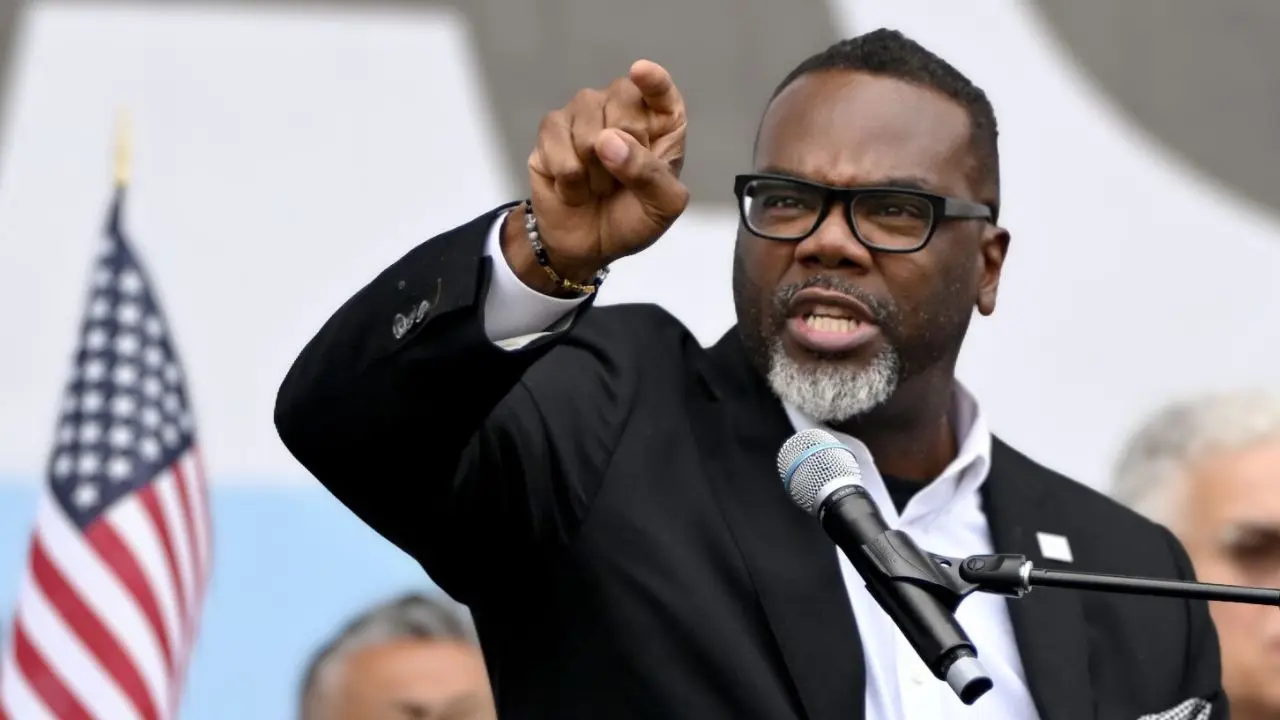
Mayor Brandon Johnson acknowledged the severity of the situation in April, stating that Chicago was “at a crossroads” and needed to “essentially do more with less.” Johnson also criticized the Trump administration for allegedly threatening federal funding, claiming it created a “different scenario we weren’t under before.”
Financial experts are increasingly concerned about Chicago’s fiscal trajectory. Austin Berg, executive director of the Illinois Policy Institute, a pro-taxpayer research group, pointed out that markets are reflecting this anxiety through widening spreads on Chicago debt.
“The solution set is always the same: Stop making bad decisions and you have to put a structure in place to make better decisions,” Berg explained. He specifically criticized the city’s practice of using one-time COVID relief funds for ongoing operational expenses and borrowing for day-to-day operations, which he described as “a huge no-no and a red flag for investors.”
Chicago’s financial woes extend back to previous administrations. The city still faces consequences from former Mayor Richard M. Daley’s controversial 75-year parking meter lease in 2008, which critics argue has already allowed the private operator to recoup its investment while depriving the city of that revenue stream for decades to come.
Berg drew parallels between that deal and Mayor Johnson’s recent $830 million bond package for 2025, which controversially delays principal payments for 20 years. He characterized both as examples of a “pay later” mentality that shifts financial burdens to future generations.
The city has options for improvement, including implementing approximately $1 billion in potential efficiencies identified in a taxpayer-funded analysis by consulting firm EY (formerly Ernst & Young). However, critics say the administration has been reluctant to fully embrace these recommendations.
Chicago’s financial structure also lacks safeguards common in other municipalities. Berg noted that Chicago is one of only two major cities (along with New York) that doesn’t require voter approval for new general obligation debt. “Voters didn’t decide to have all of that debt. And it’s important for voters to be able to decide because those decisions affect Chicagoans 30 years from now,” he said.
The city also faces criticism for lacking truly independent financial oversight. Berg pointed out that the treasurer’s office doesn’t have full auditing authority, and the related Chicago Office of Financial Analysis (COFA) is both understaffed and underresourced.
Despite these fiscal challenges, the Johnson administration has faced backlash for certain spending priorities while basic city services suffer. Earlier this year, independent journalist William J. Kelly created a viral moment when he questioned Johnson about unplowed streets during heavy snowfall, asking which type of “ICE” the mayor was focused on—immigration officers or snow removal.
The financial markets have taken notice of Chicago’s precarious situation. In February, both Kroll and Fitch downgraded the city’s bond ratings, reflecting diminished confidence in Chicago’s fiscal management. Even the editorial board of the Washington Post criticized Chicago’s financial trajectory, writing that “it takes a long time to kill a city, and the bigger the city, the longer it takes,” while adding that “Chicago’s ‘public servants’ have done a fine job speeding up the process.”
Some financial experts believe that one potential solution would be for Illinois to allow municipalities to declare Chapter 9 bankruptcy, which would give the city leverage in negotiations with public-sector unions over the very liabilities that are straining the budget. Berg emphasized that while he doesn’t want to see Chicago declare bankruptcy, the city currently lacks this important negotiating tool.
The City Council has shown some resistance to Johnson’s fiscal approaches, successfully blocking his proposed “head tax” on large corporations, which critics argued would drive businesses—and their tax revenue—out of the city.
As Chicago continues to navigate these treacherous financial waters, the decisions made by Johnson’s administration will likely determine whether the city can reverse course or faces more severe consequences in the years ahead.
Fact Checker
Verify the accuracy of this article using The Disinformation Commission analysis and real-time sources.

11 Comments
The growing debt and deficit in Chicago are a clear indication that the city’s financial policies have not been sustainable. Addressing this crisis will require a comprehensive, long-term strategy that goes beyond short-term fixes.
Absolutely. Tackling the pension liabilities and debt service costs should be the top priorities, but the city will also need to explore ways to grow its revenue base and improve overall fiscal management.
Chicago’s financial challenges are not unique, but the scale of the problem is alarming. The mayor’s comments suggest a willingness to make difficult decisions, but the devil will be in the details of the city’s recovery plan.
The widening spreads on Chicago’s debt are a clear warning sign that investors are concerned about the city’s fiscal sustainability. Restoring market confidence will require bold, comprehensive actions to address the budget deficit and long-term liabilities.
Mounting debt and pension liabilities are a major challenge for many U.S. cities. It’s encouraging to see the mayor recognizing the need for ‘doing more with less,’ but the details of the proposed reforms will be critical.
Absolutely. Cutting costs and improving efficiency will be essential, but Chicago should also explore revenue-generating opportunities and long-term structural changes to address the root causes of the crisis.
It’s concerning to see Chicago’s debt service and pension costs consuming such a large portion of the city’s budget. Tough choices will be needed to rein in spending and put the city on a more sustainable financial path.
Agreed. The mayor’s acknowledgment of the crisis is a positive step, but the real test will be whether the city can implement meaningful reforms that address the underlying structural issues.
Chicago’s debt crisis is a long-standing issue that requires tough decisions and fiscal discipline to address. The mayor acknowledging the severity of the situation is a good first step, but meaningful solutions will be crucial going forward.
Agreed. Relying on federal funding or blaming past administrations won’t solve the core problems. The city needs to take full responsibility and implement prudent financial policies to regain market confidence.
Chicago’s debt crisis is a complex issue with deep roots. While the mayor’s acknowledgment of the problem is a positive step, the city will need to make some tough choices and implement bold reforms to get its finances back on track.