


Listen to the article
California Drops Lawsuit Against Trump Administration Over High-Speed Rail Funding
California officials have dismissed a lawsuit against the Trump administration regarding the withdrawal of $4 billion in federal funding for the state’s troubled high-speed rail project, signaling a strategic shift in how the ambitious transportation initiative will move forward.
The California High-Speed Rail Authority announced this week it would instead focus on alternative funding sources to complete the project, which aims to connect San Francisco to Los Angeles and is now estimated to cost more than $100 billion.
“This action reflects the State’s assessment that the federal government is not a reliable, constructive, or trustworthy partner in advancing high-speed rail in California,” a spokesperson for the authority said in a statement.
The dispute began in July when the U.S. Department of Transportation slashed funds for the bullet train project. Federal officials justified the decision by claiming California had “no viable plan” to complete a significant portion of the rail line through the state’s Central Valley agricultural region.
California officials, led by Democratic Governor Gavin Newsom, quickly challenged the decision in court, characterizing it as “a political stunt to punish California.” The Trump administration has been openly critical of the project, with former President Donald Trump and Transportation Secretary Sean Duffy repeatedly referring to it as a “train to nowhere.”
“The Railroad we were promised still does not exist, and never will,” Trump wrote on his Truth Social platform in July. “This project was Severely Overpriced, Overregulated, and NEVER DELIVERED.”
The Transportation Department did not respond to requests for comment regarding California’s decision to dismiss the lawsuit.
The high-speed rail initiative, first approved by California voters in 2008, has faced numerous setbacks, including significant cost overruns, construction delays, and land acquisition challenges. The original plan envisioned trains traveling at speeds up to 220 mph, cutting the journey time between Los Angeles and San Francisco to under three hours.
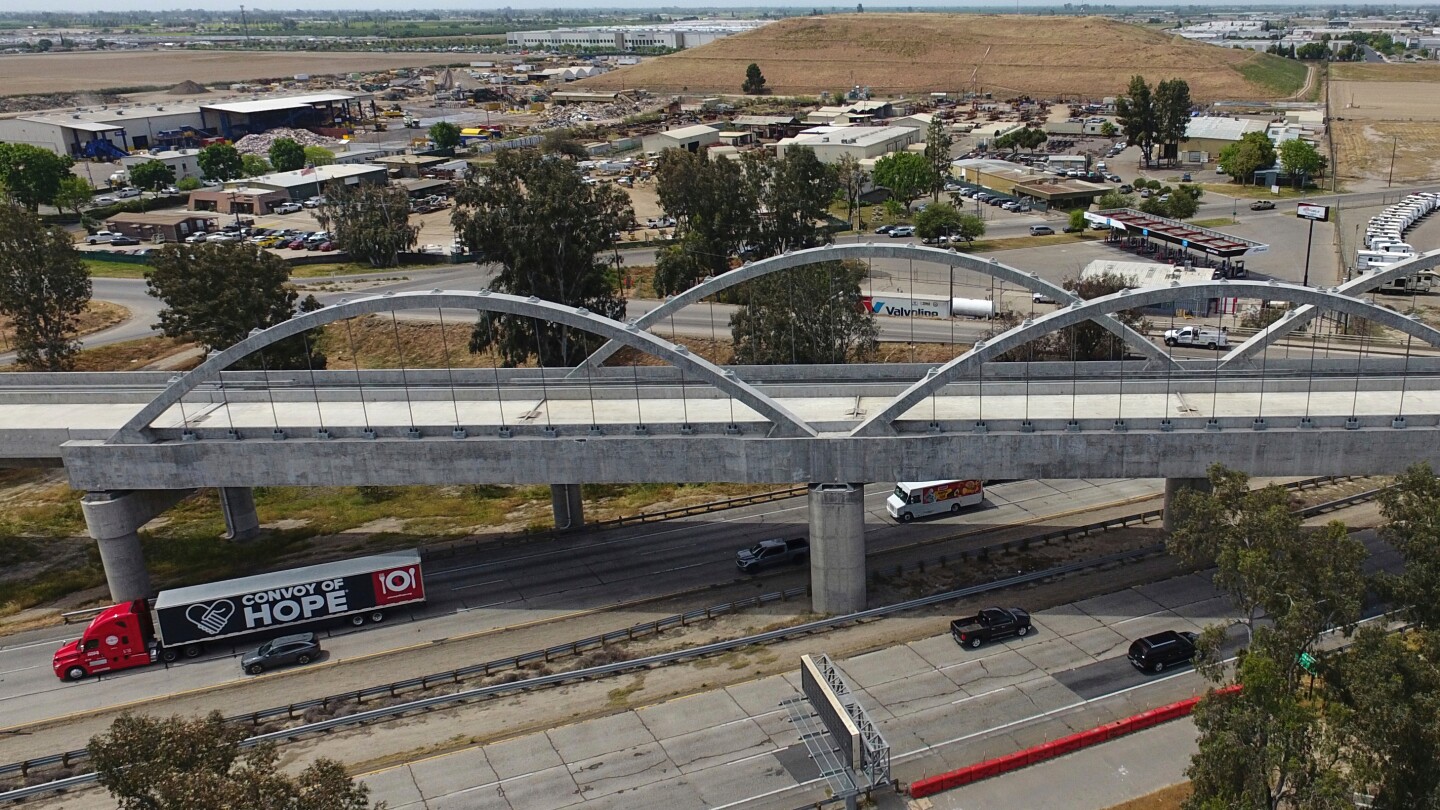
Currently, construction is focused on a 171-mile segment in the Central Valley between Merced and Bakersfield, with limited progress on connecting the system to California’s major population centers.
By abandoning the legal battle with the federal government, the rail authority hopes to create new opportunities for funding and implementation. The authority recently secured $1 billion in annual funding through 2045 from California’s cap-and-trade program, providing a long-term financing mechanism independent of federal support.
The cap-and-trade program establishes declining limits on greenhouse gas emissions from major polluters in California. Companies must either reduce their emissions, purchase allowances from the state or other businesses, or fund projects designed to offset their carbon footprint. Revenue generated from these sales is directed toward climate change mitigation efforts, affordable housing, transportation projects, and utility bill credits for California residents.
“Moving forward without the Trump administration’s involvement allows the Authority to pursue proven global best practices used successfully by modern high-speed rail systems around the world,” the rail authority spokesperson added.
The authority is also actively seeking private investors to support the project, a move that industry experts suggest may be more feasible without the complications of an ongoing federal lawsuit.
California’s high-speed rail project remains one of the most ambitious transportation initiatives in American history and represents a significant test case for large-scale rail infrastructure development in the United States. If completed, it would be the nation’s first true high-speed rail system, comparable to networks operating in Europe, China, and Japan.
Fact Checker
Verify the accuracy of this article using The Disinformation Commission analysis and real-time sources.

12 Comments
This is a pragmatic move by California. While the loss of federal funds is a setback, focusing on alternative financing options may be a better path forward than prolonged legal battles. The state needs to get this project back on track.
The California bullet train project has been mired in challenges for years. Dropping the lawsuit against the federal government suggests the state is ready to explore new paths forward, which could include innovative financing solutions. It’s a bold move, but one that may be necessary to revive this transformative transportation initiative.
California’s decision to drop the lawsuit signals a strategic shift, but also an acknowledgment that the federal government is not a reliable partner. Finding alternative ways to finance the bullet train is essential to keeping this ambitious project alive.
Interesting that California is shifting its strategy on the bullet train project by dropping the lawsuit. It’s a pragmatic move, acknowledging the federal government is not a reliable partner. Now the state needs to get creative with alternative financing options to keep this ambitious infrastructure plan alive.
The bullet train project has faced so many obstacles over the years. It’s good to see California shifting gears and exploring new funding sources rather than getting bogged down in legal disputes. Overcoming the challenges will require innovative solutions.
The high costs and delays have been a persistent issue for this bullet train project. Dropping the lawsuit suggests California is acknowledging the federal government is not a reliable partner and needs to pursue other avenues.
You’re right, the project’s challenges have been well-documented. Diversifying the funding sources could help get it moving forward again, but it will require careful planning and execution.
Interesting move by California to drop the lawsuit. While the federal funding loss is a setback, focusing on alternative financing options could be a strategic pivot to get the bullet train project back on track.
Agreed, finding creative funding solutions will be crucial to reviving this ambitious infrastructure project. It will be worth watching how California navigates this challenge.
The California bullet train project has faced so many hurdles over the years. While dropping the lawsuit is a setback, it may be a necessary step to refocus efforts on finding alternative funding sources. This could be a pivotal moment for the project’s future.
This is a curious development in the ongoing saga of California’s bullet train project. While the loss of federal funds is a blow, exploring alternative financing options could be a prudent path forward. It will be interesting to see what solutions the state comes up with.
Agreed, the state needs to be nimble and innovative in its approach. With the right financing plan, the bullet train could still become a reality, but it will require overcoming significant challenges.