


Listen to the article
Interior Department Revokes American Prairie’s Bison Grazing Permits in Montana
The U.S. Department of the Interior announced Friday it is revoking grazing permits in Phillips County that conservation nonprofit American Prairie had been using for its bison herd, ending a contentious three-and-a-half-year dispute between conservationists and Montana’s livestock industry.
The decision represents a significant victory for Montana ranchers, who have long opposed American Prairie’s efforts to restore native prairie ecosystems in north-central Montana through bison reintroduction. The Montana Stockgrowers Association quickly celebrated the news.
“MSGA is thrilled to see this decision by the BLM to restore grazing allotments back to their intended usage for production livestock grazing,” said MSGA President Lesley Robinson. “This decision is an incredible win for public lands grazers, ranching families and rural communities across the West.”
American Prairie, which has amassed over half a million acres through private land purchases and federal grazing leases since its founding in 2001, characterized the reversal as arbitrary and concerning for all public land users.
“This decision is not grounded in new impacts or new information — it appears to be completely arbitrary and is unfair,” said American Prairie CEO Ali Fox. “When federal agencies begin changing how the rules are applied after the process is complete, it undermines confidence in the system for everyone who relies on public lands.”
At the heart of the dispute is the interpretation of the 1934 Taylor Grazing Act. In her 24-page decision letter, BLM Montana/Dakotas State Director Sonya Germann cited the act’s requirement that grazing on federal lands be “limited to cases where the animals to be grazed are domestic and will be used for production-oriented purposes.”
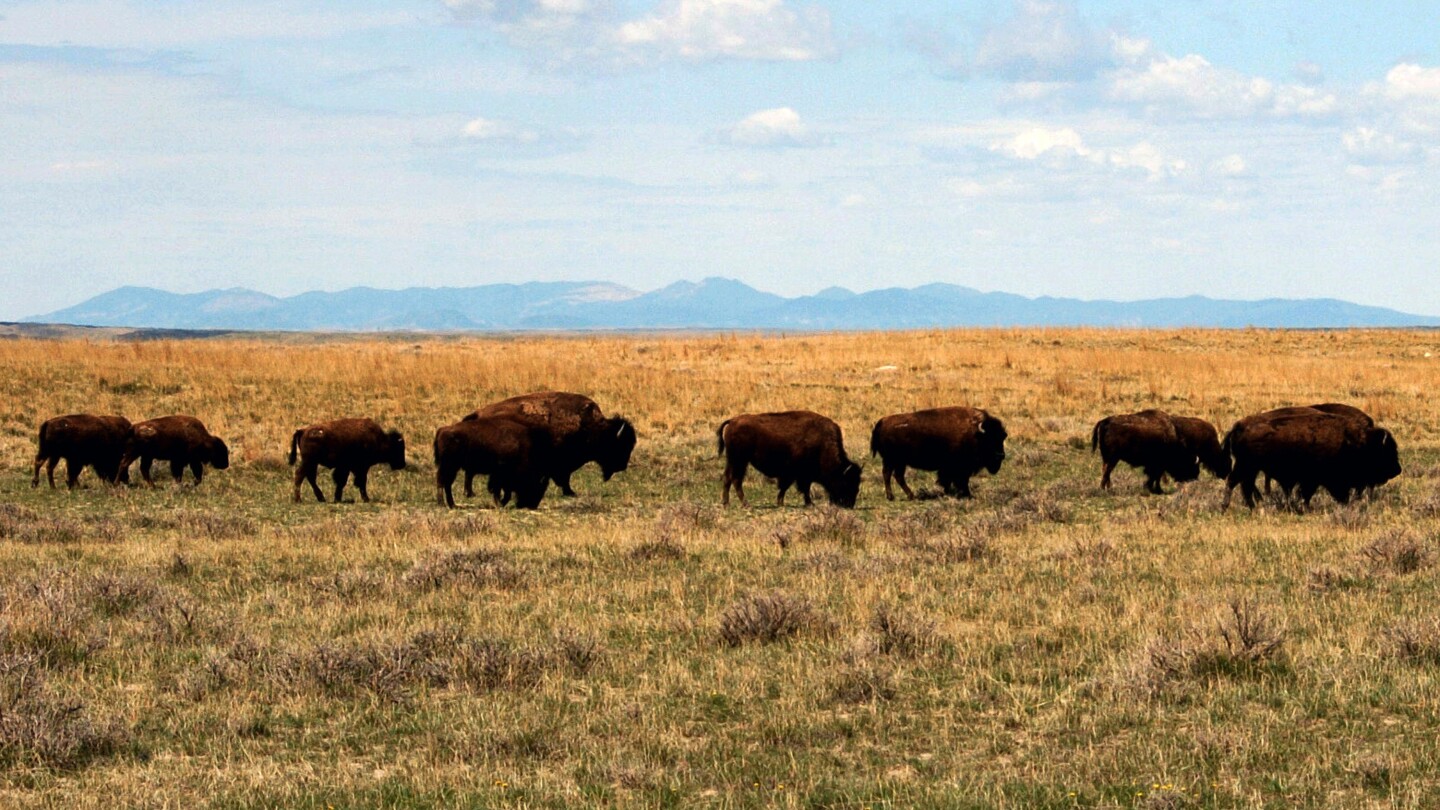
The Interior Department contended that American Prairie’s approximately 900 bison don’t meet this definition, despite the organization having grazed bison on BLM land for about 20 years through various leases. The decision comes after Interior Secretary Doug Burgum, appointed during the Trump administration, directed the BLM in December to reconsider the grazing authorization that had been approved by the Biden administration in 2022.
Notably, the BLM’s 2022 decision had explicitly noted that bison grazing is permitted on BLM-administered leases in five other western states: Colorado, New Mexico, North Dakota, South Dakota, and Wyoming. The agency had previously determined that “unfavorable views of the proposal itself do not constitute a scientific controversy, disagreement about the nature of effects, or provide evidence that the project is not in conformance to BLM’s statutory and regulatory requirements.”
American Prairie’s mission has proven controversial in Montana’s ranching communities. The nonprofit aims to connect 3.2 million acres to support what it calls a “healthy prairie ecosystem,” emphasizing the bison’s ecological significance to prairie ecosystems as “a relationship that has been extensively studied and well documented over time.”
The organization’s expanding influence has generated pushback from Republican politicians and neighboring livestock producers concerned about changes to the cultural landscape and property dynamics in central Montana. Critics, including the United Property Owners of Montana, have organized under the “Save the Cowboy” slogan to oppose American Prairie’s vision.
Montana Attorney General Austin Knudsen and Governor Greg Gianforte, both of whom opposed the 2022 decision, praised the reversal as protecting Montana’s agricultural heritage.
“Canceling the American Prairie Reserve’s bison grazing permit will help to protect the livestock industry and ranching communities in Northeastern Montana from the elitists trying to push them out,” Knudsen said in a statement.
American Prairie hinted at potential legal action in response to the decision, stating it is “reviewing the decisions and determining its course of action.” The dispute highlights ongoing tensions between conservation efforts aimed at ecosystem restoration and traditional agricultural uses of public lands in the American West.
The permit revocation comes as American Prairie recently announced crossing the half-million-acre threshold in its land conservation portfolio, a significant milestone toward its ultimate 3.2-million-acre goal to support biodiversity restoration in the region.
Fact Checker
Verify the accuracy of this article using The Disinformation Commission analysis and real-time sources.

9 Comments
The decision to revoke the bison grazing permits seems to prioritize the interests of the livestock industry over environmental restoration. However, the impacts on local communities and traditional land uses should also be taken into account.
This decision favors the livestock industry, but the long-term ecological impacts of bison restoration should not be overlooked. It will be important to find ways to balance different priorities in the management of these public lands.
The revocation of the bison grazing permits is a setback for conservation efforts, but the concerns of local ranchers also deserve consideration. Careful, balanced policymaking is needed to navigate these complex tradeoffs.
I agree that a balanced approach is essential. There are valid arguments on both sides that policymakers will need to carefully weigh.
The dispute between conservation efforts and ranching interests highlights the ongoing challenges in managing public lands. I’m curious to see if there are opportunities for compromise that address the needs of multiple stakeholders.
The American Prairie Reserve has been working to restore native ecosystems, while ranchers are concerned about grazing rights. This decision seems to prioritize traditional livestock production, but long-term sustainability and ecological considerations are also important factors to weigh.
You raise a fair point. There are legitimate concerns on both sides that policymakers will need to carefully balance.
Bison reintroduction can have significant environmental benefits, but also impacts traditional land uses. This ruling suggests the government is siding more with the livestock industry in this particular case, though the broader public interest should be considered.
This is a complex issue with impacts on ranching, conservation, and public lands use. It will be interesting to see how this plays out and whether there are compromise solutions that balance the different stakeholder interests.