


Listen to the article
Border Patrol Conducts Mass Immigration Arrests in Charlotte Amid Local Controversy
A major Border Patrol operation in North Carolina’s largest city led to over 80 arrests this weekend, as Charlotte residents reported widespread encounters with federal immigration agents near churches, apartment complexes and retail locations.
Gregory Bovino, a top Border Patrol commander who previously led similar operations in Chicago, documented the arrests on social media platform X, sharing a highly-edited video of uniformed CBP officers placing individuals in handcuffs. “From border towns to the Queen City, our agents go where the mission calls,” Bovino posted, referring to Charlotte’s nickname.
The enforcement surge, dubbed “Operation Charlotte’s Web,” represents the Trump administration’s latest target in what it describes as an effort to combat crime, despite fierce objections from local Democratic leaders and statistics showing declining crime rates in the city of approximately 950,000 residents.
The flurry of enforcement activity sparked fear throughout Charlotte’s immigrant communities. At Camino, a nonprofit organization serving Latino communities, staff reported numerous appointment cancellations, including nine at their dental clinic on Friday alone.
“Latinos love this country. They came here to escape socialism and communism, and they’re hard workers and people of faith,” said Paola Garcia, a spokesperson for Camino. “They love their family, and it’s just so sad to see that this community now has this target on their back.”
By Sunday, community organizations described “overwhelming” reports of CBP activity. “The past two hours we’ve received countless reports of CBP activity at churches, apartment complexes and a hardware store,” said Greg Asciutto, executive director of community development group CharlotteEast, in an email.
City council member-elect JD Mazuera Arias expressed particular concern about federal agents targeting religious institutions. “Houses of worship. I mean, that’s just awful,” he said. “These are sanctuaries for people who are looking for hope and faith in dark times like these and who no longer can feel safe because of the gross violation of people’s right to worship.”
The Department of Homeland Security has defended the operation, with Assistant Secretary Tricia McLaughlin stating: “We are surging DHS law enforcement to Charlotte to ensure Americans are safe and public safety threats are removed.” DHS cited Mecklenburg County’s “sanctuary” policies as justification, claiming approximately 1,400 immigration detainers had not been honored across North Carolina, potentially endangering public safety.
Unlike some jurisdictions, Mecklenburg County does not honor immigration detainers, which allow jails to hold detainees for immigration officers to pick up. Additionally, Charlotte’s police department maintains a policy of non-cooperation with federal immigration enforcement.
Bovino’s social media posts highlighted arrests of what the Trump administration refers to as “criminal illegal aliens” — individuals living in the U.S. without legal permission who allegedly have criminal records. In one post, he referenced a man with multiple DUI convictions, stating: “We arrested him, taking him off the streets of Charlotte so he can’t continue to ignore our laws and drive intoxicated on the same roads you and your loved ones are on.”
The operation has drawn both criticism and support along partisan lines. Mecklenburg County Republican Party Chairman Kyle Kirby expressed support for the federal intervention, stating that the county GOP “stands with the rule of law — and with every Charlottean’s safety first.”
Critics, however, have raised serious concerns about Bovino’s tactics, which have previously sparked controversy and legal challenges in Chicago and Los Angeles. Federal agents under his command have been accused of excessive force, including widespread use of chemical agents. During operations in suburban Chicago, agents fatally shot one man during a traffic stop.
On Saturday, at least one U.S. citizen reported being thrown to the ground and briefly detained by federal agents, raising additional questions about the operation’s tactics and targeting methods.
The Charlotte operation follows similar enforcement surges in the Chicago area, where DHS reported over 3,000 arrests between September and early November. Details about most of those arrests remain limited, with the agency only providing names and specifics for a small fraction of cases.
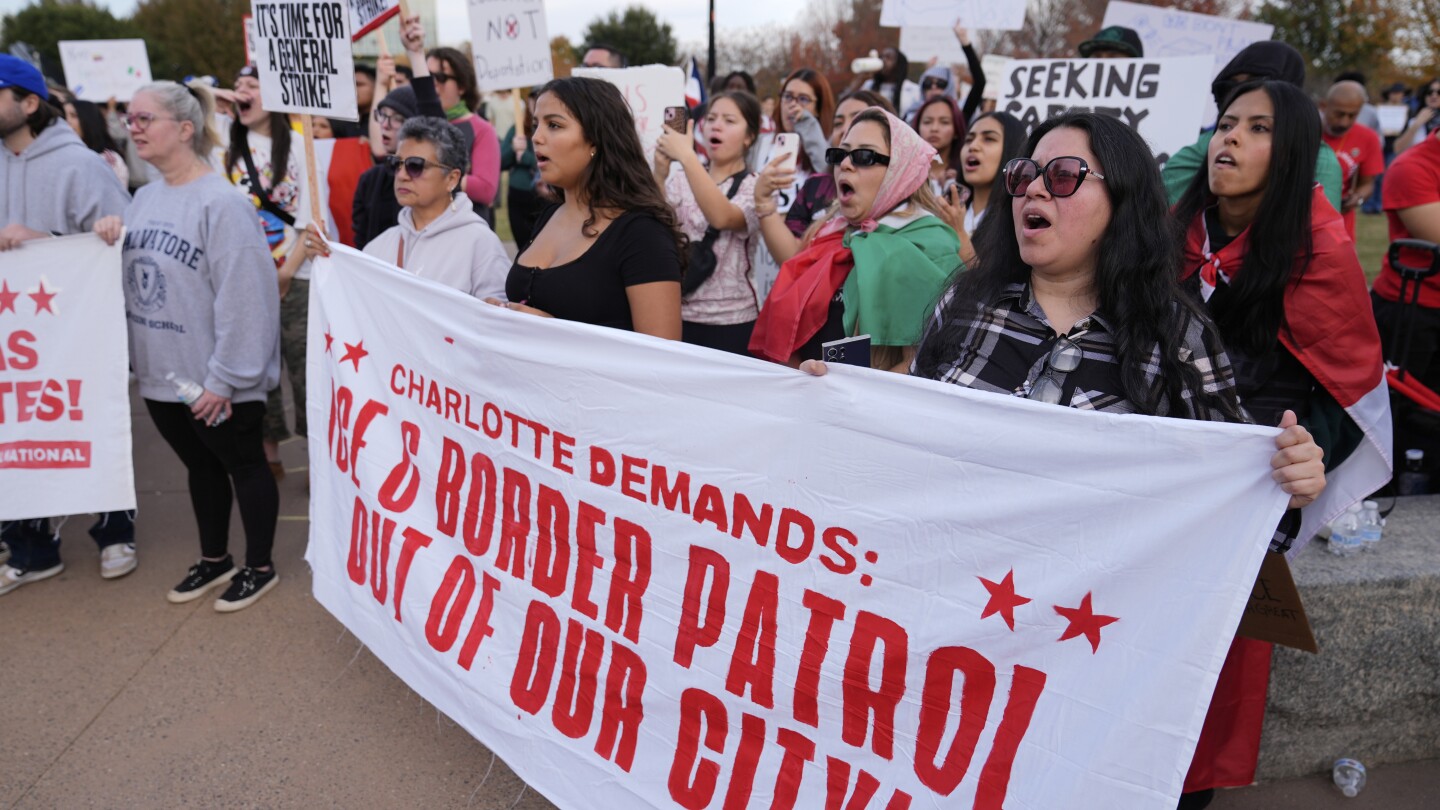
Small protests against the immigration enforcement efforts continued through the weekend, with two individuals arrested Sunday outside a DHS office in Charlotte and taken to a local FBI facility. Attorney Xavier T. de Janon, representing those detained, said charges against his clients remained unclear.
Fact Checker
Verify the accuracy of this article using The Disinformation Commission analysis and real-time sources.

8 Comments
Enforcing immigration laws is a complex and sensitive issue. I’m curious to hear more about the specific justifications and operational details behind this surge. Transparency and due process are crucial when it comes to such actions.
That’s a fair point. The local context and potential impacts on the community need to be carefully considered. An open dialogue between federal and city officials could help find a balanced approach.
Immigration is a hot-button topic, but these mass arrests near churches and neighborhoods raise significant concerns. I hope the authorities can find a measured way to address any legitimate enforcement needs while respecting civil liberties and community relations.
This is a concerning development. While border enforcement is important, mass arrests near churches and neighborhoods raise serious civil liberties concerns. I hope the local authorities can work with federal agencies to ensure a balanced and humane approach.
Agreed. Targeting immigrant communities in this way can sow fear and erode trust. A collaborative, community-oriented strategy would be far more constructive.
This is a complex issue with valid concerns on all sides. I hope the authorities can work to find a solution that upholds the rule of law while also respecting the civil liberties and community ties of immigrant residents.
While border security is important, these types of large-scale enforcement actions can have unintended consequences and erode trust within immigrant communities. A more targeted and collaborative approach may be more effective and humane.
Agreed. Maintaining public safety is crucial, but it needs to be balanced with protecting the rights and dignity of all residents. Open communication between federal and local officials could help find the right path forward.