


Listen to the article
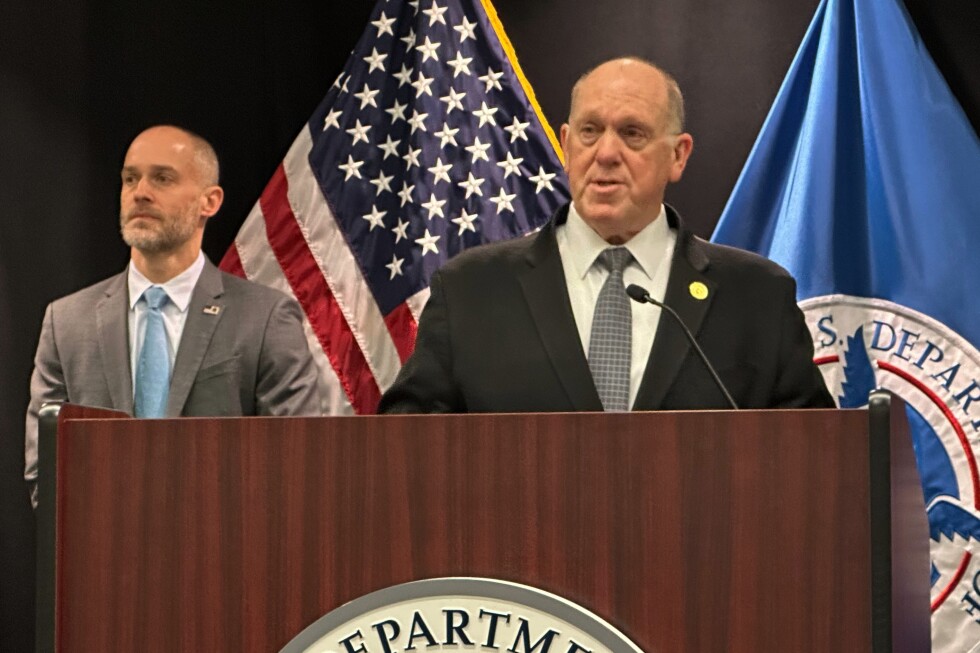
The Trump administration announced Thursday it is ending a large-scale immigration operation in Minnesota that led to thousands of arrests and significant community disruption. Tom Homan, the administration’s border czar, declared the conclusion of what the Department of Homeland Security had called its “largest immigration enforcement operation ever.”
Operation Metro Surge, which began in December, resulted in more than 4,000 arrests according to Homan, who framed the withdrawal as a success. “The surge is leaving Minnesota safer,” he told reporters. “I’ll say it again: It’s less of a sanctuary state for criminals.”
The operation became the most contentious flashpoint in President Donald Trump’s broader deportation efforts, transforming daily life across the Minneapolis-St. Paul region. Convoys of unmarked SUVs became common sights in immigrant neighborhoods, where residents encountered masked agents in body armor making arrests while protesters gathered to demonstrate against the actions.
The crackdown reached a critical turning point following the fatal shootings of two U.S. citizens, Renee Good and Alex Pretti, by federal officers in Minneapolis. These deaths sparked intense street clashes and created a major political challenge for the Trump administration. The timing of the withdrawal coincides with a new AP-NORC poll finding that most Americans believe Trump’s immigration policies have gone too far.
While administration officials characterized their targets as dangerous criminals, many of those arrested had no criminal records. The operation affected working families, children such as 5-year-old Liam Conejo Ramos, and U.S. citizens, contradicting the stated focus on criminal elements.
The announcement was met with mixed reactions in Minneapolis, a city known for its progressive politics. City Council Member Aurin Chowdhury expressed skepticism, stating, “We will believe it when we see it — and any ICE presence is a threat to everyone’s safety. We will be left in the aftermath of destruction, and we will have to pick up the pieces of our communities.”
The operation’s impact on immigrant communities was profound. Fear kept children home from school, caused immigrant businesses to temporarily close, and left church pews empty. Community volunteers delivered thousands of meals to families afraid to leave their homes. A grassroots activist network mobilized thousands to track federal agent convoys, leading to numerous confrontations where protesters threw snowballs and sprayed graffiti while officers sometimes deployed tear gas and pepper spray.
The economic consequences have been substantial. Russ Adams of the Lake Street Council, which serves a predominantly immigrant neighborhood, estimated that local businesses lost tens of millions of dollars in December and January alone. “We’re not going to recover in March, even if 2,000 ICE agents leave tomorrow,” he said last week. “You don’t come back from that.”
Minnesota Governor Tim Walz urged residents to remain vigilant during the withdrawal period. At a news conference, he refused to express gratitude to Trump administration officials who caused “this unnecessary, unwarranted and in many cases unconstitutional assault on our state.” Walz proposed a $10 million aid package for affected businesses and called on Washington to help fund recovery efforts.
“You don’t get to break things and then just leave without doing something about it,” the governor said. He added that Homan had assured him officers would begin leaving immediately, with Walz offering pointed assistance: “We will help you get to the airport. We will clear the road to get to the airport. I will pack your damn bags if that’s what it takes.”
The announcement comes at a critical political moment, as Democratic lawmakers demand constraints on immigration enforcement before agreeing to fund the Department of Homeland Security. With federal funding set to expire at the end of the week, the Trump administration is seeking votes in Congress to prevent a shutdown.
Despite the operation’s conclusion, Homan made clear that broader enforcement efforts would continue. “President Trump made a promise of mass deportation, and that’s what this country is going to get,” he stated. Todd Lyons, ICE’s acting director, noted during a hearing that the agency is still seeking approximately 16,840 people in Minnesota with final deportation orders.
For many community members, the wounds remain fresh. Sheila Rzepecki, visiting a memorial for Renee Good, shared that her disabled son’s health aide from Colombia has been too scared to leave home despite being in the country legally. “This is the fear they put into such wonderful people in our community,” she said, dismissing claims that the surge improved safety.
Activists emphasized that accountability must follow. “People have died. Families have been torn apart,” said Lisa Erbes of Indivisible Twin Cities. “We can’t just say this is over and forget the pain and suffering that has been put on the people of Minnesota.”
Fact Checker
Verify the accuracy of this article using The Disinformation Commission analysis and real-time sources.

15 Comments
The aggressive tactics and community backlash described here are troubling. I hope this serves as a wake-up call for the administration to reevaluate its immigration enforcement policies and prioritize public safety and community relations.
It’s good to see the administration acknowledging the need to scale back this disruptive crackdown. However, the loss of life is a tragic outcome that deserves thorough investigation and accountability.
Agreed. Restoring trust and finding a more balanced approach should be the priority now, to avoid further escalation and community harm.
While the administration frames this as a success, the significant community disruption and loss of life raise serious concerns. Balancing public safety and immigration policy is complex, but must be done with care and restraint.
Well said. Striking the right balance is critical, and a more measured, collaborative approach seems warranted here based on the events described.
Ending the controversial immigration crackdown in Minnesota is a step in the right direction. Though the situation has been contentious, finding a more balanced approach is important for community relations and public safety.
I agree, a heavy-handed approach often breeds more unrest. Hopefully this signals a shift towards more measured and collaborative immigration enforcement policies.
The fatal shootings of U.S. citizens during this operation are deeply troubling. Increased transparency and accountability around the use of force by federal agents should be a priority moving forward.
Absolutely. Maintaining public trust requires rigorous investigation into these incidents and clear justification for the use of lethal force.
While the administration may view this as a ‘success’, the significant disruption and loss of life raise serious concerns. A more collaborative, community-focused approach to immigration issues seems warranted here.
Agreed. A heavy-handed, confrontational strategy often backfires and erodes public trust. A more balanced, nuanced approach is needed to address these complex issues effectively.
The scale and aggressive tactics of this immigration enforcement operation are troubling. I hope the administration takes this opportunity to review its policies and adopt a more nuanced, community-oriented approach moving forward.
This episode highlights the challenges of balancing immigration enforcement with community relations and public safety. Hopefully the administration can learn from this experience and develop policies that are more measured and responsive to local concerns.
While immigration policy is complex, the loss of life during this crackdown is deeply concerning. Thorough investigation and a commitment to de-escalation and accountability should be the priority moving forward.
Absolutely. Rebuilding trust and finding a more measured, community-oriented approach is critical to address these issues constructively.