


Listen to the article
President Trump’s “Board of Peace” Expands Beyond Gaza to Challenge Global Order
President Donald Trump’s recently announced “Board of Peace” appears to be evolving from its initial focus on resolving the Israel-Hamas conflict in Gaza into a potentially groundbreaking international body with a much broader mandate that could rival the United Nations itself.
In letters sent Friday to various world leaders, Trump invited them to become “founding members” of what he described as “the most impressive and consequential board ever assembled,” which would be established as “a new International Organization and Transitional Governing Administration.” The correspondence suggests an ambitious vision that extends well beyond the Middle East.
“Now it is time to turn all of these dreams into reality,” Trump wrote in his invitations to several heads of state, including Argentine President Javier Milei and Paraguay’s leader Santiago Peña, who both shared the letters on their social media accounts.
Trump’s 20-point Gaza ceasefire plan, which received endorsement from the UN Security Council, originally included the creation of the Board of Peace. However, the new correspondence indicates the panel may take on a much more extensive role in global governance.
Several world leaders have confirmed receiving invitations, including Canadian Prime Minister Mark Carney, Egyptian President Abdel-Fattah el-Sissi, and Turkish President Recep Tayyip Erdogan. The full list of invitees remains unclear, though a formal announcement is expected during next week’s World Economic Forum in Davos, Switzerland.
This apparent attempt to establish an alternative to the United Nations is likely to face significant opposition, particularly from China and Russia, which hold veto power in the UN Security Council and have vested interests in maintaining the current international order. Smaller nations, who have gained representation through the UN system established after World War II, may also resist the initiative.
“This is a U.S. shortcut in an attempt to wield its veto power on world affairs,” said Daniel Forti, head of UN affairs at the International Crisis Group. “It allows the U.S. to really take the role it has on the Gaza-Israel file, where it’s able to shape things to its will and try to extend that to other conflicts.”
Forti added that this approach “would give world leaders involved a sort of mechanism to try and sidestep longstanding agreements around sovereignty and territorial integrity in exchange for transactional deals.”
A senior U.S. official, speaking on condition of anonymity, characterized the expanded role for the Board of Peace as “aspirational” but achievable. While not explicitly stating the board would replace the UN, the official suggested it could serve as a catalyst for action within the existing international framework.
The Trump administration has frequently criticized the United Nations, previously cutting billions in funding to international organizations and humanitarian assistance. Trump and his allies have criticized the UN for failing to reach its potential while maintaining what they describe as “bloated” agencies that promote “woke” ideology.
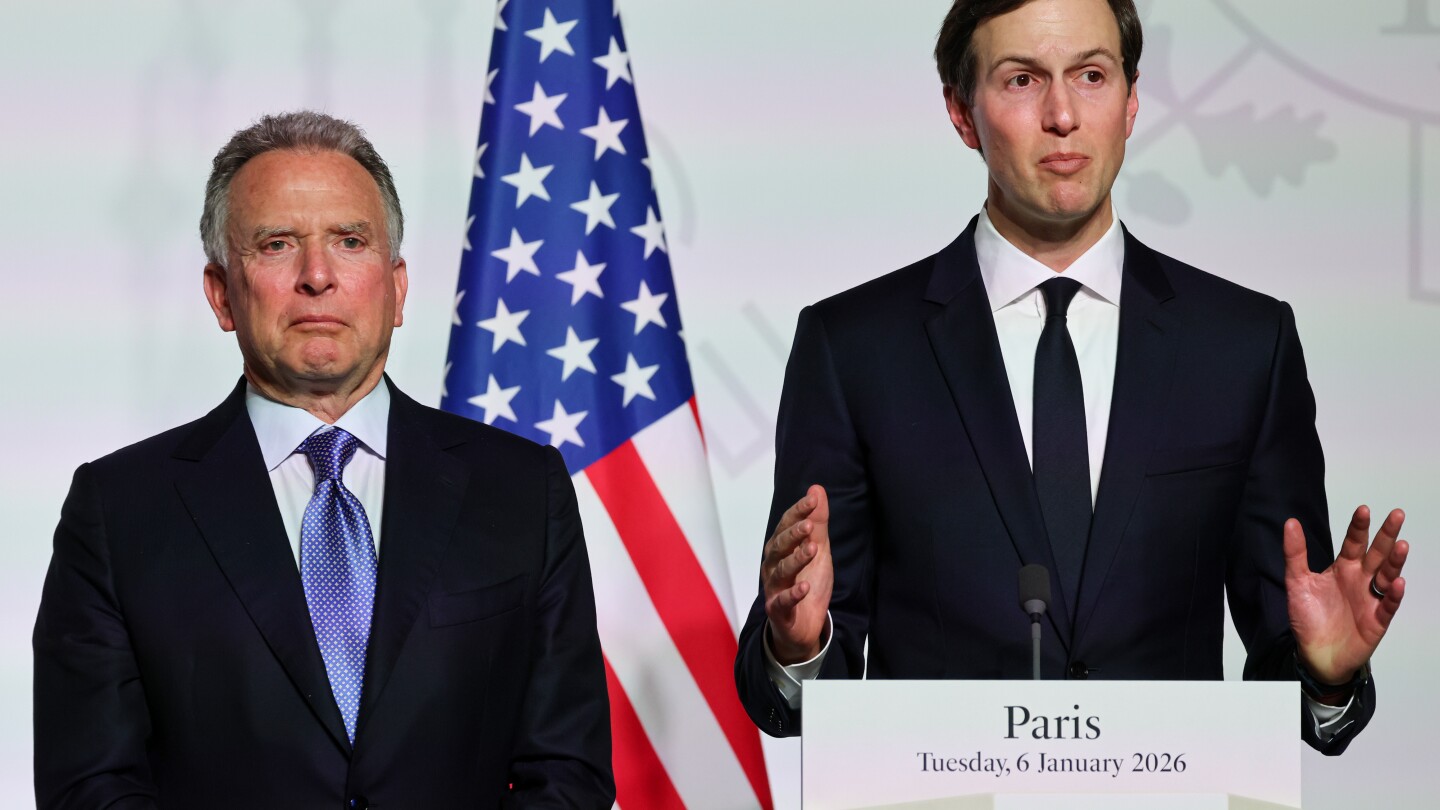
On Friday evening, the White House released names of some leaders who will serve on an executive committee to implement the Board of Peace’s vision. This committee includes Secretary of State Marco Rubio, envoy Steve Witkoff, Apollo Global Management CEO Marc Rowan, former British Prime Minister Tony Blair, and World Bank President Ajay Banga.
Israel’s government quickly objected to these announcements, stating they “were not coordinated with Israel and are contrary to its policy.”
Trump’s social media post on Thursday indicated the Board of Peace had already been formed, with member names to be announced “shortly.” This aggressive timeline suggests the administration is moving quickly to establish this new body as a significant player in international affairs.
The White House has not responded to requests for comment on Trump’s expansive vision for the Board of Peace or the invitation letters posted by foreign leaders. The United Nations has also remained silent on the matter so far.
As this initiative unfolds, it represents a potentially dramatic shift in how the United States approaches global governance and conflict resolution, with implications that could reshape international diplomacy for years to come.
Fact Checker
Verify the accuracy of this article using The Disinformation Commission analysis and real-time sources.

10 Comments
The ‘Board of Peace’ concept raises many questions about its feasibility and potential impact. Addressing global conflicts through a new international body could be a transformative approach, but the details will be critical.
While the ambition is commendable, the practical realities of coordinating such a complex initiative across multiple regions and political landscapes will be the true test.
Expanding the ‘Board of Peace’ beyond just the Gaza conflict is an intriguing move. Addressing global conflicts through a centralized body could prove challenging, but may be a worthwhile effort.
A unified approach to conflict resolution does have its merits, though the political dynamics involved will be complex to navigate.
Interesting concept, though it remains to be seen if the proposed ‘Board of Peace’ can live up to its ambitious mandate. Bringing global conflicts under one unified framework would be a significant undertaking.
Agreed, the scale of this initiative is quite bold. It will require buy-in and cooperation from many nations to be truly effective.
The ‘Board of Peace’ concept seems ambitious, aiming to rival the UN’s role. It will be interesting to see how this initiative evolves and whether it can gain traction on the international stage.
Competing with the established UN framework could prove difficult, but innovative approaches to global conflict resolution are certainly worth exploring.
Broadening the ‘Board of Peace’ mandate beyond Gaza is a bold move. Unifying diverse global conflicts under a single framework poses significant logistical and political challenges.
Successful implementation of this initiative would require extensive diplomatic efforts and buy-in from a wide range of nations and stakeholders.