


Listen to the article
In a rare show of bipartisan cooperation, Washington state representatives from opposing political parties have united to address a growing environmental crisis threatening the Pacific Northwest’s vital salmon industry. Republican Michael Baumgartner and Democrat Marie Gluesenkamp Perez are collaborating to combat the ecological imbalance caused by booming sea lion populations along the Columbia River.
“There’s a wall that stops the two parties from meeting in the middle on a lot of issues,” Gluesenkamp Perez said. “Most of the time, you have to go brick by brick to tear it down. Every now and then, you can chuck a 2,500-pound sea lion at it.”
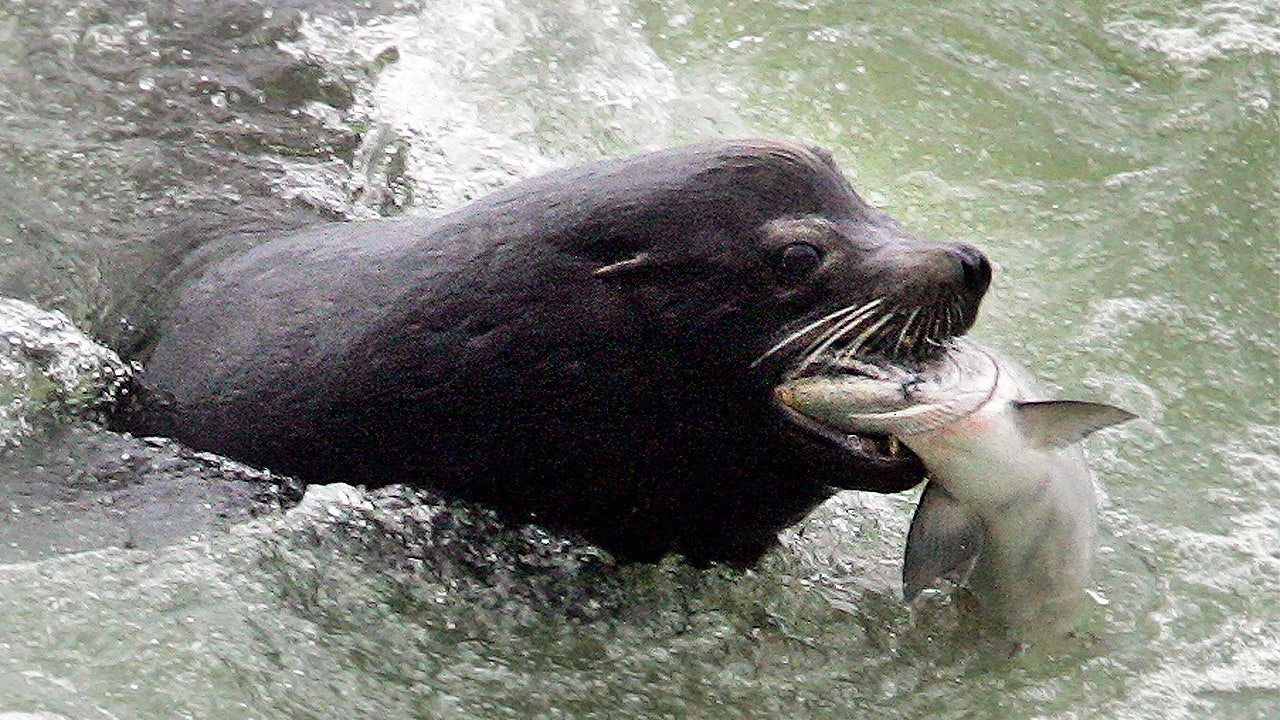
The California sea lion population has expanded dramatically since the passage of the Marine Mammal Protection Act (MMPA) in 1972. These marine mammals, which can weigh up to 2,500 pounds, have become apex predators threatening already endangered salmon and steelhead trout populations in Washington’s waterways.
Washington’s Department of Fish and Wildlife has officially classified sea lions as a “serious threat” to Columbia River salmon and steelhead trout. Both fish species are cornerstones of the state’s cultural identity, economic prosperity, and ecological health.
“Salmon are a huge deal in Washington State,” explained Baumgartner. “We have extensive salmon-bearing rivers that have historical cultural significance to our Native American tribes, a lot of interest and economic activity with sports fishermen, and our rivers are also the site of really important hydroelectric dams.”
The situation has grown particularly dire at the mouth of the Columbia River, where sea lions gather in unprecedented numbers to feed. According to environmental assessments, their predation has severely impacted salmon populations already struggling due to habitat loss, pollution, and climate change.
The Columbia River basin once supported annual salmon runs of 10-16 million fish. Today, those numbers have dwindled to a fraction of their historical abundance, with several salmon species now listed under the Endangered Species Act. The fishing industry, which contributes hundreds of millions of dollars annually to the regional economy, faces an existential threat if salmon populations continue to decline.
In response to the crisis, the House Natural Resources Committee recently held a special hearing on sea lion predation in the Pacific Northwest. Both Baumgartner and Gluesenkamp Perez participated, advocating for more aggressive management techniques to control sea lion populations.
“Save more salmon, shoot more sea lions,” Baumgartner posted on social media following the hearing, highlighting the drastic measures being considered.
Gluesenkamp Perez vividly illustrated the scope of the problem during the hearing by comparing the size of Steller sea lions, another species threatening local fish populations, to Toyota Corollas. “Southwest Washington has a serious predatory pinniped problem — tens of thousands of massive invasive sea lions are venturing further and further up the Columbia River and its tributaries to gorge on our local salmon,” she later wrote online.
The representatives’ bipartisan approach reflects the urgency of the situation for Washington communities that depend on healthy salmon populations. The fishing industry supports thousands of jobs across the state, from commercial operations to tourism and recreational fishing.
Native American tribes in the region, for whom salmon hold deep cultural and spiritual significance, have been especially vocal about the need for intervention. Many tribal communities have treaty-guaranteed fishing rights that are increasingly difficult to exercise as salmon numbers decline.
While the Marine Mammal Protection Act has successfully restored sea lion populations from their once-endangered status, the current situation demonstrates the complex balancing act required in ecosystem management. The lawmakers are now pushing for amendments that would give wildlife managers greater flexibility in controlling sea lion numbers.
“This is exactly the type of real-world problem that Americans want Congress to be able to solve,” Gluesenkamp Perez said, emphasizing the practical nature of the issue beyond partisan politics.
Environmental experts note that any solution will require careful consideration of both the immediate crisis and long-term ecological stability. The representatives are expected to introduce legislation in the coming weeks that would expand options for managing sea lion populations while maintaining protections for the species overall.
Fact Checker
Verify the accuracy of this article using The Disinformation Commission analysis and real-time sources.

8 Comments
Interesting development. Salmon are a crucial resource, but we have to be mindful of the broader ecosystem impacts. I’ll be curious to see the details of their proposed plan and how they address the ethical concerns.
This is a tricky situation. While the sea lion population growth is concerning, lethal culling shouldn’t be the default option. I hope they explore all non-lethal management strategies first to find a sustainable solution.
The bipartisan cooperation on this issue is encouraging. Protecting endangered salmon is important, but they’ll need to carefully weigh the ecological consequences of culling sea lions. A balanced approach is key.
This is a complex issue with valid concerns on both sides. Protecting endangered salmon is crucial, but culling predators raises ethical questions. I hope they can find a balanced solution that safeguards the ecosystem.
Culling apex predators is a delicate matter that requires thorough scientific assessment. I hope they consult marine biologists and conservation experts to develop an effective, ethical plan to protect the salmon industry.
The salmon industry is clearly vital for the region, but we have to be cautious about disrupting the natural predator-prey balance. I’m curious to learn more about the proposed solutions and their potential environmental impacts.
Interesting to see bipartisan cooperation on this environmental challenge. Thoughtful management of the sea lion population could help restore salmon stocks, but they’ll need to weigh the ecological impacts carefully.
Agreed, it’s good to see politicians setting aside partisan divides to address a real conservation issue. Striking the right balance will be key.