


Listen to the article
The Berkeley City Council reluctantly approved two high-rise development projects Monday night that use a state housing law to bypass local labor standards, highlighting ongoing tensions between affordable housing goals and worker protections.
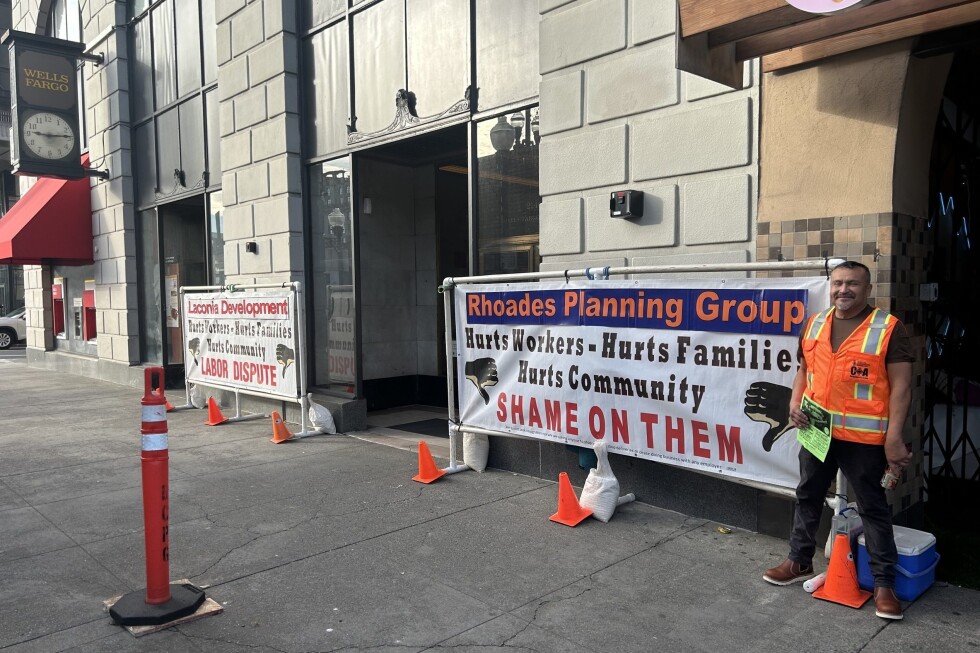
The controversial projects—a 20-story complex on Durant Avenue and a 23-story building on University Avenue—will proceed despite protests from labor unions. Both developments utilize California’s “density bonus” law to sidestep Berkeley’s 2023 ordinance requiring developers of large projects to provide health care coverage and apprenticeship programs for workers.
Developers Collab Home and Laconia Development argued that complying with Berkeley’s labor standards would make their projects financially unfeasible. Mark Rhoades, a consultant for the Durant Avenue project, told the council that local mandates would add $16.6 million in costs, with nearly $13 million stemming from prevailing wage requirements alone.
“This is an extreme, up-front cost that is difficult—impossible—to commit to,” Rhoades said during the meeting.
Several council members expressed sympathy for labor concerns but acknowledged they were legally constrained by state law, which requires cities to grant developers exemptions from certain regulations if their projects include affordable housing units.
“I don’t think the legal justification is there to deny the concessions,” Councilmember Rashi Kesarwani said. “The city is not in a position to take on the cost of expensive litigation, when we know at the outset that we are likely to fail.”
Berkeley currently faces an estimated $30 million budget deficit, making costly legal battles particularly unappealing to city officials.
The Durant Avenue project, developed by Berkeley-based Collab Home, will include 32 below-market-rate units among its 169 apartments. Laconia’s University Avenue development proposed two versions: one with 240 units and another with 160 larger apartments, including either 24 or 36 affordable units depending on the final configuration.
In addition to bypassing the healthcare and apprenticeship requirements (known as “HARD HATS”), the Durant Avenue project sought exemption from prevailing wage requirements, while the University Avenue development requested relief from bird-safe window glass mandates.
For weeks leading up to the vote, union members from the Building and Construction Trades Council of Alameda County and the Northern California Carpenters Regional Council staged protests outside City Hall and downtown offices. Workers in safety vests attended Monday’s meeting, arguing that Berkeley’s labor standards ensure quality training and injury coverage.
“I can afford to live in Berkeley, which I love, because I’ve been given these opportunities through apprenticeships, through a living wage, through health care,” said carpenter Stephanie Lind during public comment.
Labor advocates contend the developers are misusing the density bonus law, which they believe was intended to address physical construction limitations rather than labor standards. Attorney Jolene Kramer, representing the Building and Construction Trades Council, argued, “The original legislative intent of the density bonus law was to allow developers to build more affordable units as a social good. Allowing a developer to avoid a labor standards requirement will do the opposite.”
Developers’ attorneys countered that the law was deliberately written with broad language to exempt builders from costly mandates that might impede housing production.
The projects represent some of the first developments subject to Berkeley’s HARD HATS ordinance, which applies to projects submitted since 2024. Union leaders fear other developers will adopt similar strategies to circumvent local labor standards.
Despite reluctance from several council members, the Durant Avenue project passed with five votes in favor, while four council members abstained. The University Avenue project failed to receive enough votes for official approval, but the city’s zoning board’s earlier decision stands by default, allowing the project to move forward.
State Senator Jesse Arreguín, who as Berkeley’s former mayor championed the HARD HATS ordinance with union support, expressed disappointment with the council’s decision. Arreguín stated he is “considering introducing legislation to amend the state density bonus law to close this loophole.”
The case illustrates California’s ongoing struggle to balance increasing housing production with maintaining labor standards and local control, a tension likely to persist as the state faces both a housing crisis and concerns about worker protections.
Fact Checker
Verify the accuracy of this article using The Disinformation Commission analysis and real-time sources.

18 Comments
Interesting development in Berkeley. Balancing affordable housing and worker protections is a challenge. I’m curious to see if there are any creative compromises that could address both priorities.
The use of state laws to bypass local labor requirements is concerning. Affordable housing is important, but not at the expense of worker protections. I hope the city and unions can negotiate a fair solution.
You’re right, it’s a delicate balance. Hopefully the city and developers can find a middle ground that works for all parties involved.
This is a challenging situation. Affordable housing is desperately needed, but worker protections are also essential. I’m curious to see if there are any innovative approaches that could balance these competing priorities.
You make a good point. Hopefully the city and developers can come up with a compromise that addresses both the housing shortage and labor concerns.
This is a delicate balance. Affordable housing is desperately needed, but worker protections are also essential. I’m curious to see if there are any innovative approaches that could address both of these priorities.
This highlights the ongoing tensions between development and labor standards. While we need more housing, it shouldn’t come at the expense of worker protections. Curious to see if there are any compromises that could be reached.
I agree. It’s a complex issue without easy answers. Hopefully the city and developers can find a middle ground that addresses both housing needs and labor concerns.
This is a complex issue without easy answers. Affordable housing is crucial, but worker protections are also essential. I’m curious to see if there are any innovative approaches that could address both priorities.
This is a complex issue without easy solutions. Affordable housing is crucial, but so are worker protections. I’m curious to see if there are any creative approaches that could satisfy both priorities.
Agreed. It will be interesting to see if the city and developers can find a middle ground that addresses the housing shortage while still upholding labor standards.
The use of state laws to bypass local labor requirements is concerning. Affordable housing is crucial, but not at the cost of worker protections. I hope the city and unions can negotiate a solution that works for all.
Interesting development in Berkeley. Balancing affordable housing goals with labor protections is challenging. Curious to see how this plays out and if there are creative solutions that work for all stakeholders.
You’re right, this is a tricky situation. Developers need to make projects financially viable, but workers’ rights must also be protected.
The use of state laws to bypass local labor requirements is troubling. Affordable housing is important, but not at the expense of worker protections. I hope the city and unions can negotiate a solution that works for everyone.
This highlights the ongoing tensions between development and labor standards. It’s a complex issue without easy answers. Hopefully the city and all stakeholders can come together to find a solution that works for everyone.
While I understand the developers’ financial concerns, sidestepping labor standards is worrying. Affordable housing is crucial, but not at the cost of worker protections. I hope the city can find a way to meet housing goals without compromising on labor rights.
While I understand the need for affordable housing, sidestepping labor standards is concerning. Workers’ rights shouldn’t be sacrificed in the process. I hope the city can find a way to meet housing goals without compromising on labor protections.