


Listen to the article
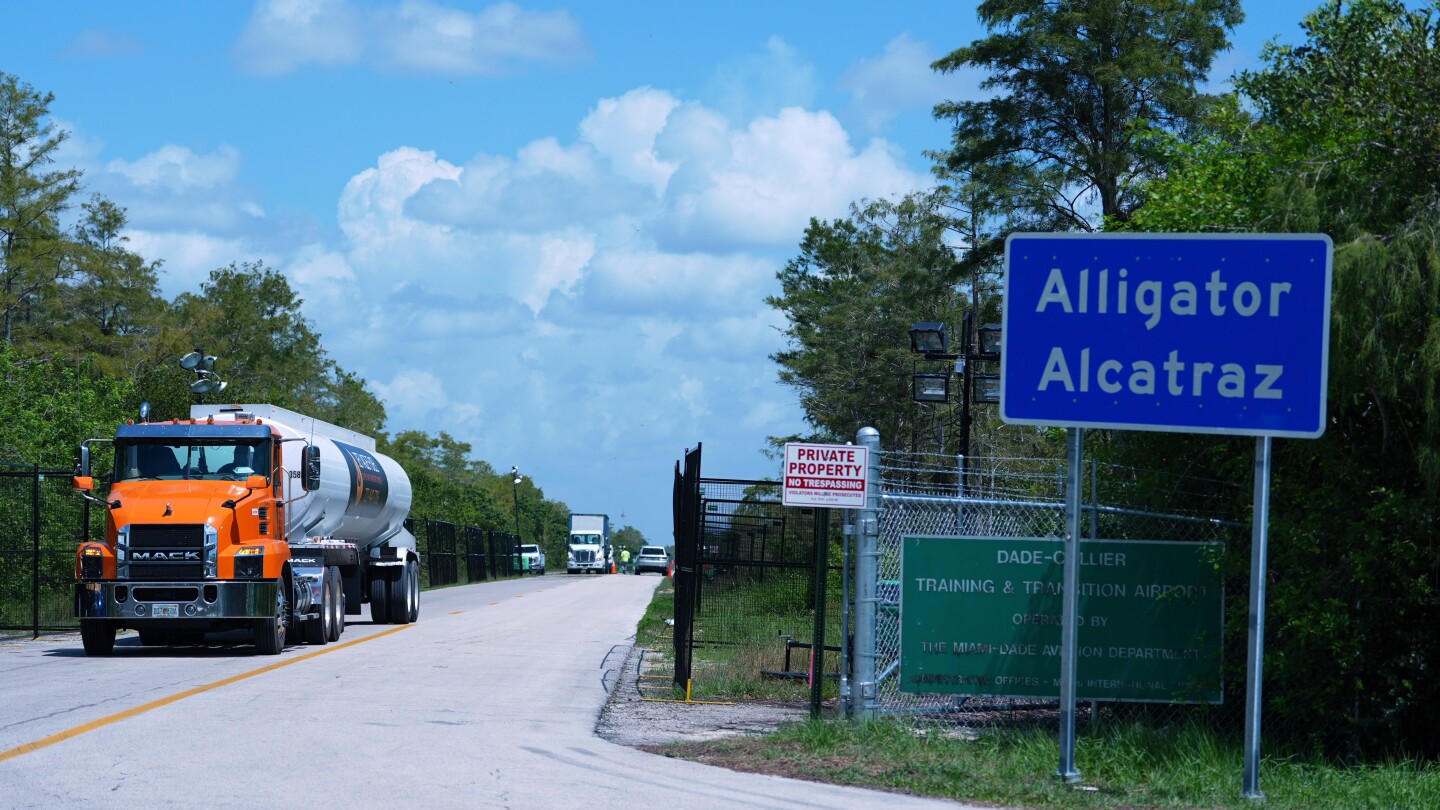
Attorneys representing detainees at a controversial immigration facility in Florida’s Everglades have requested a federal judge make an unannounced visit to assess whether their clients are receiving adequate legal access. The detention center, nicknamed “Alligator Alcatraz” due to its remote location, has become the center of multiple legal battles since opening this summer.
In a filing submitted Friday, lawyers asked U.S. District Judge Sheri Polster Chappell to conduct an in-person inspection within the next two months. They argue that such a visit would help determine if detainees can meet with their attorneys “in a confidential and regular manner” – a right they claim is being systematically denied.
The facility, established by Republican Governor Ron DeSantis’ administration at an isolated airstrip deep in the Everglades, has faced scrutiny over its operational practices since inception. According to the federal lawsuit, attorneys must schedule appointments three days in advance, unlike standard protocols at other immigration detention centers where lawyers can visit during regular hours.
Detainees’ legal representatives have documented additional barriers, including clients being transferred without notice after appointments were scheduled and lengthy delays that have caused detainees to miss critical legal deadlines. These practices, they argue, effectively deny immigrants their constitutional right to counsel.
“Federal courts routinely conduct site visits as a valid fact-finding tool, especially in cases involving conditions of confinement,” the detainees’ attorneys wrote in their request, citing judicial precedent for such inspections.
Florida state attorneys have firmly opposed the proposed visit, arguing that a federal judge lacks authority to inspect a state facility. They further contend that such a visit would create “significant security risks” and “impose a large burden on facility staff and significantly interrupt the facility’s operations.” As of Monday, Judge Chappell had not yet ruled on the request.
This legal challenge over attorney access represents just one of three federal lawsuits currently targeting the detention center. Despite nine hours of court-ordered settlement discussions last week, attorneys failed to reach any resolution on the access issues.
A separate lawsuit filed in Fort Myers challenges the fundamental legal authority of the facility, arguing that immigration enforcement falls exclusively under federal jurisdiction, making Florida’s state-operated detention center potentially unlawful. Last week, a judge denied detainees’ request for a preliminary injunction that would have closed the facility while the case proceeds.
In a third lawsuit, a federal judge in Miami initially ordered the facility to cease operations over a two-month period, citing officials’ failure to conduct required environmental impact reviews. However, an appellate court panel has temporarily stayed that decision, allowing “Alligator Alcatraz” to remain operational while the appeal is considered.
Beyond legal access concerns, detainees have reported alarming living conditions within the facility. Complaints include non-functioning toilets, floors flooded with sewage, and pervasive insect infestations – particularly mosquitoes, which are abundant in the Everglades environment.
The detention center gained national attention last summer when former President Donald Trump toured the facility, suggesting it could serve as a model for future immigration detention centers nationwide. The visit aligned with Trump’s campaign promises to expand detention infrastructure to support increased deportations if elected to a second term.
The ongoing legal challenges highlight tensions between state and federal immigration enforcement powers, while raising significant questions about detainee rights and humane treatment standards in immigration facilities. Judge Chappell’s decision regarding the site visit could prove pivotal in addressing the specific legal access concerns raised in the current lawsuit.
Fact Checker
Verify the accuracy of this article using The Disinformation Commission analysis and real-time sources.

14 Comments
The nickname “Alligator Alcatraz” certainly paints a vivid picture of the facility’s remote and potentially challenging setting. However, that cannot justify denying detainees their fundamental right to access legal counsel. I’m glad the judge is being urged to conduct an on-site assessment.
The requirement for 3-day advance scheduling of legal visits is highly problematic and appears to create unnecessary barriers for detainees. Timely, confidential access to counsel is a fundamental right that must be upheld, even at a remote facility like this one.
The nickname “Alligator Alcatraz” is certainly evocative. I’m curious to learn more about the facility’s operational challenges given its isolated location in the Everglades. Protecting detainees’ rights should be the top priority.
Yes, the remote setting likely creates unique logistical obstacles. An in-person assessment will be important to ensure the facility is upholding its legal obligations.
This is a concerning situation that merits close scrutiny. Ensuring reliable legal access for detainees should be a top priority, regardless of a facility’s remote location or other operational factors. I’m glad the judge is being urged to conduct an in-person assessment.
Agreed. An unannounced visit could provide important insights into the real-world challenges and help identify any systemic issues that need to be addressed.
This is an important issue that deserves close scrutiny. Ensuring detainees have adequate access to legal counsel is a fundamental right. An unannounced inspection by the judge could shed light on the facility’s operational practices.
Agreed. Transparency is critical, especially for a detention center with such a remote location. Hopefully the judge’s visit can help identify and address any barriers to legal access.
This is a concerning situation that warrants close oversight. Detainees must have reliable access to legal counsel, regardless of a facility’s location or operational model. I hope the judge’s visit can lead to constructive reforms.
The requirement to schedule appointments 3 days in advance seems highly restrictive and problematic. Timely, confidential access to lawyers is a fundamental right for detainees. The judge’s inspection could uncover other systemic issues.
Absolutely. That advance scheduling policy appears to create unnecessary barriers. An unannounced visit should provide a clearer picture of the real-world challenges detainees face in meeting with their attorneys.
This is a concerning situation that warrants close scrutiny. Ensuring detainees have adequate access to legal counsel, regardless of a facility’s location or operational model, is a critical issue. I hope the judge’s inspection can lead to meaningful reforms.
Absolutely. An unannounced visit could provide important insights and help identify any systemic issues that need to be addressed to protect detainees’ rights.
As a remote facility located deep in the Everglades, the “Alligator Alcatraz” detention center faces unique operational challenges. However, that cannot justify denying detainees their legal rights. I hope the judge’s inspection leads to meaningful reforms.