


Listen to the article
Scarlet Sands-Bliss rises at 6 a.m. to drive to rural Lake County, where her research focuses on community preparedness for extreme heat events. After spending a day meeting with tribal representatives and behavioral health workers, the UC Berkeley Ph.D. student made the journey to Sacramento to participate in a science fair and lobbying event alongside dozens of other students and postdoctoral researchers from across California.
Their mission: urging state lawmakers to establish a $23 billion scientific research fund at a time when federal support for science is diminishing.
“I have some professors at Berkeley who really believe that we’re scientists and it’s not our job to discuss the implications of our work,” said Sands-Bliss. But her perspective has evolved. “As a young person working in climate, everything feels really urgent.”
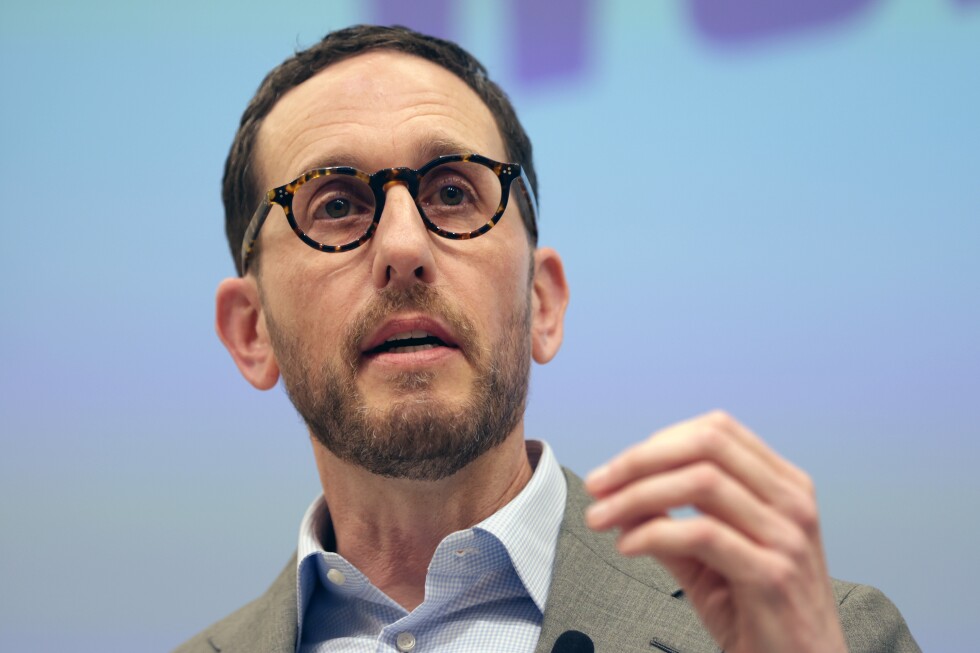
Early-career scientists like Sands-Bliss are spearheading efforts to create the California Foundation for Science and Health Research, which would distribute grants for projects in health, agriculture, earthquake and wildfire safety, and other critical fields. The proposed legislation, authored by state Sen. Scott Wiener, would place a bond measure before voters in November to fund the foundation, with priority given to ongoing studies that have lost federal funding.
Supporters say the initiative directly responds to the Trump administration’s disruption of research in California. Federal grants for studies addressing diversity, race and gender disparities, or climate change have been canceled or threatened with cancellation as the administration aligns funding with presidential priorities.
The impact has been widespread. Research on wildfire smoke effects on developing fetuses, new antibiotics for tuberculosis, infertility treatments, and support for small farmers has seen federal funding paused or canceled across California.
By December, UC Berkeley had lost over $50 million in federal research grants, representing a significant portion of the $473 million in federal research dollars the university received for the 2024-25 fiscal year. Researchers have been forced to remove potentially controversial language from grant proposals to avoid federal scrutiny.
While many grants have been restored—including over $500 million that Trump officials attempted to reclaim from UCLA—scientists face an uncertain future. The president has proposed slashing overall science funding, directed political appointees to vet grant applications for “anti-American” ideas, and appointed officials who have replaced scientific experts with skeptics on advisory panels.
“It’s like they’re Neanderthals who want to bring us back to the Middle Ages, where we’re un-curing diseases,” Wiener remarked as he toured the science fair, set up inside the California Federation of Labor Unions office.
Wiener proposed the state science fund early last year after becoming “very upset and angry” at attacks on university research and federal science agencies. He was surprised by the swift support from the United Auto Workers union, which represents scientists at the University of California and in state government.
The University of California joined the coalition despite ongoing negotiations with graduate student workers over wages and benefits. “Reductions in federal funding are already disrupting critical UC research that supports thousands of jobs, drives medical innovation, and leads to life-changing solutions that benefit everyone,” UC President James Milliken said in a statement.
At the January 26 fair, researchers showcased projects that have faced federal funding challenges. Sands-Bliss’s work in Lake County addresses the increasing frequency of wildfires and heat waves resulting from climate change, which disproportionately affect farmworkers, seniors, and unhoused people.
“We had to take the word ‘climate’ out of everything,” Sands-Bliss explained, noting that they now speak of “rural preparedness for extreme weather events” to protect their funding.
Similarly, a UCLA project examining HIV transmission prevention among formerly incarcerated people had its funding temporarily revoked because it was part of a larger grant to Charles Drew University, California’s only historically Black college. While the grant was eventually reinstated, the disruption forced researchers to abandon a planned partnership with a Skid Row community organization.
The proposed California Foundation for Science and Health Research has garnered support from Democratic legislators and some Republicans. As outlined in Wiener’s bill, state grants would be awarded by a majority-scientist council appointed by the secretary of Government Operations. California would recoup some profits from inventions developed with state funds and could choose to manufacture pharmaceutical discoveries at a discount for Californians.
UC Berkeley stands to benefit significantly from the proposed fund. Christopher Rae, a UC Berkeley postdoctoral researcher investigating new tuberculosis treatments, noted that his lab had a major NIH grant temporarily revoked and has frozen hiring due to funding uncertainties.
“The countries and the institutes that put the money towards the things that they care about will be the places that scientists like me end up going,” Rae said, explaining that he’s now considering job options outside the U.S. more seriously.
Voter support for the science bond may depend on economic conditions in November and competition from other ballot measures, including a separate billionaire tax initiative and a proposed $10 billion housing bond. The science measure requires two-thirds support from California legislators and Governor Gavin Newsom, followed by majority voter approval.
If successful, California would join other states taking independent action on research funding. Texas voters recently directed interest from the state’s rainy day fund to an endowment for university research, while Massachusetts has proposed a $400 million state fund for studies and early-career researchers.
For scientists like Rae, the logic is simple: “If California’s economy is bigger than most other nations, and those nations are putting money into research, then California certainly could.”
Fact Checker
Verify the accuracy of this article using The Disinformation Commission analysis and real-time sources.

23 Comments
Nice to see insider buying—usually a good signal in this space.
Good point. Watching costs and grades closely.
Silver leverage is strong here; beta cuts both ways though.
Good point. Watching costs and grades closely.
The cost guidance is better than expected. If they deliver, the stock could rerate.
Good point. Watching costs and grades closely.
Good point. Watching costs and grades closely.
Nice to see insider buying—usually a good signal in this space.
Good point. Watching costs and grades closely.
Exploration results look promising, but permitting will be the key risk.
Good point. Watching costs and grades closely.
Good point. Watching costs and grades closely.
I like the balance sheet here—less leverage than peers.
Good point. Watching costs and grades closely.
Good point. Watching costs and grades closely.
The cost guidance is better than expected. If they deliver, the stock could rerate.
The cost guidance is better than expected. If they deliver, the stock could rerate.
Good point. Watching costs and grades closely.
If AISC keeps dropping, this becomes investable for me.
Good point. Watching costs and grades closely.
Exploration results look promising, but permitting will be the key risk.
Good point. Watching costs and grades closely.
The cost guidance is better than expected. If they deliver, the stock could rerate.