


Listen to the article
European leaders are using terms like “intimidation,” “threats,” and “blackmail” to describe U.S. President Donald Trump’s warning about imposing new tariffs on nations that oppose American control of Greenland. The rhetoric across Europe has intensified since Trump returned to the White House a year ago, particularly in response to the unprecedented suggestion that the United States might seize territory belonging to a NATO ally.
After a year of Trump’s second administration, European confidence in the strength of the trans-Atlantic relationship is rapidly diminishing. Previous diplomatic approaches of flattery have proven ineffective, forcing European leaders to develop new strategies as they simultaneously confront threats from an increasingly aggressive Russia.
During Trump’s first term, NATO nearly collapsed. Former Secretary-General Jens Stoltenberg revealed in his memoir that he “feared NATO was about to stop functioning” after Trump threatened to abandon a 2018 summit. The situation has only deteriorated, with Danish Prime Minister Mette Frederiksen now warning that if Trump attempts to annex Greenland, which is a semi-autonomous Danish territory, “then everything stops… including our NATO.”
Maria Martisiute, an analyst at the European Policy Centre, described the situation bluntly: “We are at the very early stage of a rather deep political-military crisis. There is a greater realization, even though political leaders will not like to admit it, that America has abandoned NATO.”
When Trump returned to office in January 2025, NATO allies were anxiously waiting to learn his plans for Ukraine. Europe’s most significant land war in decades was entering its fourth year, with European leaders viewing a potential Russian victory as an existential threat to their own security.
Within weeks, any remaining hope for continued U.S. commitment to Ukraine vanished. American arms supplies and funding began to diminish, leaving Europe to fill the gap and pay for any assistance from the United States.
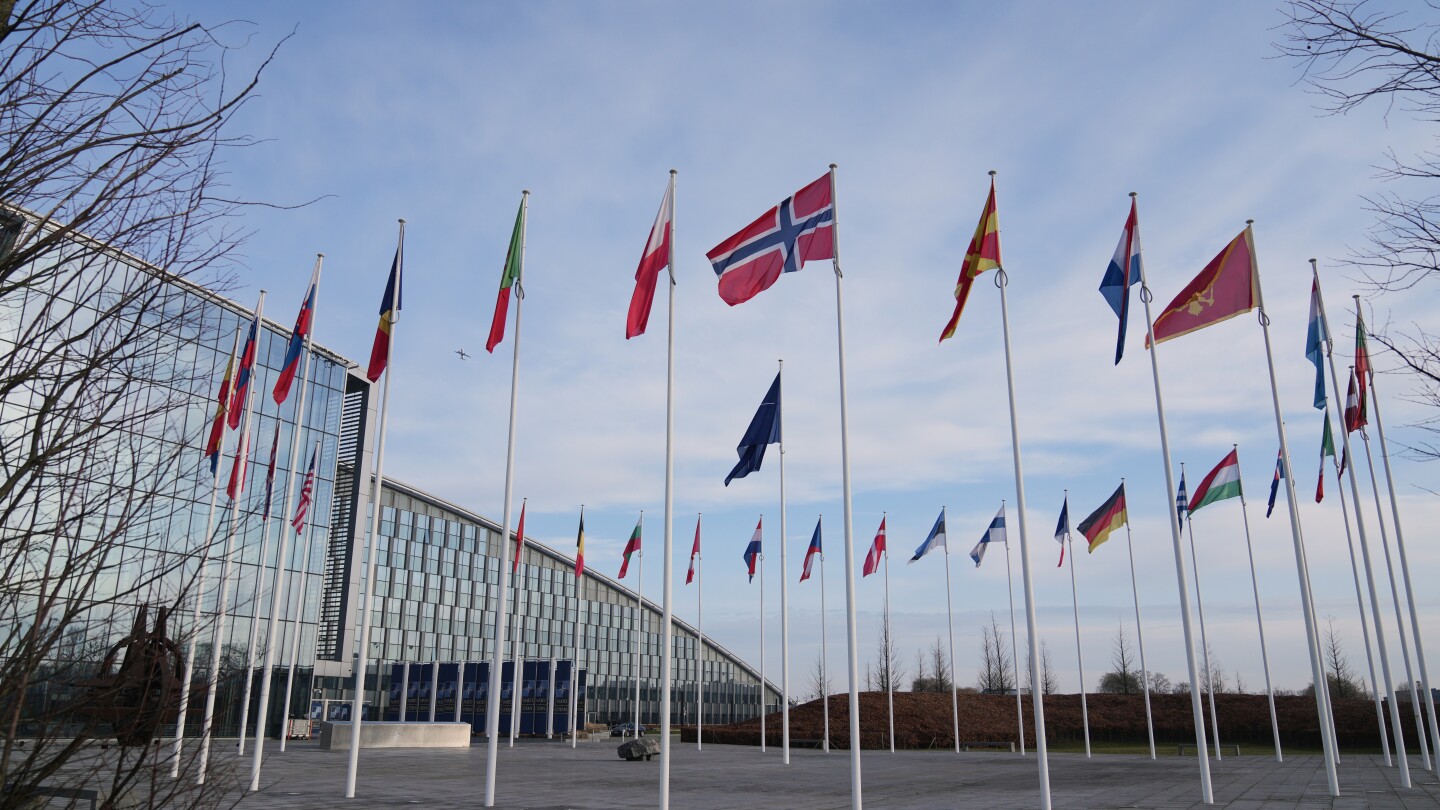
In February, U.S. Defense Secretary Pete Hegseth delivered a stark message at NATO headquarters, informing European allies and Canada that the United States had priorities elsewhere and Europe would need to handle security in its own region. He made it clear that Ukraine would not join NATO, and territory seized by Russia would not be returned.
Despite diplomatic efforts, including Ukrainian President Volodymyr Zelenskyy’s visits with royalty in the United Kingdom and the Netherlands intended to garner support, Trump has blamed Zelenskyy for the invasion. Vice President JD Vance further strained relations by meeting with a far-right party leader during German election campaigns and suggesting that Europe’s main threat was internal rather than from Russia.
After winning the German election, Chancellor Friedrich Merz acknowledged the reality of the situation, stating that “in view of the increasing threat situation,” Germany and Europe “must now very quickly make very big efforts” to strengthen their defense capabilities.
Throughout last year, European leaders and Zelenskyy traveled to Washington attempting to maintain Trump’s support. A 28-point plan to end the war, which would have conceded to many Russian demands, was subsequently revised. Negotiations continue without Russian President Vladimir Putin’s participation, though few expect him to accept the terms.
Meanwhile, Europe has advanced new defense initiatives as Trump engages in a global tariff war that has disrupted allied economies. The European Union established a multi-billion-euro fund for purchasing arms and ammunition, emphasizing procurement from European companies to reduce dependence on U.S. suppliers.
Debt rules for security spending were relaxed, and financial support was directed to Ukraine’s defense industry. In December, European leaders committed to funding most of Ukraine’s military and economic needs for the next two years as Kyiv faces potential bankruptcy.
A new U.S. national security strategy has further damaged trans-Atlantic relations by portraying European allies as weak, offering implicit support to far-right political parties, and criticizing European policies on free speech and migration.
European Council President Antonio Costa warned against U.S. interference in European affairs, while Chancellor Merz emphasized the necessity for Europe to become “much more independent” from the United States. The European Commission has begun developing Europe’s own security strategy to address global geopolitical changes and increase autonomy.
In a symbolic show of resolve, several European nations including France, Germany, the UK, Norway, Sweden, and the Netherlands dispatched troops to Greenland. French President Emmanuel Macron stressed the importance of supporting a sovereign state’s territorial integrity, noting that “Europe is being shaken from some of its certainties” by allies “who are now causing us to doubt a lot, or are even turning against those who expected it the least.”
The eight European countries targeted by Trump’s tariff threats have stated they “stand firmly behind” the principles of sovereignty and territorial integrity, warning that “tariff threats undermine transatlantic relations and risk a dangerous downward spiral.”
Fact Checker
Verify the accuracy of this article using The Disinformation Commission analysis and real-time sources.

8 Comments
The deterioration of US-Europe relations is troubling, especially given the strategic importance of the trans-Atlantic alliance. Europe’s efforts to reduce its dependence on American security are understandable, but must be handled carefully to avoid further escalation of tensions.
This is a concerning development, as the trans-Atlantic alliance has been a cornerstone of global security for decades. While Europe’s move towards greater self-reliance is rational, I hope the two sides can find ways to rebuild trust and strengthen their partnership going forward.
This situation highlights the challenges of maintaining strong trans-Atlantic ties in an increasingly complex geopolitical landscape. Europe’s desire for greater strategic autonomy is a rational response, but it will require deft navigation to avoid further fractures in the relationship.
The growing rift between the US and Europe is worrying, especially given the vital role the trans-Atlantic relationship has played in maintaining global stability. Europe’s efforts to reduce its reliance on American security may be prudent, but it will require deft diplomacy to avoid further escalation.
The notion of the US potentially seizing Greenland is quite alarming and a troubling sign of the deteriorating relationship. Europe is right to be concerned and to explore ways to reduce its reliance on American security guarantees, though this will be a delicate and difficult process.
It’s concerning to see the level of mistrust and antagonism building between the US and its European allies. While Europe’s push for greater strategic independence is understandable, I hope both sides can find ways to constructively address their differences and maintain a productive partnership.
The US-Europe relationship has certainly hit some turbulent times under the current administration. Europe’s desire for greater strategic autonomy is understandable, but it will be a complex and challenging process to achieve. Maintaining open communication and compromise will be key.
The tensions between the US and Europe are certainly concerning. While the US has been an important security partner, Europe’s efforts to become more self-reliant are understandable given the unpredictability of the current administration. Careful diplomacy will be crucial to maintain stability.