


Listen to the article
A federal appeals court ruled 2-1 on Tuesday to allow the Pentagon to temporarily enforce its reinstated ban on transgender military service while litigation continues, overturning a lower court’s preliminary injunction against the Trump administration’s 2025 policy.
The U.S. Court of Appeals for the D.C. Circuit determined that the district court had improperly substituted its own judgment for that of Pentagon leadership when it blocked the policy earlier this year.
“The United States military enforces strict medical standards to ensure that only physically and mentally fit individuals join its ranks. For decades, these requirements barred service by individuals with gender dysphoria, a medical condition associated with clinically significant distress,” wrote Judges Gregory Katsas and Neomi Rao in the majority opinion.
The ruling represents a significant development in one of the most closely watched military policy cases in the country, marking another shift in transgender service policies that have fluctuated significantly over the past decade.
White House spokeswoman Anna Kelly celebrated the decision, telling Fox News Digital, “Today’s victory is a great win for the security of the American people. As commander in chief, President Trump has the executive authority to ensure that our Department of War prioritizes military readiness over woke gender ideology.”
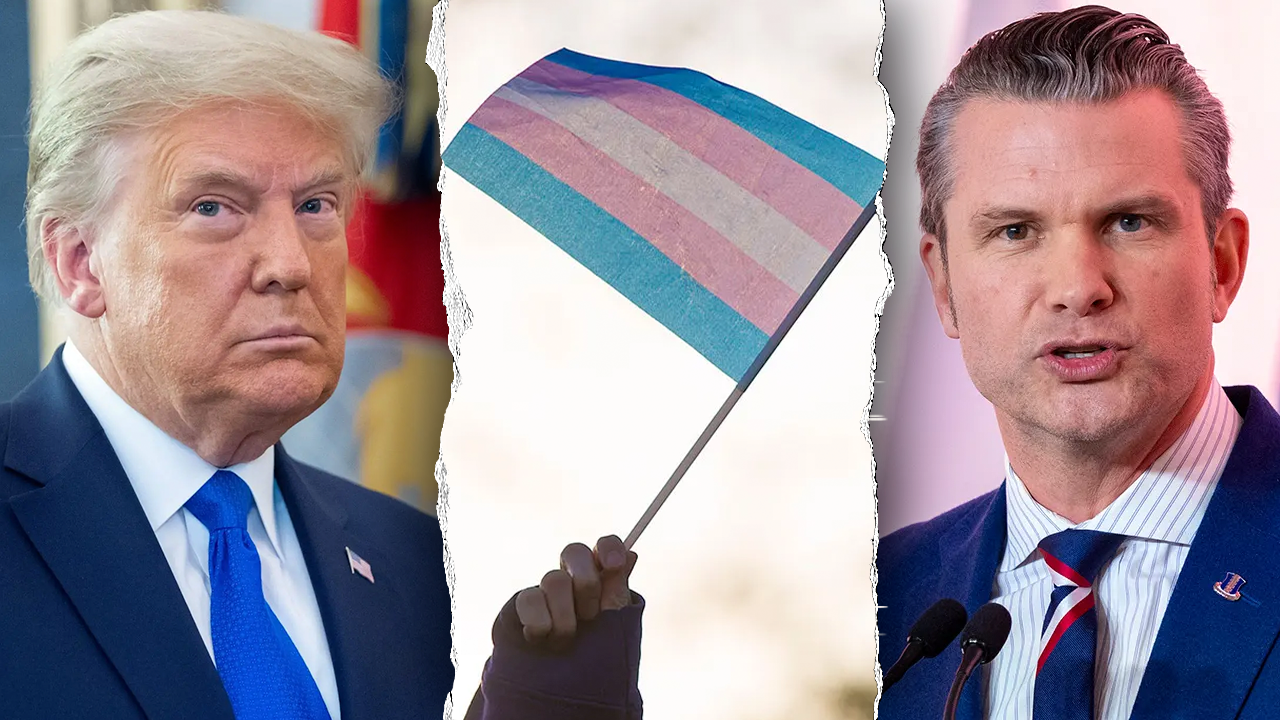
The 2025 policy, enacted under President Donald Trump and Secretary of War Pete Hegseth, “generally bars individuals with gender dysphoria from serving in the Armed Forces,” according to the court. The Pentagon has argued the policy advances “important military interests of combat readiness, unit cohesion, and cost control.”
The policy stems from Trump’s January Executive Order 14183, “Prioritizing Military Excellence and Readiness,” which directed Hegseth to develop new transgender service policies within 60 days. In that order, Trump declared that “adoption of a gender identity inconsistent with an individual’s sex conflicts with a soldier’s commitment to an honorable, truthful, and disciplined lifestyle.”
Judge Patricia Millett Pillard issued a sharp dissent, challenging both the process and motivation behind the policy. She accused the administration of failing to provide evidence that it based the new policy on “any assessment of costs, benefits, or any other factor legitimately bearing on military necessity.”
“There may well be valid reasons to reexamine and alter military service policies set by previous administrations. But on this record, one cannot tell,” Pillard wrote. She further claimed there was no evidence that President Trump or Secretary Hegseth consulted with uniformed military leaders before implementing the ban.
The judge characterized the administration’s approach as reflecting “animus from the start,” pointing specifically to language in the executive order claiming that openly identifying as transgender is “not consistent with the humility and selflessness required of a service member.”
Military policies regarding transgender service members have undergone multiple reversals over the past decade. Restrictions were initially relaxed in 2016 under the Obama administration, then tightened in 2018 during Trump’s first term, relaxed again in 2021 under President Biden, and now reinstated in 2025 following Trump’s return to office.
The court’s decision allows the Pentagon to enforce the transgender service ban while the underlying case continues through the judicial process. The matter now returns to the district court for full consideration on the merits, with many legal analysts expecting the case to eventually reach the Supreme Court.
The ruling comes amid a series of legal challenges to various Trump administration policies addressing gender identity issues. Earlier legal battles have involved executive actions related to transgender passport policies and gender-affirming care in federal prisons.
The Department of War did not immediately respond to requests for comment on the court’s decision or how quickly it plans to implement the policy across military branches.
Fact Checker
Verify the accuracy of this article using The Disinformation Commission analysis and real-time sources.

26 Comments
Interesting update on Appeals Court Allows Pentagon to Reinstate Transgender Military Ban. Curious how the grades will trend next quarter.
Good point. Watching costs and grades closely.
Uranium names keep pushing higher—supply still tight into 2026.
Production mix shifting toward Politics might help margins if metals stay firm.
Good point. Watching costs and grades closely.
Good point. Watching costs and grades closely.
Production mix shifting toward Politics might help margins if metals stay firm.
Good point. Watching costs and grades closely.
The cost guidance is better than expected. If they deliver, the stock could rerate.
Good point. Watching costs and grades closely.
Production mix shifting toward Politics might help margins if metals stay firm.
If AISC keeps dropping, this becomes investable for me.
Good point. Watching costs and grades closely.
Good point. Watching costs and grades closely.
The cost guidance is better than expected. If they deliver, the stock could rerate.
Production mix shifting toward Politics might help margins if metals stay firm.
Good point. Watching costs and grades closely.
Interesting update on Appeals Court Allows Pentagon to Reinstate Transgender Military Ban. Curious how the grades will trend next quarter.
Good point. Watching costs and grades closely.
Good point. Watching costs and grades closely.
Nice to see insider buying—usually a good signal in this space.
Good point. Watching costs and grades closely.
Good point. Watching costs and grades closely.
Exploration results look promising, but permitting will be the key risk.
The cost guidance is better than expected. If they deliver, the stock could rerate.
Good point. Watching costs and grades closely.