


Listen to the article
A piece of history from one of the first recovered slave ships will soon return to South Africa after years on display at the Smithsonian’s National Museum of African American History and Culture in Washington, D.C.
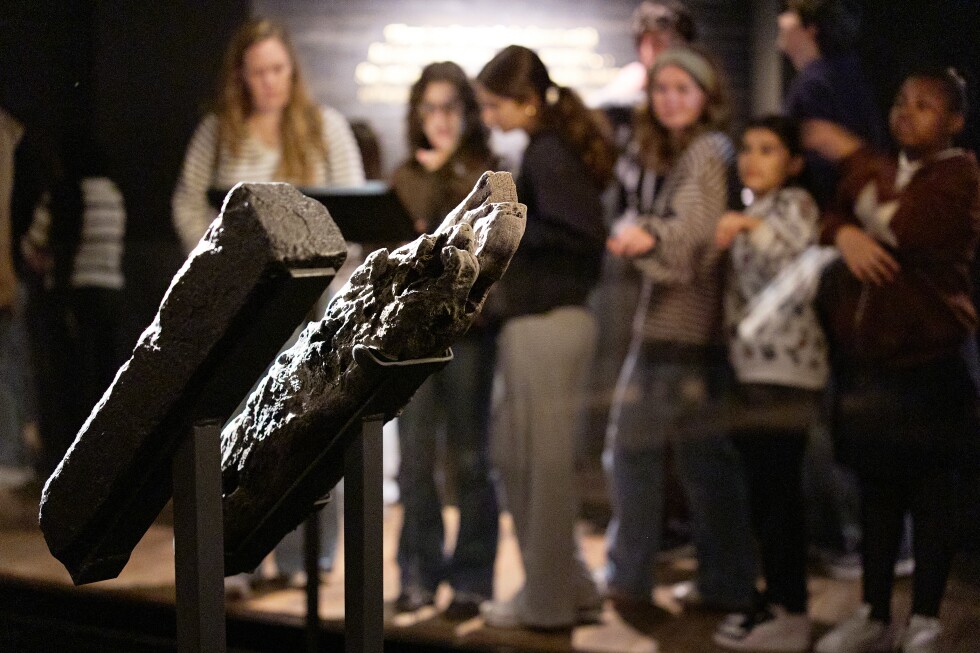
The 33-pound timber remnant from the São José-Paquete de Africa has been a centerpiece of the museum’s “Slavery and Freedom” exhibit since its opening in 2016. Museum officials announced that visitors have until March 22 to view the artifact before it is prepared for transport back to the Iziko Museums of South Africa, in accordance with the terms of a loan agreement that expires July 1.
The timber piece sits in a darkened gallery dedicated to the Middle Passage, seemingly suspended over a void with a ship’s ballast at its side. This powerful display has provided visitors with a tangible connection to the brutal reality of the trans-Atlantic slave trade.
“The artifacts are extraordinarily powerful,” said Jim Carnes, a visitor from Birmingham, Alabama, who works in civil rights education. Other museumgoers described feeling profound emotions when encountering the exhibit, with one visitor, Anehtra Reynolds from northern Virginia, saying it gave her a glimpse of “their misery.”
The São José was a Portuguese vessel that sank off the coast of Cape Town in December 1794 while transporting more than 400 enslaved people from Mozambique to Brazil. Half of those aboard perished, while survivors were resold into slavery in South Africa’s Western Cape.
The wreckage was recovered in 2015 through the Slave Wrecks Project, an international research initiative. The São José is historically significant as one of the first identified and excavated slave ships in which enslaved people died during the voyage.
Paul Gardullo, assistant director of history at the museum, explained that the Middle Passage exhibit addresses a particularly harrowing aspect of the Atlantic crossing, during which millions of captives died. The exhibit features other artifacts including shackles and details about the conditions aboard slave ships.
While the timber piece will depart, other items from the ship, including ballast stones that counterbalanced the human cargo, will remain on display for another two years before returning to South Africa. A ship’s manifest will replace the timber in the exhibit.
The timing of the exhibit change has raised questions, as it comes amid increased scrutiny of historical narratives in federal museums. President Donald Trump’s administration recently issued an executive order titled “Restoring Truth and Sanity to American History,” which includes a review of displays and programming at several Smithsonian institutions, including the National Museum of African American History and Culture.
Michelle Commander, the museum’s deputy director, emphasized that the exhibit change is solely related to the loan agreement’s expiration and the conservation needs of the fragile wooden artifact. “That’s why we’re being transparent in this moment, because we are aware that there are those kinds of questions,” Commander told the Associated Press.
Gardullo noted that South Africa has strict cultural patrimony laws dictating how artifacts can be loaned and displayed. “The wooden materials are more fragile, and they need a little more close care,” he explained.
The museum maintains that the departure of the timber piece will not diminish the impact of the exhibit. “The story does not leave the museum because this timber is going to be returned to its owners,” Commander said.
For many visitors, the exhibit has served as a powerful educational tool that brings history out of textbooks and into reality. Krystina Hernandez, chaperoning her son’s school group, noted the exhibit’s importance in making abstract historical concepts concrete for young learners.
Jorge Carvajal, a Colombian-born Florida resident, reflected that the exhibit promotes empathy by helping visitors understand the historical basis for racial tensions. “This will help people empathize a lot more. I mean, at least you would hope,” he said.
As the museum prepares for this significant change to one of its most impactful exhibits, staff are working to ensure the remaining artifacts continue to effectively tell the story of the Middle Passage and the millions of lives lost and forever altered by the trans-Atlantic slave trade.
Fact Checker
Verify the accuracy of this article using The Disinformation Commission analysis and real-time sources.

30 Comments
Interesting update on AP Exclusive: Smithsonian museum will revamp its slavery exhibit after artifact loan runs out. Curious how the grades will trend next quarter.
Good point. Watching costs and grades closely.
Good point. Watching costs and grades closely.
Interesting update on AP Exclusive: Smithsonian museum will revamp its slavery exhibit after artifact loan runs out. Curious how the grades will trend next quarter.
Good point. Watching costs and grades closely.
Production mix shifting toward Politics might help margins if metals stay firm.
Good point. Watching costs and grades closely.
Exploration results look promising, but permitting will be the key risk.
Good point. Watching costs and grades closely.
Interesting update on AP Exclusive: Smithsonian museum will revamp its slavery exhibit after artifact loan runs out. Curious how the grades will trend next quarter.
The cost guidance is better than expected. If they deliver, the stock could rerate.
Good point. Watching costs and grades closely.
Good point. Watching costs and grades closely.
The cost guidance is better than expected. If they deliver, the stock could rerate.
Good point. Watching costs and grades closely.
Good point. Watching costs and grades closely.
I like the balance sheet here—less leverage than peers.
Good point. Watching costs and grades closely.
Good point. Watching costs and grades closely.
Interesting update on AP Exclusive: Smithsonian museum will revamp its slavery exhibit after artifact loan runs out. Curious how the grades will trend next quarter.
Good point. Watching costs and grades closely.
Exploration results look promising, but permitting will be the key risk.
The cost guidance is better than expected. If they deliver, the stock could rerate.
Interesting update on AP Exclusive: Smithsonian museum will revamp its slavery exhibit after artifact loan runs out. Curious how the grades will trend next quarter.
Good point. Watching costs and grades closely.
Silver leverage is strong here; beta cuts both ways though.
Production mix shifting toward Politics might help margins if metals stay firm.
Nice to see insider buying—usually a good signal in this space.
Good point. Watching costs and grades closely.
Good point. Watching costs and grades closely.