


Listen to the article
Texas Senate Primaries Launch 2026 Midterm Season as Both Parties Face Critical Tests
Two fiercely contested U.S. Senate primaries in Texas officially kick off the 2026 midterm election cycle on Tuesday, as voters in the Lone Star State along with Arkansas and North Carolina select nominees for November’s general election.
With Republicans currently holding a 53-47 Senate majority, Democrats face a challenging path to regaining control of the chamber. However, party strategists believe the right combination of primary outcomes in Texas could help put the traditionally Republican state in play during a midterm cycle when the president’s party typically loses congressional seats.
In the Republican Senate primary, incumbent Sen. John Cornyn faces his most significant challenge yet after cruising to renomination in four previous campaigns. State Attorney General Ken Paxton, U.S. Rep. Wesley Hunt, and five other candidates have mounted serious challenges against Cornyn, forcing the veteran senator to defend his conservative credentials in the Trump era.
The historical odds favor Cornyn—only two incumbent U.S. senators from Texas have lost a primary in the last century. However, political analysts note that counties where former President Trump earned 80% or more of the vote in 2024 could prove decisive. These predominantly rural areas collectively represent about one-fifth of the vote in state GOP primaries.
On the Democratic side, U.S. Rep. Jasmine Crockett and state Rep. James Talarico lead a competitive race for the nomination, with frequent candidate Ahmad Hassan also in the running. The Democratic nominee will face steep odds in November, as no Democrat has won a U.S. Senate race in Texas since 1988, and the party has not secured any statewide office since 1994.
Republican Gov. Greg Abbott is seeking his fourth term against 10 primary challengers. The Democratic gubernatorial field includes former U.S. Rep. Chris Bell, state Rep. Gina Hinojosa, and six other active candidates.
Further down the ballot, U.S. House candidates are competing in newly redrawn congressional districts that state Republicans reconfigured at President Donald Trump’s urging to help maintain GOP control of the chamber. The redistricting has created immediate consequences, forcing some Democratic incumbents to face each other.
In the redrawn 18th Congressional District, Democratic U.S. Reps. Christian Menefee and Al Green will compete against each other and two additional candidates. Similarly, in the new 33rd Congressional District, Democratic Rep. Julie Johnson faces former Rep. Colin Allred and two others in the primary.
Republican incumbents also face challenges, with Reps. Dan Crenshaw and Tony Gonzales confronting strong primary opponents in the 2nd and 23rd congressional districts, respectively. Gonzales has faced particular scrutiny after allegations of an affair with a former staffer who died by suicide, leading some fellow Republicans to call for his resignation.
Texas primary winners must secure a majority of votes to avoid a May 26 runoff, adding another layer of complexity to these contests.
Harris County, home to Houston, plays a crucial role in both parties’ primaries as the state’s most populous county. Dallas and Travis counties contribute significantly to Democratic primary totals, while Tarrant County (Fort Worth) tends to exert more influence in Republican contests.
For Democrats, key regions to watch include counties with large Hispanic populations along the border, especially El Paso and Hidalgo, and those with significant African American communities, including areas in East Texas that form part of the region known as the Black Belt.
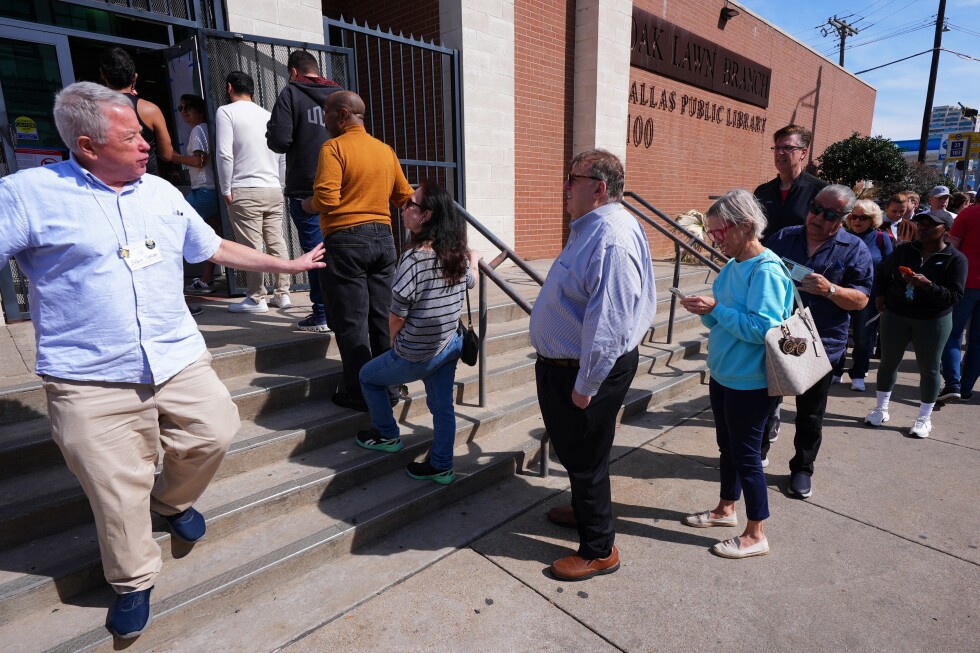
Polls close at 7 p.m. local time across Texas, with the westernmost parts of the state in a different time zone closing at 9 p.m. ET. Early voting has been robust, with nearly 1.18 million Democratic primary ballots and over 1 million Republican primary ballots cast before election day.
With 84 days until potential primary runoffs and 245 days until the 2026 midterm elections, Tuesday’s results will provide the first concrete indications of each party’s electoral strength heading into a crucial election cycle that could determine control of Congress.
Fact Checker
Verify the accuracy of this article using The Disinformation Commission analysis and real-time sources.

17 Comments
Nice to see insider buying—usually a good signal in this space.
Good point. Watching costs and grades closely.
Good point. Watching costs and grades closely.
I like the balance sheet here—less leverage than peers.
Good point. Watching costs and grades closely.
Interesting update on AP Decision Notes: What to expect in the Texas state primaries. Curious how the grades will trend next quarter.
Interesting update on AP Decision Notes: What to expect in the Texas state primaries. Curious how the grades will trend next quarter.
The cost guidance is better than expected. If they deliver, the stock could rerate.
Good point. Watching costs and grades closely.
Nice to see insider buying—usually a good signal in this space.
Silver leverage is strong here; beta cuts both ways though.
Good point. Watching costs and grades closely.
Good point. Watching costs and grades closely.
I like the balance sheet here—less leverage than peers.
Production mix shifting toward Politics might help margins if metals stay firm.
I like the balance sheet here—less leverage than peers.
Silver leverage is strong here; beta cuts both ways though.