


Listen to the article
Trump Hosts Emotional Ceremony for Angel Families, Proclaims National Day of Remembrance
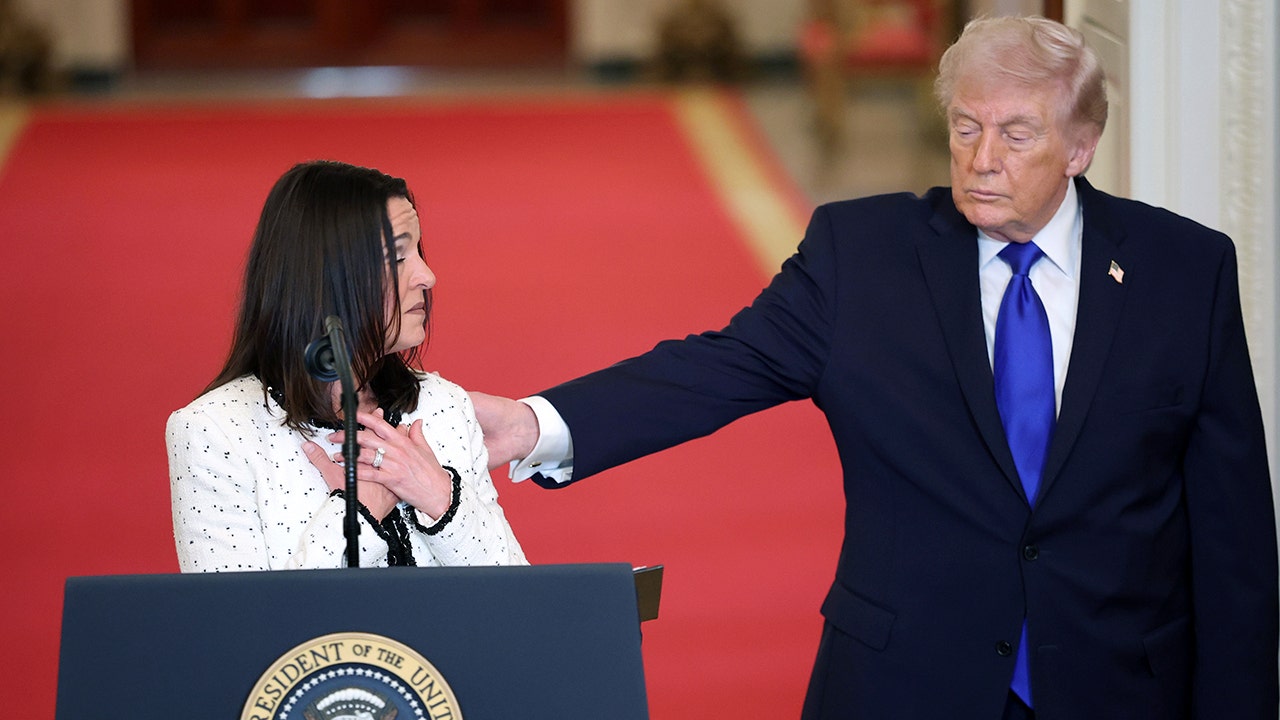
Family members of Americans killed by illegal immigrants gathered at the White House on Monday to share their stories during an emotional ceremony hosted by President Donald Trump. The event culminated with the President signing a proclamation designating February 22, 2026, as National Angel Family Day.
Among those in attendance was Allyson Phillips, mother of Laken Riley, a 22-year-old nursing student who was killed on February 22, 2024, allegedly by a Venezuelan man who had entered the country illegally. During her remarks, Phillips expressed profound gratitude to the president.
“I just can’t thank you enough,” Phillips told Trump, calling his efforts “a thankless job that most people just wouldn’t do.”
The ceremony highlighted the administration’s focus on illegal immigration, a cornerstone issue for Trump since his first presidential campaign. The event provided a platform for grieving families to voice their experiences and frustrations.
Jody Jones, whose brother Rocky was shot “eight times at point-blank range,” delivered an impassioned message about American families affected by crimes committed by undocumented immigrants.
“I’m sick and tired of Democrats talking about criminal, illegal aliens getting torn away from their families,” Jones said. “What about us? What about the American family? What about us? We mean somethin’ too. And this man right here understands it.”
The ceremony comes amid intensified efforts by the administration to address illegal immigration. Immigration and Customs Enforcement (ICE) has recently increased operations targeting undocumented immigrants with criminal records, including those convicted of serious offenses such as child rape, sexual assault, and drug trafficking.
The proclamation signed by the President calls on Americans to “assemble in their respective places of worship to pay homage to the victims killed by illegal aliens and to those taken by the fentanyl epidemic, and lift up the Angel Families and families devastated by drug overdoses.”
It further urges “public officials, community leaders, and all citizens to end the violence and lawlessness that have claimed so many innocent lives.”
The term “Angel Families” has been used by the administration to refer to those who have lost loved ones to crimes committed by people in the country illegally. By establishing a national day of recognition, the White House appears to be further cementing immigration enforcement as a policy priority.
February 22 holds particular significance as the date chosen for this commemoration, as it marks the two-year anniversary of Laken Riley’s death, which gained national attention and became a rallying point for those advocating stricter immigration policies.
The ceremony reflects the administration’s continued emphasis on highlighting crimes committed by undocumented immigrants, a strategy that has drawn criticism from immigration advocates who argue it unfairly stigmatizes immigrant communities while exploiting grieving families for political purposes.
Supporters of the administration’s approach, however, maintain that these stories illustrate real consequences of illegal immigration and border security failures that might otherwise go unnoticed in policy debates.
The designation of a national day of remembrance represents one of the administration’s more formal acknowledgments of families affected by such tragedies, elevating their stories within the broader national conversation on immigration policy.
Fact Checker
Verify the accuracy of this article using The Disinformation Commission analysis and real-time sources.

10 Comments
Illegal immigration is a complex challenge that deserves thoughtful, evidence-based policymaking. While I understand the motivation behind this event, I hope the administration will also explore ways to enhance border security and interior enforcement in a manner that upholds human rights and civil liberties.
This is a difficult and emotionally-charged issue. While I respect the administration’s intention to support these grieving families, I hope they will also consider more holistic solutions that address the root causes and vulnerabilities that lead to illegal immigration in the first place.
The personal stories shared at this ceremony underscore the real human toll of illegal immigration. While this is a sensitive issue, I believe we need a balanced, compassionate approach that respects the rule of law while also addressing the root causes driving illegal immigration.
I agree, this is a complex challenge without easy solutions. Constructive dialogue and evidence-based policies are needed to find the right balance.
While this is a sensitive and emotional issue, I appreciate the president’s effort to give a voice to these grieving families and bring attention to the real human costs of illegal immigration. We need to find solutions that respect the rule of law while also addressing the underlying challenges.
As someone concerned about public safety, I appreciate the administration’s efforts to enforce immigration laws and support the families impacted by these tragic crimes. However, I also believe we need a more comprehensive, humane approach to address the underlying issues driving illegal immigration.
Enforcing immigration laws is a complex and politically-charged topic. I hope both sides can approach this constructively and focus on finding humane, effective solutions that enhance public safety without infringing on civil liberties.
Well said. This is an issue that deserves nuanced, evidence-based policymaking, not partisan grandstanding.
This is a sensitive and polarizing issue. I appreciate the administration’s effort to give a voice to these grieving families, but I also hope they will consider more holistic strategies that enhance public safety while upholding the values of a just and humane immigration system.
The personal stories shared at this ceremony highlight the real human consequences of illegal immigration. However, I believe long-term solutions will require a balanced approach that combines strong border security with compassionate policies that address the underlying drivers of illegal immigration.