


Listen to the article
AIPAC Steps Up Campaign Spending in Illinois Primary, Stirring Controversy
A high-stakes primary season in Illinois has become the latest battleground for the American Israel Public Affairs Committee (AIPAC), as the powerful advocacy organization intensifies its political spending amid growing tensions over U.S.-Israel relations and campaign finance transparency.
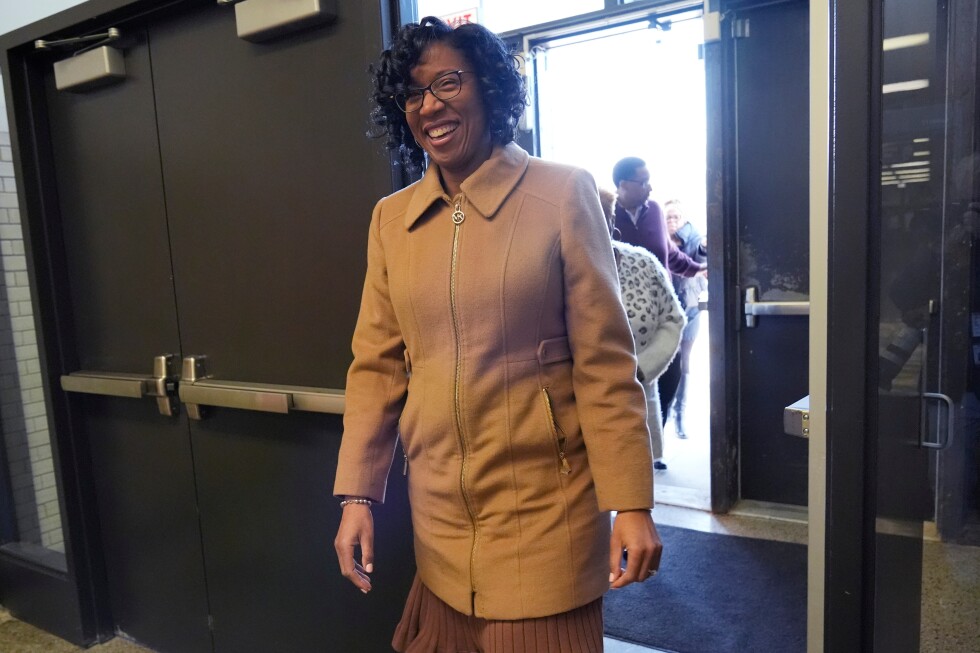
AIPAC has reserved at least $1.9 million in advertisements through its super PAC to support Melissa Conyears-Ervin, Chicago’s city treasurer, in the crowded March 17 primary to replace retiring Rep. Danny Davis. The organization’s aggressive spending in Illinois follows its controversial $2 million investment in a recent New Jersey special election primary, where AIPAC’s preferred candidate ultimately lost to progressive Analilia Mejia, who has been critical of Israel’s actions in Gaza.
Despite facing backlash from across the political spectrum after the New Jersey defeat, AIPAC remains undeterred. “We expect to be involved in dozens of races both in primaries and general elections this cycle,” said Patrick Dorton, spokesman for AIPAC’s affiliated super PAC, the United Democracy Project (UDP).
The organization’s increased political involvement comes at a critical moment as traditional bipartisan support for U.S. military assistance to Israel faces growing challenges from progressive Democrats concerned about the war in Gaza. AIPAC’s interventions in Democratic primaries aim to shore up pro-Israel candidates but risk further dividing the party.
In Illinois, campaign finance laws concerning super PACs have created a lack of transparency about funding sources. While UDP openly acknowledges its AIPAC affiliation, newly formed groups like Elect Chicago Women and Affordable Chicago Now aren’t required to disclose their financial backers until after the primary. Critics suspect these organizations may be AIPAC conduits, though the advocacy group has declined to confirm or deny any connection.
According to AdImpact, a nonpartisan ad-tracking service, UDP, Elect Chicago Women, and Affordable Chicago Now are three of the top four spenders on House race advertisements so far, collectively pouring almost $11 million into campaigns, with the majority flowing into Illinois races.
Notably, none of these organizations mention Israel in their campaign messaging. Instead, they focus on broader political issues—a tactic AIPAC-affiliated groups have employed previously. For example, UDP’s advertisements promote Conyears-Ervin by highlighting her commitment to lowering costs and protecting healthcare, rather than mentioning Middle East policy.
This strategy has fueled speculation and concern about AIPAC’s political influence. Supporters of Israel argue that critics are invoking antisemitic tropes about dual loyalty, while others maintain that the issue centers on campaign finance transparency rather than AIPAC specifically.
“I think the folks who are talking the most about AIPAC are seeking to demonize Israel and create a break in the U.S.-Israel relationship,” said Rep. Brad Schneider, a Democrat representing Illinois’ 10th district. “The problem is Citizens United and the decision to allow dark money. The problem is the rules. Let’s fix the rules.”
The controversy has spilled into campaign rhetoric, with candidates attacking each other over perceived connections to AIPAC. Four progressive candidates competing for different Illinois congressional seats jointly denounced the organization’s involvement in the state’s primaries during a February press conference.
Former New Jersey Congressman Tom Malinowski, who recently lost his race after being targeted by AIPAC spending, remains bitter about the experience. Though he describes himself as pro-Israel, he opposed unconditional assistance for the country—a position that drew AIPAC’s opposition. Malinowski has stated he won’t support any AIPAC-backed candidates this year.
While AIPAC has long been politically active, the organization significantly expanded its direct campaign spending during the 2022 midterms. Since then, it has spent more than $221 million through its traditional PAC and super PAC, according to Federal Election Commission filings.
The super PAC has primarily focused on Democratic primaries, spending at least $1 million supporting or opposing 18 candidates in the 2022 and 2024 cycles, with 16 of those being Democrats. In 2024, UDP’s largest investments targeted progressive incumbents, spending more than $13 million to help Rep. George Latimer defeat former Rep. Jamaal Bowman in New York’s 16th District, and $8.5 million opposing former Rep. Cori Bush, who lost her primary to Rep. Wesley Bell.
As the Illinois primary approaches, the expanding influence of AIPAC and questions about campaign finance transparency continue to reshape the political landscape, with implications that extend far beyond the Prairie State.
Fact Checker
Verify the accuracy of this article using The Disinformation Commission analysis and real-time sources.

18 Comments
AIPAC’s spending in this Illinois primary is a testament to the high stakes involved. The outcome could have significant implications for the future direction of U.S. policy towards Israel.
Campaign finance reform remains a crucial issue, as the influence of special interest groups like AIPAC raises concerns about the fairness of the electoral process.
This primary in Illinois represents a high-stakes test for AIPAC’s political clout. The outcome could shape the future of the U.S.-Israel relationship within the Democratic party.
While AIPAC’s involvement is notable, it’s important that voters consider the full range of a candidate’s policies and priorities, not just their stance on Israel.
The Illinois primary provides a unique opportunity to gauge the influence of AIPAC and the strength of the pro-Israel lobby within the Democratic party. The results could be telling.
Transparency in campaign finance is crucial for voters to make informed decisions. AIPAC’s spending should be closely scrutinized in this and other races.
The battle over AIPAC’s influence reflects the broader partisan divide on foreign policy issues like the U.S.-Israel relationship. It will be intriguing to see how this plays out in the primaries.
While AIPAC’s involvement may sway some voters, it’s important that candidates are evaluated on the full breadth of their platforms and views, not just their positions on Israel.
AIPAC’s heavy involvement in this primary underscores the organization’s determination to shape the political landscape on Israel-related issues. The outcome could set the tone for future debates.
While AIPAC’s spending may sway some voters, it’s important that candidates are evaluated holistically and not solely on their positions regarding Israel.
This race in Illinois highlights the complex dynamics around U.S. support for Israel. It will be worth watching how the candidates address this issue and whether voters prioritize it.
Campaign finance transparency is crucial for voters to make informed decisions. AIPAC’s spending in these races should be closely scrutinized.
This race highlights the ongoing debate within the Democratic party about the U.S. relationship with Israel. It will be interesting to see how this issue resonates with voters in Illinois.
Interesting to see AIPAC flexing its political muscle in this Illinois primary. Given the growing debate over U.S.-Israel relations, it will be telling to see how voters respond to their involvement.
AIPAC’s aggressive spending in elections raises important questions about the role of money in politics and the influence of special interest groups.
AIPAC’s significant investment in this Illinois primary underscores the organization’s determination to influence the political landscape on U.S.-Israel relations. The outcome will be closely watched.
The battle over AIPAC’s role in this Illinois primary highlights the broader ideological divisions within the Democratic party on foreign policy issues. It will be fascinating to see how this plays out.
Campaign finance transparency is crucial for ensuring a level playing field in elections. AIPAC’s spending should be closely scrutinized by voters and the media.