


Listen to the article
Federal Immigration Agents in Minneapolis Face Scrutiny Over Aggressive Tactics
Federal immigration agents deployed to Minneapolis have sparked controversy with their aggressive crowd-control tactics following the fatal shooting of a woman last week. The confrontation has become a focal point of tension in a city already on edge.
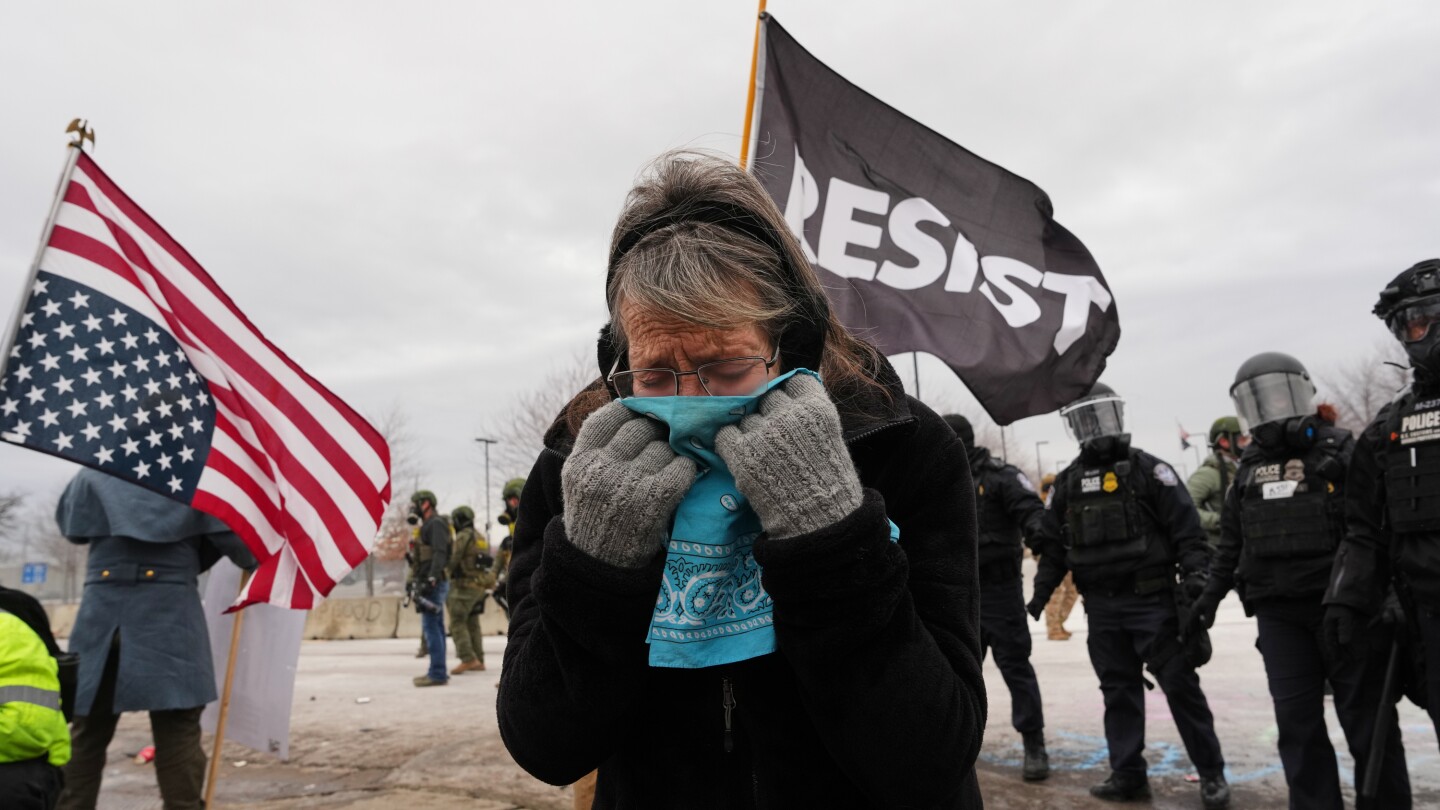
Agents have been observed pointing rifles at demonstrators, using chemical irritants early in confrontations, breaking vehicle windows, forcibly removing people from cars, and engaging in physical altercations with protesters. These incidents, widely shared on social media, have further inflamed tensions between authorities and demonstrators.
Federal officials defend these actions as necessary measures to protect officers from violent attacks. However, the escalating response has raised serious concerns among civil rights advocates and law enforcement experts about appropriate tactics for managing public demonstrations.
The situation in Minneapolis highlights a significant shift in federal intervention during protests, with immigration agents and investigators assuming roles traditionally handled by local police. These federal officers, primarily trained for arrests, deportations, and criminal investigations, often lack the specialized training in crowd management and de-escalation techniques that local police receive.
“There’s so much about what’s happening now that is not a traditional approach to immigration apprehensions,” said Sarah Saldaña, former Immigration and Customs Enforcement Director who left her position in early 2017 as the Trump administration began.
The current deployment stems from a major immigration enforcement operation ordered by the Trump administration in December, which sent more than 2,000 officers from various Department of Homeland Security agencies to the Minneapolis-St. Paul area. These operations have taken on new significance following the death of Renee Good, a 37-year-old woman shot by an immigration agent last week. Federal officials claim the shooting was in self-defense after Good allegedly used her vehicle as a weapon.
In response to escalating tensions, the American Civil Liberties Union of Minnesota filed a lawsuit Monday seeking an emergency injunction to restrict how federal agents operate during protests. The lawsuit requests limitations on chemical agents, pointing firearms at non-threatening individuals, and interference with lawful video recording.
Law enforcement experts warn that the current approach contradicts established de-escalation principles and could transform volatile demonstrations into deadly confrontations.
“It’s highly unlikely that your typical ICE agent has a great deal of experience with public order tactics or control,” explained Ian Adams, an assistant professor of criminal justice at the University of South Carolina.
DHS Secretary Tricia McLaughlin defended the agents’ preparation, stating that ICE officer candidates receive extensive training over eight weeks, including conflict management and de-escalation. She noted many are military veterans with prior law enforcement experience.
However, Ed Maguire, a criminology professor at Arizona State University who specializes in crowd management training, expressed alarm at what he’s observed. “We’re seeing routinely substandard law enforcement practices that would just never be accepted at the local level,” he said. “Then there seems to be just an absence of standard accountability practices.”
Modern policing has evolved significantly from the heavy-handed approaches of previous decades. Adams noted that contemporary police departments typically attempt to establish communication with protest organizers, set clear boundaries, and show reasonable deference to avoid escalation.
Despite this evolution, there is no nationwide standard for handling civil unrest. Different departments maintain varying policies regarding the use of pepper spray, tear gas, and other control measures, particularly in residential areas.
Humberto Cardounel, senior director of training at the National Policing Institute, emphasized the importance of regular policy review and simulation training rather than relying on basic training knowledge from years past.
A fundamental issue, according to Adams, is the relationship between officers and the communities they serve. “Police agencies have a relationship with their community that extends before and after any incidents,” he explained. “Officers know we will be here no matter what happens, and the community knows regardless of what happens today, these officers will be here tomorrow.”
As tensions continue to mount in Minneapolis, Saldaña expressed concern about increasing aggression on both sides. “You cannot put yourself in front of an armed officer, you cannot put your hands on them certainly. That is impeding law enforcement actions,” she said, while also acknowledging the increasingly aggressive behavior from law enforcement officials.
Fact Checker
Verify the accuracy of this article using The Disinformation Commission analysis and real-time sources.

6 Comments
I’m curious to know more about the specific training these federal officers receive and how it compares to standard law enforcement protocols for crowd control. Were they adequately prepared to handle a volatile protest situation, or did their aggressive tactics stem from a lack of proper training?
That’s a really good question. The training and rules of engagement for federal agents deployed to local protests need to be scrutinized. If they are not properly prepared to de-escalate tensions and protect constitutional rights, then their presence is likely to do more harm than good in these volatile situations.
The shift towards more federal intervention in local protests is worrying. Immigration agents and investigators should not be playing the role of local police, especially when using such heavy-handed tactics. This could set a dangerous precedent and further erode trust in authorities.
You make a good point. Local police are trained to balance public safety with protecting the constitutional rights of protesters. Federal agents may not have the same level of de-escalation training or understanding of the community. This mismatch in approach is a recipe for escalating tensions rather than resolving them.
This situation in Minneapolis sounds very concerning. Federal agents using such aggressive tactics against protesters raises serious questions about their training and rules of engagement. Appropriate crowd control measures are important, but the reported actions seem disproportionate and likely to further inflame tensions.
I agree, the reports of federal agents breaking car windows, using chemical irritants, and forcibly removing people are deeply troubling. These tactics seem more suited for a war zone than managing a public demonstration. There needs to be a thorough review of the training and protocols for these federal officers.