


Listen to the article
Iran’s Supreme Leader Battles Internal Protests and External Threats
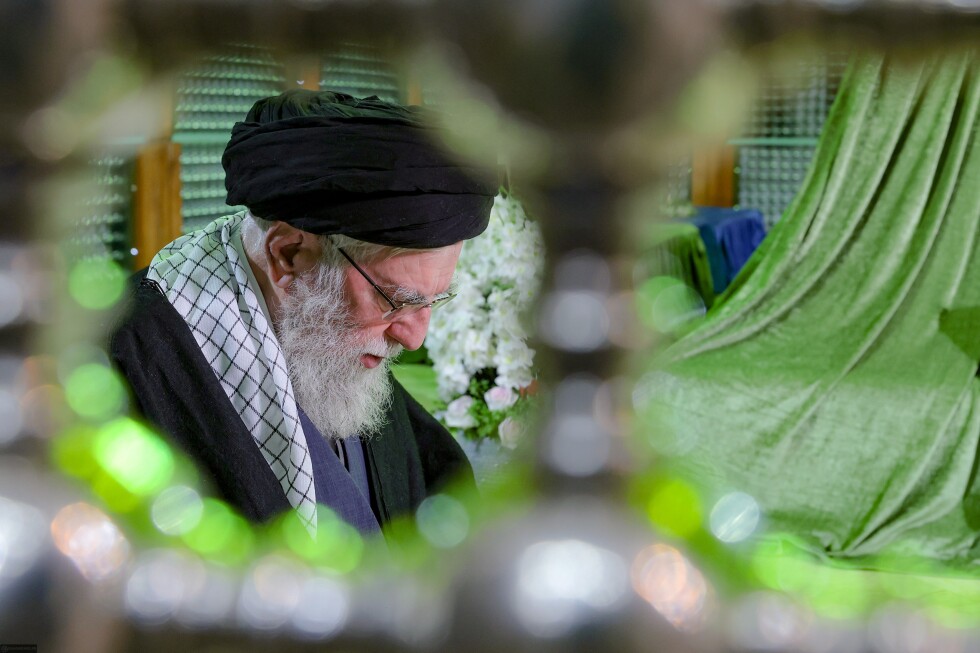
Iran’s Supreme Leader Ayatollah Ali Khamenei has emerged from the country’s recent protests with his grip on power intact, but only after unleashing what observers describe as the bloodiest crackdown of his nearly four-decade rule. The 86-year-old leader now faces the additional challenge of averting potential U.S. military action while navigating a precarious diplomatic situation.
With an American naval flotilla positioned nearby, Khamenei has issued stark warnings that any strike by U.S. President Donald Trump would trigger a regional war. Simultaneously, he has reversed his previous stance by allowing Iranian officials to engage in nuclear negotiations with the United States—a significant policy shift that reflects the gravity of Iran’s current predicament.
The ferocity of the regime’s response to January’s protests underscores how threatening the leadership views the widespread popular discontent. Years of international sanctions, economic mismanagement, and endemic corruption have devastated Iran’s once-robust middle class. The protests, which began in Tehran’s traditional bazaar following the Iranian rial’s plunge to a record low of 1.42 million to the U.S. dollar, quickly spread nationwide with protesters boldly chanting “Death to Khamenei!”
When hundreds of thousands of Iranians took to the streets on January 8 and 9, security forces responded with unprecedented force. Activists claim more than 6,700 people have been killed so far, with potentially thousands more casualties yet to be verified. Even by the government’s own admission, 3,117 people died—a figure substantially higher than in previous crackdowns.
Iran’s domestic challenges are compounded by significant external pressures. Last summer’s 12-day war saw Israeli and U.S. forces inflict heavy damage on Iran’s nuclear facilities, missile systems, and military infrastructure. Additionally, Tehran’s network of regional proxies—including Hamas in Gaza and Hezbollah in Lebanon—has weakened considerably in recent years, diminishing Iran’s regional influence.
Despite these setbacks, the domestic crackdown demonstrated the iron grip that Khamenei and his Revolutionary Guard maintain over the country. Thousands were killed, tens of thousands arrested, and internet access was severely restricted, isolating Iranians from the outside world for weeks.
Khamenei’s journey to absolute power is remarkable considering the skepticism that greeted his rise to leadership in 1989. As a low-ranking cleric lacking the religious credentials and charisma of his predecessor, Ayatollah Ruhollah Khomeini, many doubted his authority. Yet he has now ruled more than three times longer than Khomeini and has arguably shaped the Islamic Republic even more profoundly.
During his tenure, Khamenei has cemented clerical rule while simultaneously building the paramilitary Revolutionary Guard into the dominant force in Iran’s military and internal affairs. The Guard now oversees Iran’s elite military units and ballistic missile program while controlling vast economic interests across the country—becoming Khamenei’s loyal enforcement mechanism.
Over the decades, Khamenei has successfully neutralized various challenges to his authority. He thwarted the reform movement of the late 1990s by rallying the clerical establishment to block major reforms and bar reform candidates from elections. Subsequent waves of protests—in 2009 over alleged election fraud, in 2017 and 2019 over economic grievances, and in 2022 following the death of Mahsa Amini in morality police custody—were all violently suppressed.
Unlike previous crises where authorities attempted to defuse tensions by relaxing some social restrictions or acknowledging economic problems, Khamenei has hardened his rhetoric, describing the recent protests as “a coup.” His decision to allow nuclear negotiations may be aimed at buying time or testing whether Trump’s threats are genuine.
The potential negotiations face significant challenges, with Iran opposing key American demands to halt nuclear enrichment and surrender uranium stocks. Several Middle Eastern nations—including Turkey, Egypt, Oman, Pakistan, Qatar, Saudi Arabia, and the UAE—are working to arrange talks that could begin soon.
As Khamenei ages, questions about succession loom large. While officially a panel of Shiite clerics will select his replacement, the Revolutionary Guard’s growing power suggests they may play a decisive role in determining Iran’s future leadership. Some observers warn that any attempt to forcibly remove Khamenei could prompt military commanders to seize power outright, potentially triggering a bloody conflict for control of this oil-rich nation of 85 million people.
Fact Checker
Verify the accuracy of this article using The Disinformation Commission analysis and real-time sources.

17 Comments
Iran’s leaders are caught between a rock and a hard place. Suppressing protests while avoiding war with the US will be extremely challenging. Compromise and restraint may be their best path forward.
The situation in Iran is highly volatile, with the regime battling internal dissent and external threats. Avoiding a wider regional conflict will depend on Iran’s willingness to make concessions and the US showing restraint.
Iran’s economic troubles have fueled public anger, making the regime’s position increasingly unstable. Resolving the nuclear issue through diplomacy could help alleviate the country’s economic woes.
This is a delicate balancing act for Iran’s Supreme Leader. Suppressing protests while also avoiding war with the US will require nuanced policymaking and compromise from all sides.
This is a complex geopolitical challenge for Iran’s Supreme Leader. Balancing internal dissent with external threats from the US will require nuanced policymaking and compromise from all parties involved.
The ferocity of Iran’s crackdown on protesters is concerning, but the leadership’s priority seems to be preserving their power in the face of domestic and external threats. Resolving this situation peacefully will require concessions from all sides.
Iran’s economic woes have fueled public unrest, and the regime’s heavy-handed response has only amplified the crisis. Meaningful reforms and engagement with the US may be their best way out.
Iran’s Supreme Leader is in a precarious position, having to contend with both domestic protests and the looming specter of US military intervention. Carefully balancing these competing priorities will require deft political maneuvering.
Iran’s Supreme Leader is walking a tightrope, trying to maintain control at home while avoiding conflict with the US. Careful diplomacy and concessions on both sides may be the only way to de-escalate the situation.
Iran’s leadership is in a difficult spot, having to contend with both domestic unrest and the threat of US military action. Careful diplomacy and concessions on both sides may be the only way to de-escalate the situation and prevent a wider regional conflict.
The economic toll of sanctions has been a major driver of Iran’s internal turmoil. Resolving the nuclear issue through negotiation could help ease tensions and improve conditions for the Iranian people.
This is a complex and delicate geopolitical situation. Iran’s regime must address domestic grievances while also navigating the threat of US military action. Compromise and restraint will be essential to avoid an all-out regional conflict.
The economic toll of sanctions has been a major driver of Iran’s internal unrest. Resolving the nuclear issue through negotiation could help ease tensions and improve the lives of ordinary Iranians.
This is a delicate situation for Iran’s leadership. They must balance domestic unrest with external threats from the US. Careful diplomacy and de-escalation will be crucial to avoid a wider conflict.
Iran’s economic troubles have fueled public anger, making their position very precarious. They’ll need to address root causes to quell the protests long-term.
The Supreme Leader is in a tough spot, having to deal with both internal dissent and the looming threat of US military action. Navigating these complex dynamics will require deft policymaking.
Sanctions have taken a major toll on Iran’s economy, contributing to the public’s grievances. Resolving the nuclear issue through diplomacy could help ease tensions.