


Listen to the article
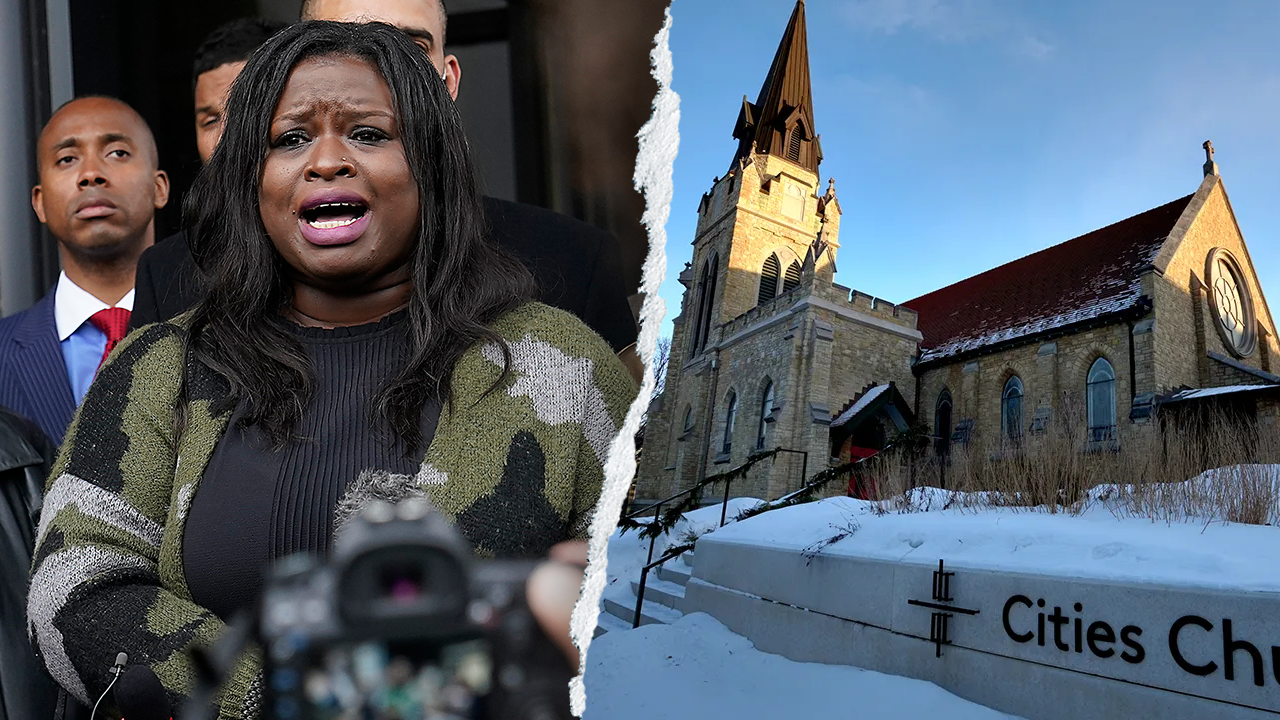
Civil rights activist Nekima Levy Armstrong, who recently organized a controversial protest at a Minnesota church against ICE operations, received over $1 million in compensation while leading a Minneapolis anti-poverty nonprofit over a six-year period, financial records show.
Armstrong, a self-described civil rights lawyer and “scholar-activist,” helped coordinate the disruption of a service at Cities Church in St. Paul last Sunday. Protesters targeted the church based on Armstrong’s claim that one of its pastors works as a leader at U.S. Immigration and Customs Enforcement (ICE).
The demonstration is part of a wave of protests throughout the Twin Cities region against the federal government’s recent deployment of additional immigration enforcement officials to Minnesota. Federal authorities have increased their presence to address what they describe as widespread fraud occurring in the state.
Financial records indicate that Armstrong served as executive director of the Wayfinder Foundation from 2019 through 2024. During this period, tax filings show she earned $936,395 in salary, plus an additional $201,313 in health benefits and other compensation, bringing her total compensation to approximately $1.14 million over six years.
The foundation’s financial priorities have raised questions among observers. In 2024, while Armstrong received $215,726 in salary and $40,548 in additional benefits, the organization awarded just $158,811 in grants. Similar patterns appear in previous years’ filings, with Armstrong’s compensation consistently exceeding the foundation’s grant disbursements.
Over the six-year period of her leadership, the Wayfinder Foundation reported $5.24 million in revenue but distributed only about $700,052 in grants—approximately 13.3% of its revenue.
The nonprofit, which is no longer operational based on its defunct website, described itself as an organization that invested in “Black women and Latina activists, organizers, and change agents who are using their social, political, and financial capital to challenge the status quo and to disrupt business-as-usual within systems that perpetuate oppression.”
Major donors to the Wayfinder Foundation have included the Black Lives Matter Global Network Foundation, which contributed $20,000 “to conduct activities to educate and support Black communities,” according to a 2023 tax filing. The Walton Family Foundation, which manages charitable giving for Walmart’s founding family, was a significantly larger contributor, donating $2.34 million between 2018 and 2024.
Armstrong has since transitioned to a new role as founder and CEO of Dope Roots, a cannabis company. However, her activism has continued to generate controversy beyond the recent church disruption. She has been a key organizer of boycotts against Target over the retailer’s decision to scale back its diversity, equity and inclusion initiatives.
Her social media activity has also drawn scrutiny. Last September, Armstrong posted praise for Joanne Chesimard, also known as Assata Shakur, who was convicted of murdering State Trooper Werner Foerster in 1977. Armstrong described Shakur as “a brave, wise, powerful, and revolutionary Black woman.”
The disruption at Cities Church has intensified the ongoing debate about immigration enforcement in Minnesota. Protesters oppose what they characterize as heavy-handed tactics by ICE agents, while federal officials maintain that their increased presence is necessary to combat fraud and enforce immigration laws.
When contacted for comment on the financial records and recent activism, Armstrong did not immediately respond. Representatives from the Wayfinder Foundation, Black Lives Matter Global Network Foundation, the Walton Family Foundation, and Walmart also did not provide responses to inquiries.
Fact Checker
Verify the accuracy of this article using The Disinformation Commission analysis and real-time sources.

14 Comments
Interesting to see this activist received such substantial compensation from an anti-poverty nonprofit. Questions around accountability and transparency would be warranted in a situation like this.
Agreed, the large compensation raises eyebrows. Nonprofits should prioritize directing funds to their mission, not lavish executive pay.
This story highlights the need for greater accountability and oversight of nonprofit organizations, especially when it comes to executive compensation. Transparency is key to maintaining public trust.
Agreed, the large payout to the activist raises serious concerns about how this nonprofit is managing its resources. Nonprofits must prioritize their mission over executive pay.
This highlights the complex dynamics between social activism, nonprofit management, and use of funds. While the activist’s work may be important, the financials deserve close scrutiny.
Absolutely, the optics of a well-paid activist organizing protests against a church are quite concerning. Transparency is key for nonprofits.
This story underscores the need for robust oversight and transparency in the nonprofit sector. Excessive executive compensation at an anti-poverty organization is highly questionable and merits further scrutiny.
Agreed, the large payout to the activist running this nonprofit is very troubling. Nonprofits must prioritize allocating resources to fulfill their stated mission, not compensate leaders lavishly.
The substantial compensation paid to this activist leading an anti-poverty nonprofit is quite concerning. Nonprofits must be vigilant about aligning executive pay with their stated mission and values.
Absolutely, the large payout seems at odds with the organization’s purpose. Nonprofit leaders should be held to high standards of financial stewardship and transparency.
While the activist’s work may have social value, the substantial personal compensation raises red flags about the nonprofit’s financial practices and priorities. Transparency is crucial for public trust.
Exactly, the large payout to the activist head seems inappropriate for an anti-poverty organization. Nonprofit leaders must be held accountable for responsible use of funds.
The large compensation paid to this activist raises valid questions about the priorities and spending of the anti-poverty nonprofit they led. Nonprofit governance merits careful oversight.
Agreed, this situation seems questionable. Nonprofits should direct the majority of their resources to serving their stated mission, not compensating executives.