


Listen to the article
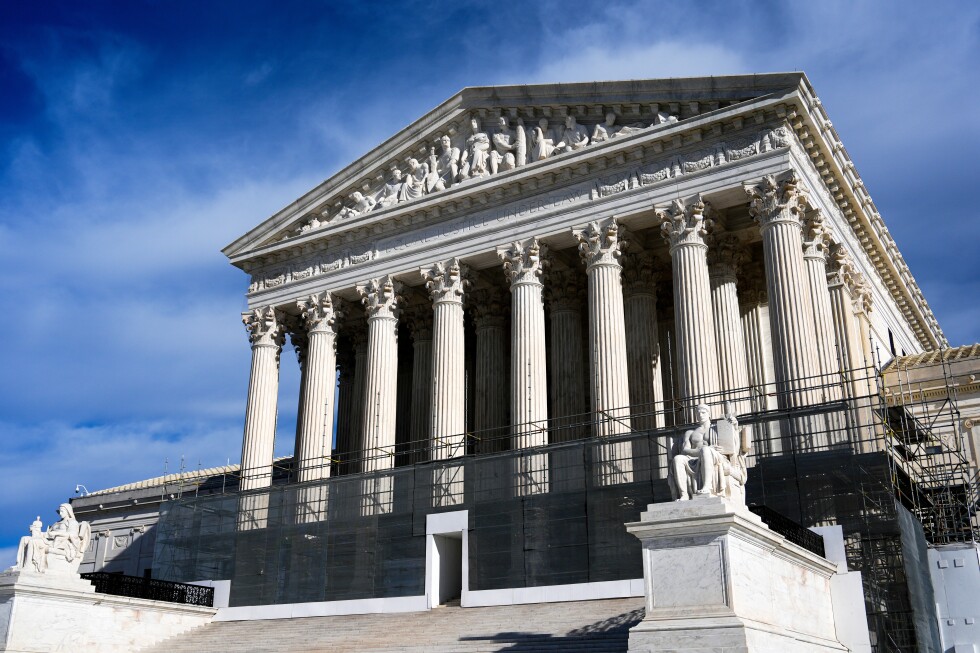
In an unusual legal alignment that bridges traditional political divides, the Supreme Court will hear arguments Monday in a case challenging federal restrictions on gun ownership for cannabis users. The case brings together unlikely allies and opponents, creating a rare political crossover in Washington.
At the center of the dispute is a federal law prohibiting regular marijuana users from legally owning firearms. The Biden administration is defending this restriction with support from gun control advocacy groups, while the National Rifle Association has joined forces with the American Civil Liberties Union to challenge the law.
The case involves Ali Danial Hemani, a Texas man charged with a felony for possessing a firearm while admitting to smoking marijuana every other day. FBI agents discovered a gun in his house during a search that also uncovered a small amount of cocaine, though he faced charges only for the firearm violation.
The conservative-leaning 5th U.S. Circuit Court of Appeals previously ruled against the government, determining that only individuals who are actually intoxicated while armed could be criminally charged.
“We’re deeply concerned with the potential of this statute to basically give federal prosecutors a blank check,” said Cecillia Wang, legal director at the ACLU. “Millions of Americans use marijuana and there is no way for them to know based on words of this statute whether they could be charged or convicted of this crime because they own a firearm.”
This legal battle comes amid significant shifts in marijuana policy across the United States. Cannabis is now legal for medicinal purposes in most states and for recreational use in approximately half the country. However, it remains classified as illegal under federal law, creating tension between state and federal regulations.
President Biden recently signed an order to expedite the reclassification of marijuana as a less dangerous drug, reflecting evolving attitudes about cannabis. Despite this move toward relaxing cannabis restrictions, his Justice Department continues to defend the gun ownership prohibition.
Government lawyers argue the restriction is justified because “habitual illegal drug users with firearms present unique dangers to society — especially because they pose a grave risk of armed, hostile encounters with police officers while impaired.” They draw historical parallels to restrictions on people who were frequently intoxicated.
The gun-rights advocacy groups contend the law infringes on Second Amendment protections. “Americans have traditionally chosen which substances are acceptable for responsible recreational use, and the fundamental right to keep and bear arms was never denied to people who occasionally partook in such drugs — unless they were carrying arms while actively intoxicated,” attorneys for the Second Amendment Foundation wrote in court documents.
Cannabis advocacy organization NORML has also weighed in, noting that one of the fastest-growing demographics of marijuana users is baby boomers seeking relief from conditions like arthritis and sleep problems through products such as marijuana edibles.
“It’s laughable to think that by outlawing cannabis users possessing firearms you’ll minimize the problem with gun violence,” said Joe A. Bondy, chair of NORML’s board of directors.
The case represents a significant test for the Supreme Court, which has recently expanded gun rights while upholding certain restrictions, such as disarming individuals subject to domestic violence restraining orders. The Department of Justice argues that drug users present similar risks that justify limitations on their gun ownership.
The same federal statute was applied in the high-profile case against Hunter Biden, who was convicted of purchasing a gun while addicted to cocaine.
Everytown for Gun Safety, a gun control advocacy group, supports the administration’s position, arguing the law meets the Supreme Court’s requirement that gun legislation must have strong historical foundations. The organization noted in its court filing that “restricting firearm use by illegal drug users is ‘as old as legislative recognition of the drug problem itself.'”
The case highlights the complex intersection of evolving drug policies and constitutional rights in American society, with implications that could extend beyond marijuana to affect gun ownership rights for users of other controlled substances.
Fact Checker
Verify the accuracy of this article using The Disinformation Commission analysis and real-time sources.

7 Comments
The intersection of marijuana use and gun ownership is a complex and controversial topic. I can understand the arguments on both sides, and it will be interesting to see how the Supreme Court navigates this tricky legal territory.
This case touches on some fundamental rights and the challenges of reconciling them. I’m curious to learn more about the specifics and legal reasoning as this plays out in the Supreme Court.
Agreed, it’s a delicate balance that the court will need to carefully consider. The outcome could have wide-ranging implications.
This case seems to highlight some unusual alliances. It’s intriguing to see groups typically at odds, like the NRA and ACLU, come together on this particular issue. I wonder how the court will rule and what the broader implications could be.
This is a complex legal and social issue without any easy answers. I appreciate that the court is taking the time to carefully consider the arguments and precedents before making a decision.
The fact that this case has brought together such unlikely allies is certainly noteworthy. It will be fascinating to see how the justices approach this issue and what their final ruling might be.
Yes, the unusual political dynamics at play here make this a particularly intriguing case to follow. I’ll be watching closely to see how it unfolds.