


Listen to the article
Citizens Form Vigilant Network to Track Immigration Raids in Minneapolis
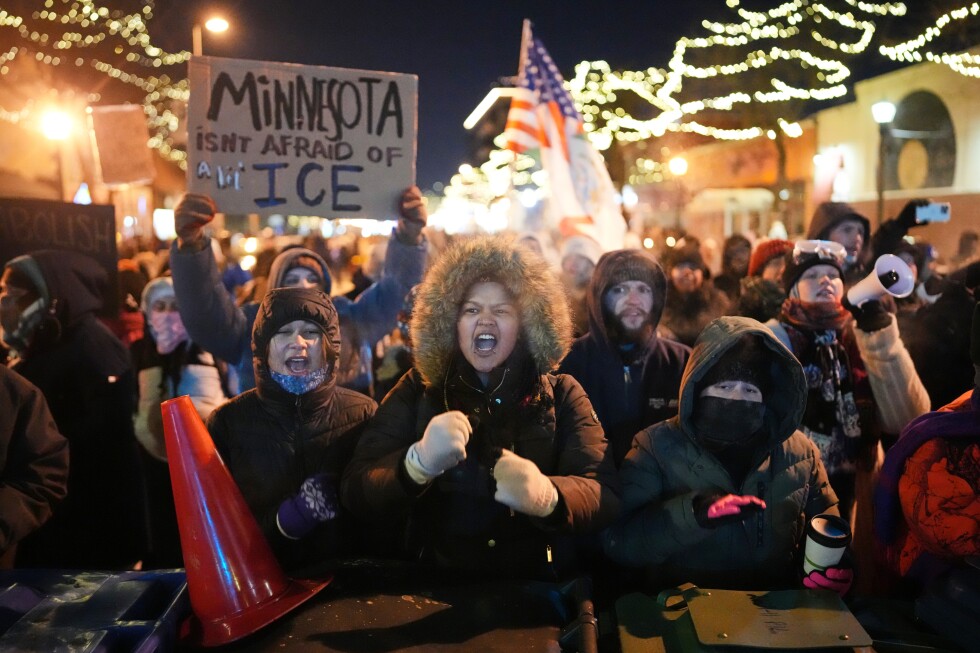
The shrieking whistles and honking horns have become the unofficial soundtrack of Minneapolis in recent weeks, as thousands of residents follow immigration agents across the city. These sounds mark the ever-moving shadow of the Trump administration’s Operation Metro Surge, a massive immigration enforcement action that has upended life in the Twin Cities.
Behind this acoustic warning system stands a sprawling, often anonymous network of ordinary citizens. They are teachers, scientists, stay-at-home parents, business owners and service workers united by a common purpose: helping immigrants and documenting what’s happening as federal agents conduct what officials have called “the largest immigration operation ever.”
Since early January, when the operation dramatically intensified, more than 3,400 people have been arrested, according to Immigration and Customs Enforcement (ICE). The federal presence is substantial, with approximately 2,000 ICE officers and 1,000 Border Patrol agents deployed across the Minneapolis-St. Paul metro area.
While the administration insists the operation targets criminals in the country illegally, the reality on the ground appears far more sweeping. Local officials report that agents have conducted random stops demanding citizenship papers, including detaining off-duty Latino and Black police officers and city workers. In one incident, agents broke down the door of a Liberian man without a proper warrant, even though he had been regularly checking in with immigration officials.
“I think that everyone slept a little better knowing that Bovino had been kicked out of Minneapolis,” said Andrew Fahlstrom, who helps run Defend the 612, a coordination hub for volunteer networks, referring to the recent transfer of Gregory Bovino, the senior Border Patrol official who had become the public face of the immigration crackdown. “But I don’t think the threat that we’re under will change because they change out the local puppets.”
The White House has struck a more conciliatory tone following the weekend killing of Alex Pretti, which prompted Bovino’s removal. However, Trump’s border czar, Tom Homan, warned on Thursday that activists will continue to “be held accountable” and that “justice is coming.”
The Community Response
The enforcement campaign has quickly rippled through immigrant-heavy neighborhoods. Medical professionals report patients avoiding critical healthcare, thousands of immigrant children are staying home from school, and many businesses have closed or operate with doors locked to all but regular customers.
In response, residents across Minneapolis-St. Paul and surrounding suburbs have organized rapidly. Volunteers deliver food to families afraid to leave home, provide transportation to workplaces, and stand watch outside schools.
Perhaps most notably, they’ve created interlocking networks involving thousands of volunteers who track immigration agents and communicate through encrypted messaging apps like Signal. These citizen observers document the movements of federal convoys, report license plates of suspected government vehicles, and provide warnings when enforcement actions begin.
When agents stop to question or arrest someone, network members quickly converge, filming interactions, blowing whistles, honking horns, and sometimes shouting legal advice to those being detained.
“Sometimes it all can feel performative,” notes one observer, describing how some young activists rarely remove their helmets and gas masks even when no law enforcement is present. However, these encounters frequently escalate into real confrontations, with protesters screaming at agents and agents sometimes responding with physical force, pepper spray, tear gas, or arrests.
Different Approaches to Resistance
One network member, known only by her nickname “Sunshine,” spends hundreds of hours patrolling immigrant neighborhoods in her Subaru, watching for signs of federal agents. A healthcare worker who requested anonymity fearing retaliation, she can identify idling SUVs from the faintest exhaust trail and distinguish unmarked immigration vehicles from undercover local police cars.
Sunshine takes a cautious approach, carefully weighing when to report agent movements to network dispatchers versus sounding a horn as direct warning. She understands the anger of more confrontational protesters but employs different tactics.
“My strategy, my approach, my risk calculation is different than other peoples’. And at the same time, the vitriol, the frustration, I get it,” she explained while patrolling a St. Paul neighborhood of taquerias and Asian grocery stores. “And sometimes it feels good to see someone unleash that.”
Not all advocacy groups agree with confrontational tactics. The Montgomery County Immigrant Rights Collective in Maryland recently cautioned that whistling can “escalate already volatile ICE agents who don’t respect our rights” and “increase the likelihood of aggression toward bystanders or the detained person.”
“This is not an action movie,” the group wrote. “You are not in a one-on-one fight with ICE.”
Nevertheless, as Operation Metro Surge continues, Minneapolis residents appear committed to maintaining their vigilance, regardless of White House tone changes or personnel shifts. The grassroots response has created an unusual community of resistance in a city already known for its progressive politics, one that shows no signs of disbanding as immigration enforcement actions persist.
Fact Checker
Verify the accuracy of this article using The Disinformation Commission analysis and real-time sources.

9 Comments
While the administration may claim this is targeting criminals, the scale of the operation seems disproportionate. It’s good to see citizens organizing to document what’s happening and assist vulnerable immigrants.
This shadow network appears to be a grassroots effort to defy federal immigration enforcement and protect immigrants in the community. It will be interesting to see how this situation unfolds and what the long-term impacts are.
I agree, the actions of this network seem both brave and necessary given the scale of the federal operation.
The acoustic warning system created by locals is an intriguing approach to tracking and responding to immigration raids. I wonder how effective it is at providing real-time information to those who need it.
While the administration may justify this operation as targeting criminals, the scope appears disproportionate and disruptive to the broader immigrant community. The local network’s response is understandable given the circumstances.
This sounds like a challenging situation, with the federal government asserting a significant presence. I’m curious to learn more about the motivations and tactics of the local network trying to support immigrants.
It’s concerning to see such a heavy-handed immigration enforcement operation disrupting communities. I hope the local network is able to provide some protection and transparency around the situation.
It’s admirable that these ordinary citizens have come together to form such a robust network in response to the federal immigration crackdown. Their efforts to assist and protect vulnerable immigrants are commendable.
I’m curious to learn more about the specific tactics and strategies being used by this local network. Documenting the federal actions and providing support to immigrants is an important role they are playing.