


Listen to the article
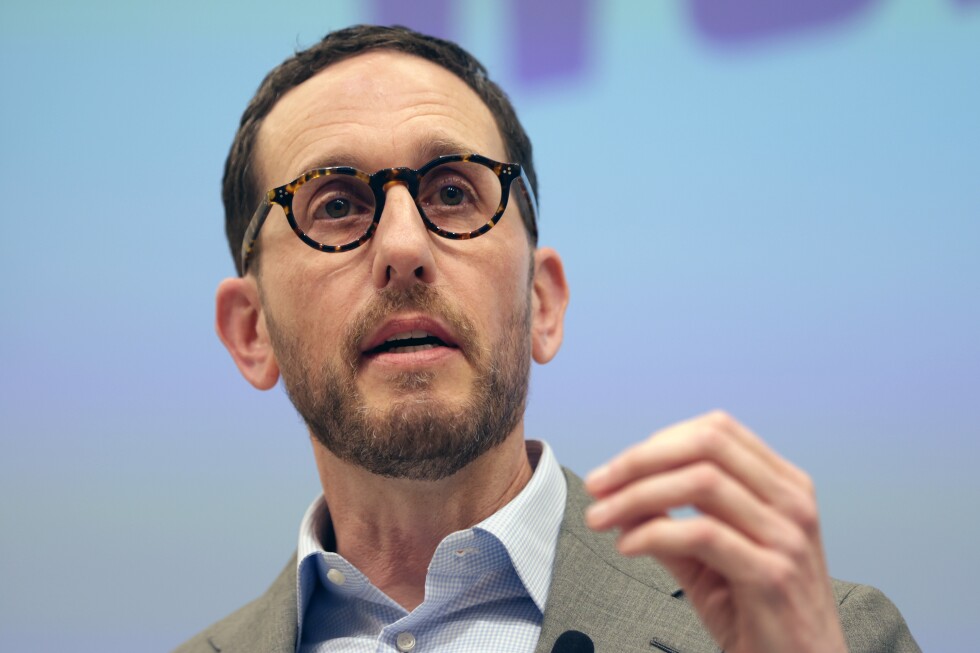
California State Senator Scott Wiener poised to win Democratic Party endorsement in his bid to succeed Nancy Pelosi, positioning himself as a high-profile legislator known for tackling controversial issues in San Francisco and beyond.
Wiener, expected to receive the California Democratic Party’s formal backing this Sunday, has already made national headlines through his legislative work on issues ranging from transgender youth protections to bans on masked federal agents during immigration raids. The endorsement would provide significant momentum in what remains a competitive primary race.
“Sen. Wiener only does the tough bills,” noted Chris Micheli, a veteran Sacramento lobbyist. “He never shies away from a significant political battle.”
Throughout his 15-year political career in city and state government, Wiener has developed a reputation for navigating the complex terrain of Democratic politics—often finding himself criticized by conservatives as emblematic of San Francisco’s liberal politics while occasionally clashing with progressives within his own party.
His legislative record demonstrates this balancing act. Wiener authored California’s landmark climate disclosure law requiring large corporations to report their direct and indirect emissions, and championed housing density legislation near public transit. He also led efforts to protect transgender youth and attempted to decriminalize psychedelic mushrooms.
Not all of Wiener’s legislative efforts have succeeded. His first-in-the-nation law banning local and federal law enforcement from wearing face coverings during immigration raids was recently blocked by a judge—a setback that reportedly led to tensions with Governor Gavin Newsom’s administration. His attempts to decriminalize psychedelics and hold oil companies liable for climate disaster damages also failed to gain sufficient support.
The legislator’s position on the Israel-Gaza conflict illustrates the political challenges he faces. In January, Wiener initially declined to describe Israel’s actions in Gaza as “genocide” during a candidate forum, while his primary opponents directly affirmed this characterization. Days later, Wiener released a video stating that Israel had committed genocide, a shift that prompted him to step down as co-chair of the state Legislative Jewish Caucus.
“For a period of time I chose not to use the word ‘genocide’ because it is so sensitive within the Jewish community,” Wiener explained. “But ultimately I decided I had been effectively saying ‘genocide’ for quite some time.”
The evolution of his position reflects the changing political landscape around the Israel-Gaza conflict, with polls showing American sympathy for Israel at historic lows, particularly among Democrats and independents. Currently, only a small percentage of congressional Democrats and just two Jewish members of Congress have publicly used the term “genocide” to describe Israel’s actions.
Wiener’s Jewish background adds personal dimension to his stance. Raised in a Conservative Jewish family in New Jersey, he maintained close ties to his religious community through high school and later joined a Jewish fraternity at Duke University. “A lot of Jews just intuitively understand what it means to be part of a marginalized community,” he said, noting the connection to his identity as a gay man.
In the race to succeed Pelosi, who has not endorsed any candidate, Wiener faces competition from San Francisco Supervisor Connie Chan and former tech executive Saikat Chakrabarti, a former aide to Rep. Alexandria Ocasio-Cortez. Both opponents position themselves as more progressive alternatives, criticizing Wiener as an establishment moderate who has failed to prioritize affordable housing.
All candidates have pledged to address San Francisco’s notoriously high cost of living, though they differ on approaches. Political consultant Jim Ross notes that while no one can truly replace Pelosi given her extraordinary political influence, Wiener shares her pragmatic focus on results.
“If you’re willing to risk people being mad at you, you can get things done and make people’s lives better,” Wiener said, summarizing his political philosophy.
If elected, Wiener would join Congress at a time when San Francisco representatives face particular scrutiny from conservative critics who often portray the city as emblematic of progressive policy failures, presenting both challenges and opportunities for the veteran legislator accustomed to high-profile political battles.
Fact Checker
Verify the accuracy of this article using The Disinformation Commission analysis and real-time sources.

18 Comments
As a relative moderate, Wiener will need to carefully balance progressive and conservative interests within the Democratic party. His ability to navigate those ideological divides could be a key factor in this race.
Absolutely, finding that balance will be crucial for Wiener as he seeks to win the Democratic nomination and ultimately succeed Pelosi in Congress.
Wiener’s legislative work on controversial topics like transgender protections and immigration shows he’s not afraid to take on tough issues. That could help him connect with voters looking for a bold, independent voice in Congress.
You raise a good point. Voters may appreciate Wiener’s willingness to tackle complex, divisive issues head-on, even if it means clashing with factions within his own party.
Interesting to see a policy-focused candidate like Wiener take on the challenge of Pelosi’s seat. It will be a high-profile race to watch, given his legislative track record and reputation for tackling complex issues.
Agreed, Wiener seems well-positioned to succeed Pelosi. His experience navigating the nuances of Democratic politics in San Francisco could serve him well in this race.
It’s encouraging to see a policy-focused candidate like Wiener running for Pelosi’s seat. His experience in state government and reputation for navigating complex political terrain could serve him well in this race.
Agreed, Wiener’s background and legislative record suggest he has the necessary skills and experience to effectively represent the district if elected.
Wiener’s experience navigating the complex political terrain of San Francisco and California could serve him well in this race for Pelosi’s seat. His ability to balance competing interests within the Democratic party will be crucial.
Agreed, Wiener’s political savvy and willingness to take on tough issues could make him a formidable candidate in this high-profile race.
With Pelosi’s seat being such a high-profile one, this race is sure to draw significant national attention. Wiener’s legislative accomplishments and reputation for tackling tough issues could give him an advantage.
You raise a good point. The national spotlight on this race could work in Wiener’s favor, as voters may be drawn to his bold, policy-focused approach.
Pelosi’s seat is a high-profile one, so this race is sure to draw national attention. Wiener’s track record of legislative accomplishments and reputation for tackling tough issues could give him an edge.
You’re right, the national spotlight will be on this race. Wiener’s willingness to take on controversial topics could resonate with voters looking for a bold, principled representative.
It will be interesting to see how Wiener positions himself in the primary race. As a relative moderate, he’ll need to balance progressive and conservative interests within the Democratic party.
That’s a good observation. Wiener’s ability to navigate those ideological divides could be a key factor in determining his success in the primary.
Wiener’s legislative work on issues like climate disclosure and transgender protections shows he’s not afraid to take on controversial topics. That could resonate with voters looking for a bold, independent voice in Congress.
That’s a good point. Wiener’s willingness to tackle complex, divisive issues head-on could set him apart in a crowded primary field.