


Listen to the article
GOP Optimistic Despite Headwinds as Republicans Defend Slim Senate Majority
Republicans face significant challenges as they work to protect their narrow 53-47 Senate majority in the 2026 midterm elections, but party leaders remain confident they can not only hold their advantage but potentially expand it.
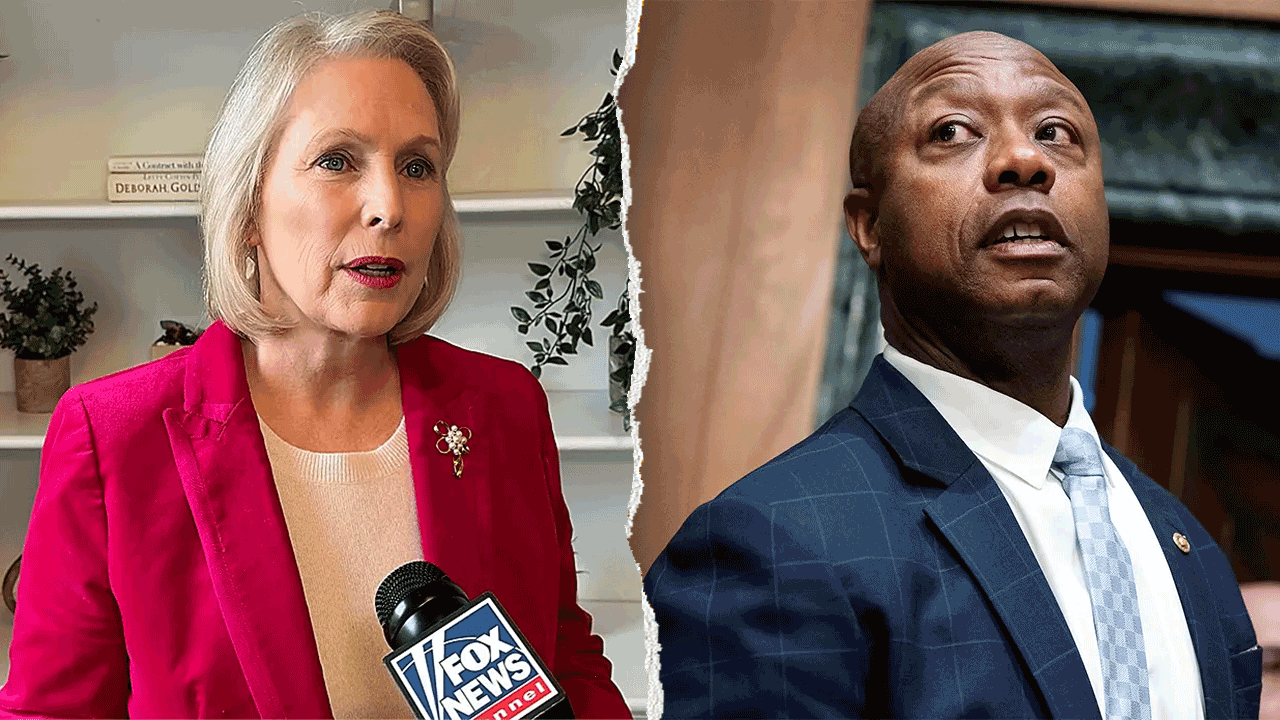
“There’s no doubt the climate has gotten more and more difficult by the day, it seems like at times,” National Republican Senatorial Committee (NRSC) Chair Sen. Tim Scott told Fox News Digital in a recent interview. Yet despite these obstacles, Scott maintains an optimistic outlook.
The GOP is contending with traditional midterm difficulties that typically plague the party controlling the White House. Economic concerns stemming from persistent inflation and President Donald Trump’s underwater approval ratings have created a challenging electoral environment.
Nevertheless, Scott believes the party has positioned itself well. “The good news is we have a president who made promises, he’s been keeping those promises, and we have been able to recruit the highest quality candidates anyone could want in every single battleground state,” he said.
Scott has expressed confidence that Republicans could potentially expand their majority, suggesting that “54 is clearly within our grasp right now, but with a little bit of luck, 55 is on our side.” When asked again more recently, he reiterated, “I think we have a possibility of more than 53 seats.”
Democrats, meanwhile, see an opportunity to reclaim control of the chamber. Democratic Senatorial Campaign Committee (DSCC) Chair Sen. Kirsten Gillibrand told Fox News Digital in January that “President Trump is creating a toxic agenda that’s harming people,” adding that she’s “optimistic that we have a shot to take back the majority.”
Battleground States Could Determine Senate Control
In Maine, longtime Republican Sen. Susan Collins faces reelection in the only state that former Vice President Kamala Harris carried in 2024 among GOP Senate seats up this cycle. Collins has seen her poll numbers decline compared to her previous reelection six years ago but has proven remarkably resilient against past Democratic challenges.
Democrats are contending with a competitive primary between two-term Democratic Gov. Janet Mills, who enjoys the tacit support of Senate Democratic Leader Chuck Schumer and the DSCC, and veteran Graham Platner, a progressive candidate backed by Sen. Bernie Sanders.
North Carolina represents another crucial battleground with Republican Sen. Thom Tillis retiring. Democrats scored a recruitment victory when former two-term Gov. Roy Cooper entered the race last summer. Cooper brings significant name recognition and an undefeated record in statewide races. Republicans have rallied around former Republican National Committee Chair Michael Whatley, who has secured Trump’s endorsement. The race is expected to be among the most expensive and competitive this cycle.
In Ohio, Democrats hope former longtime Sen. Sherrod Brown can defeat Republican Sen. Jon Husted, who was appointed to the seat after JD Vance became vice president. Ohio has trended increasingly Republican in recent years, with Trump winning the state by 11 points in 2024, but Brown’s candidacy gives Democrats a fighting chance in what will likely be another high-spending contest.
Additional Competitive Races Across the Map
Alaska became more competitive for Democrats when former Rep. Mary Peltola announced her challenge to Republican incumbent Sen. Dan Sullivan in February. Though Alaska leans Republican, Peltola’s entry gives Democrats hope in this traditionally red state.
In Iowa, Republicans are defending an open seat following Sen. Joni Ernst’s retirement but have coalesced around Rep. Ashley Hinson, who has Trump’s backing. Democrats face a contested primary involving several candidates, including state Rep. Josh Turek, state Sen. Zach Wahls, and veteran Nathan Sage.
Texas features a contentious Republican runoff between longtime Sen. John Cornyn and state Attorney General Ken Paxton, scheduled for late May. Trump has remained neutral in this intra-party battle, while Senate Majority Leader John Thune and the NRSC support Cornyn. Democrats have nominated state Rep. James Talarico, viewing the seat as potentially competitive if Paxton emerges victorious.
Michigan presents a Republican opportunity with Democratic Sen. Gary Peters retiring. The GOP has united behind former Rep. Mike Rogers, who narrowly lost a Senate race in 2024 even as Trump carried the state. Democrats face a divisive three-way primary that has exposed party rifts on manufacturing policy and Middle East issues.
Georgia’s first-term Democratic Sen. Jon Ossoff is considered vulnerable by Republicans, though his substantial fundraising gives him a financial advantage. The GOP primary features a competitive three-way race between Reps. Mike Collins and Buddy Carter, and former University of Tennessee football coach Derek Dooley, who has popular Governor Brian Kemp’s support.
In New Hampshire, Republicans hope to end their 16-year losing streak in Senate races following Democratic Sen. Jeanne Shaheen’s retirement. Former Sen. John E. Sununu, backed by Trump, and former Sen. Scott Brown are competing for the Republican nomination, while most Democrats support four-term Rep. Chris Pappas.
Minnesota rounds out the competitive map, where Democratic Sen. Tina Smith’s retirement has created an open seat. The NRSC has recruited former NBC sports reporter turned conservative commentator Michele Tafoya, who faces several Republican competitors. On the Democratic side, progressive Lt. Gov. Peggy Flannagan and moderate Rep. Angie Craig are vying for their party’s nomination.
With multiple competitive races across diverse regions, the 2026 midterms will determine whether Republicans can maintain or expand their Senate majority or if Democrats can reclaim control of the upper chamber.
Fact Checker
Verify the accuracy of this article using The Disinformation Commission analysis and real-time sources.

10 Comments
Keeping the Senate majority will be an uphill battle for Republicans given the political environment. But if they can find the right candidates and messaging, they may be able to pull it off. This is definitely shaping up to be a pivotal election cycle.
With the GOP defending a slim Senate majority, these 2026 races will be crucial. It will be interesting to see how the party navigates the economic and political headwinds. Candidate quality and campaign strategy will be key factors.
The GOP seems optimistic about their chances, but there are certainly some headwinds they’ll have to navigate. Recruiting high-quality candidates will be crucial, especially in those key battleground states.
Agreed, candidate quality and campaign strategy will be critical. I’ll be curious to see how the dynamics play out over the next few years leading up to 2026.
Interesting to see how the 2026 Senate races could shape up. With the GOP defending a narrow majority, it’ll be a tough battle for both sides. Curious to see how the economic climate and Trump’s approval ratings factor in.
You’re right, the economic conditions and political environment will be key factors. It will be a closely watched election cycle for sure.
The economic concerns stemming from inflation and Biden’s approval ratings will certainly be a challenge for the GOP. But their ability to recruit strong candidates could give them an edge. I’ll be following these races closely.
The 2026 Senate races are going to be must-watch TV. The GOP is facing some serious challenges, but if they can recruit top-notch candidates and capitalize on the right messaging, they may be able to hold onto their narrow majority. I’ll be following these races closely.
It’s going to be fascinating to watch these Senate races unfold. With the narrow GOP majority, every seat will be hotly contested. I wonder how much of a factor Trump’s approval ratings will be for Republican candidates.
That’s a good point. Trump’s standing could definitely impact some Republican candidates, especially in more moderate states. It will be an interesting dynamic to monitor.