


Listen to the article
Women’s Health Roundtable Focuses on Combating Misinformation in British Columbia
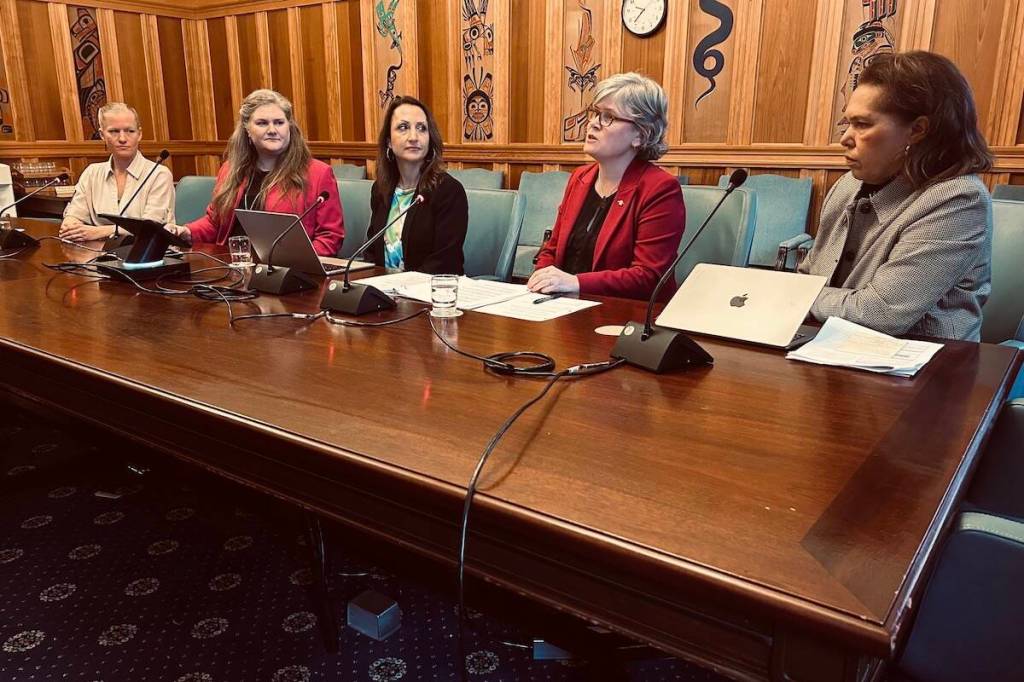
Health Minister Josie Osborne gathered experts for a women’s health roundtable at the British Columbia legislature on Monday, where participants highlighted an urgent need to address health misinformation spreading online. The meeting, convened as part of Women’s Health Research Month, brought together medical professionals and researchers to discuss ongoing challenges and progress in women’s healthcare across the province.
Misinformation emerged as a central concern during the discussions, particularly regarding contraception and reproductive health. Dr. Laura Schummers, an assistant professor at the University of British Columbia and reproductive health policy researcher, emphasized the difficulty young people face in distinguishing accurate health information from falsehoods online.
“It’s really hard for young people to know what is true and what is not true,” said Schummers. “We need cross-disciplinary approaches that support youth and young adults to find the right information to make evidence-based decisions that are right for them or their reproductive goals.”
The health minister noted she was “particularly struck” by the conversation surrounding misinformation, acknowledging the critical importance of ensuring British Columbians have access to credible health information sources. This issue has gained increasing relevance as social media platforms continue to amplify unverified health claims that can influence personal medical decisions.
Internationally renowned gynecologist and author Dr. Jen Gunter joined the roundtable via video call, describing health misinformation as “a crisis unto itself.” Gunter, a Canadian currently residing in the United States who plans to relocate to British Columbia, drew attention to the broader implications of medical misinformation.
“Misinformation is misogyny,” Gunter stated forcefully. “What it does is it robs women of agency because they can no longer make an evidence-based decision.” She cited the resurgence of measles outbreaks across Canada as a troubling example of what happens when public trust in established medical science erodes due to misinformation.
The roundtable also served as an opportunity for Minister Osborne to highlight recent provincial achievements in women’s healthcare. British Columbia has expanded several initiatives aimed at improving access to essential services, including new prescription coverage for menopause treatments and the implementation of at-home screening programs for human papillomavirus (HPV), which can lead to cervical cancer if undetected.
These advancements come at a time when women’s health issues are receiving increased attention nationally. Across Canada, healthcare systems are working to address historical gaps in women’s health research and treatment options, though progress remains uneven across provinces.
Health experts at the roundtable suggested potential solutions to combat misinformation, including enhanced digital literacy programs in schools, improved communication strategies from healthcare providers, and greater collaboration between medical institutions and social media platforms to flag dangerous health misinformation.
The BC government’s focus on women’s health initiatives represents part of a broader strategy to modernize healthcare delivery in the province, which has faced challenges including physician shortages and hospital capacity issues in recent years.
As digital platforms continue to serve as primary information sources for many Canadians, the roundtable underscored that addressing health misinformation will require ongoing coordination between government agencies, healthcare providers, educators, and technology companies to ensure British Columbians can make informed decisions about their health based on scientific evidence rather than viral misinformation.
Fact Checker
Verify the accuracy of this article using The Disinformation Commission analysis and real-time sources.

13 Comments
Combating health misinformation is a vitally important issue. I’m encouraged to see the BC government convening experts to address this problem, particularly when it comes to sensitive topics like women’s reproductive health.
Kudos to the BC government for convening this roundtable. Addressing health misinformation is a complex challenge, but an important one to tackle head-on. Curious to see what concrete actions and policies emerge from this discussion.
Yes, I share your interest. Developing cross-disciplinary approaches to support youth and young adults in navigating online health information sounds like a promising avenue to explore further.
This roundtable seems like an important step in the right direction. Empowering people, especially young people, to make informed decisions about their health and wellbeing is crucial. Looking forward to seeing what concrete actions emerge from this discussion.
Absolutely. With so much misinformation spreading online, it’s critical that we find effective ways to equip people with the tools to navigate this landscape and access accurate, reliable information.
This is a critical issue that needs addressing. Misinformation can have serious consequences for women’s health. I’m glad to see the BC government taking steps to combat this problem and empower people to access accurate, evidence-based information.
Absolutely. With so much noise online, it’s vital that young people are equipped to discern fact from fiction when it comes to reproductive health.
Reproductive health is a complex and sensitive issue. I’m glad to see the BC government taking a proactive approach to addressing misinformation and empowering people to make informed decisions about their own bodies and wellbeing.
Reproductive health is a sensitive and personal topic. I’m glad to see the BC government taking steps to ensure people have access to accurate, evidence-based information from trusted medical professionals.
Agreed. With so much misinformation circulating online, it’s critical that young people are equipped with the tools to distinguish fact from fiction when it comes to their health and bodies.
The prevalence of misinformation around women’s health and reproductive issues is truly concerning. This roundtable seems like a positive step towards empowering people to make informed decisions about their own bodies and wellbeing.
Kudos to the BC government for convening this important roundtable. Addressing health misinformation, especially around women’s reproductive issues, is a crucial challenge that requires a coordinated, multi-faceted approach. Curious to see what policy recommendations emerge from this discussion.
Agreed. With so much online noise, it’s vital that young people have the tools and resources to distinguish fact from fiction when it comes to their health and wellbeing.