


Listen to the article
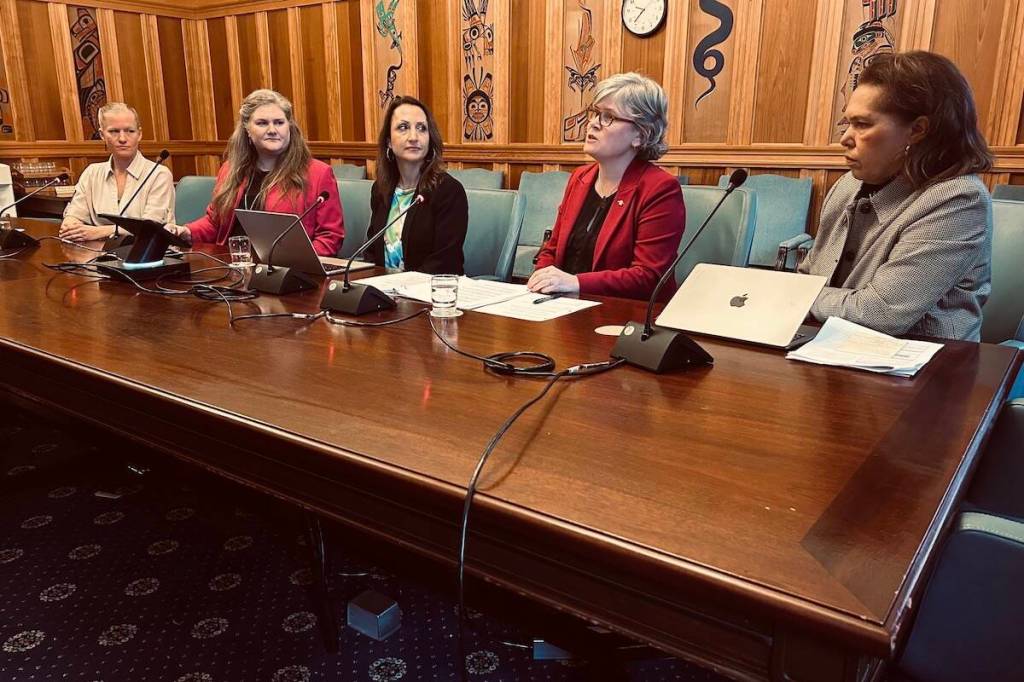
Women’s health advocates in British Columbia are emphasizing the urgent need to combat health misinformation, particularly around reproductive issues, following a roundtable discussion led by Health Minister Josie Osborne at the provincial legislature on Monday.
The gathering, organized as part of Women’s Health Research Month, brought together medical professionals and researchers who voiced concerns about the proliferation of false information affecting women’s health decisions across the province.
Dr. Laura Schummers, assistant professor at the University of British Columbia and reproductive health policy researcher, highlighted the particular vulnerability of young people to medical misinformation.
“It’s really hard for young people to know what is true and what is not true,” Schummers noted during the discussion. “We need cross-disciplinary approaches that support youth and young adults to find the right information to make evidence-based decisions that are right for their reproductive goals.”
The roundtable participants pointed to widespread online misinformation about contraception side effects as a significant example of harmful health myths that can lead to poor decision-making and unnecessary health risks.
Minister Osborne, who convened the panel, expressed particular concern about the information landscape. “I was particularly struck by the conversation about misinformation and disinformation, and the need to ensure people have credible sources of information,” she said while reflecting on the discussion.
The minister also used the forum to highlight recent provincial advancements in women’s health care, including expanded prescription coverage for menopause treatments and the implementation of at-home human papillomavirus (HPV) screening programs. These initiatives represent part of British Columbia’s broader strategy to improve health outcomes for women across the province.
Renowned gynecologist and author Dr. Jen Gunter, who joined the discussion via video call, framed the issue in stark terms, describing misinformation as “a health crisis unto itself.” Gunter, a Canadian currently based in the United States who plans to relocate to British Columbia, emphasized the gendered nature of health misinformation.
“Misinformation is misogyny,” Gunter asserted. “What it does is it robs women of agency because they can no longer make an evidence-based decision.” Her comments underscored how false health information disproportionately impacts women’s autonomy over their own bodies and health choices.
The discussion also touched on broader public health concerns, with participants drawing parallels between misinformation affecting women’s health and vaccine hesitancy. Gunter specifically referenced the resurgence of measles in Canada, attributed largely to declining vaccination rates fueled by misconceptions and distrust of established medical research.
The roundtable reflects growing awareness among provincial health officials about the intersection between digital literacy, health literacy, and women’s health outcomes. The challenge of sorting credible information from falsehood has become increasingly complex in the digital age, with social media platforms often amplifying unverified or outright false health claims.
Health experts at the meeting advocated for improved educational frameworks to help British Columbians navigate health information critically, particularly around women’s reproductive health where stigma and historical gaps in research have created fertile ground for misinformation to take root.
The province’s focus on combating health misinformation comes at a time when women’s health initiatives are gaining momentum across Canada, with increased attention to historically underfunded and understudied conditions affecting women. British Columbia’s efforts to expand women’s health services while simultaneously addressing information quality mark an integrated approach to improving health outcomes.
As the roundtable concluded, participants emphasized that accurate health information is not merely an educational issue but a fundamental component of healthcare access and equity for women throughout the province.
Fact Checker
Verify the accuracy of this article using The Disinformation Commission analysis and real-time sources.

12 Comments
Combating health misinformation is vital, especially for vulnerable groups like young people. Providing reliable, evidence-based information to support informed decisions is crucial for reproductive health.
Agreed. Tackling the spread of false claims online should be a priority to ensure people have access to accurate medical information.
Misinformation can have serious consequences, especially for vulnerable populations. Ensuring access to factual, evidence-based health information is crucial for empowering individuals to make informed choices.
Agreed. Tackling the spread of false claims and promoting digital literacy are important steps to combat the harmful effects of misinformation.
The call for stronger measures against misinformation in women’s health is a valid one. Promoting access to accurate, evidence-based information is crucial for supporting informed decision-making and improving health outcomes.
Agreed. Addressing the proliferation of false claims, especially around sensitive topics like reproductive health, should be a priority to protect vulnerable groups.
It’s concerning to hear about the prevalence of misinformation around contraception. Efforts to educate and empower people, particularly youth, are important to counter harmful myths.
Absolutely. Equipping the public with credible, science-based knowledge is key to improving health outcomes and promoting informed decision-making.
This is an important issue that deserves attention. Strengthening measures to combat medical misinformation, especially on sensitive topics like reproductive health, is a worthy goal.
I hope the proposed cross-disciplinary approaches can effectively support young people in navigating the wealth of information online and finding reliable sources.
This is a concerning issue that requires a multi-faceted approach. Educating the public, particularly young people, on how to critically evaluate health information online is an important step.
Absolutely. Empowering individuals to navigate the digital landscape and identify reliable sources is key to ensuring informed decision-making around sensitive health topics.