


Listen to the article
As measles cases surge across the United States, public health experts are raising alarms over the dangerous intersection of politics and disease prevention. With more than 700 cases reported already in 2026, the country is witnessing a troubling reversal of one of its most significant public health achievements.
In 2000, U.S. health officials proudly declared measles eliminated nationwide after decades of successful vaccination campaigns. That milestone now appears increasingly fragile as vaccination rates fall and political disputes over immunization policy intensify.
Current data shows measles cases have reached a 34-year high, with experts pointing to a clear cause: approximately 90 to 95 percent of affected children are either unvaccinated or under-vaccinated. The spike represents four times the number of cases typically seen in an entire calendar year, compressed into just the first few weeks of 2026.
The resurgence coincides with significant changes at the federal level. The Centers for Disease Control and Prevention (CDC), once internationally respected for its scientific authority, has experienced unprecedented upheaval. Key staff members have either been fired or resigned in protest over what they describe as the “weaponization of public health.”
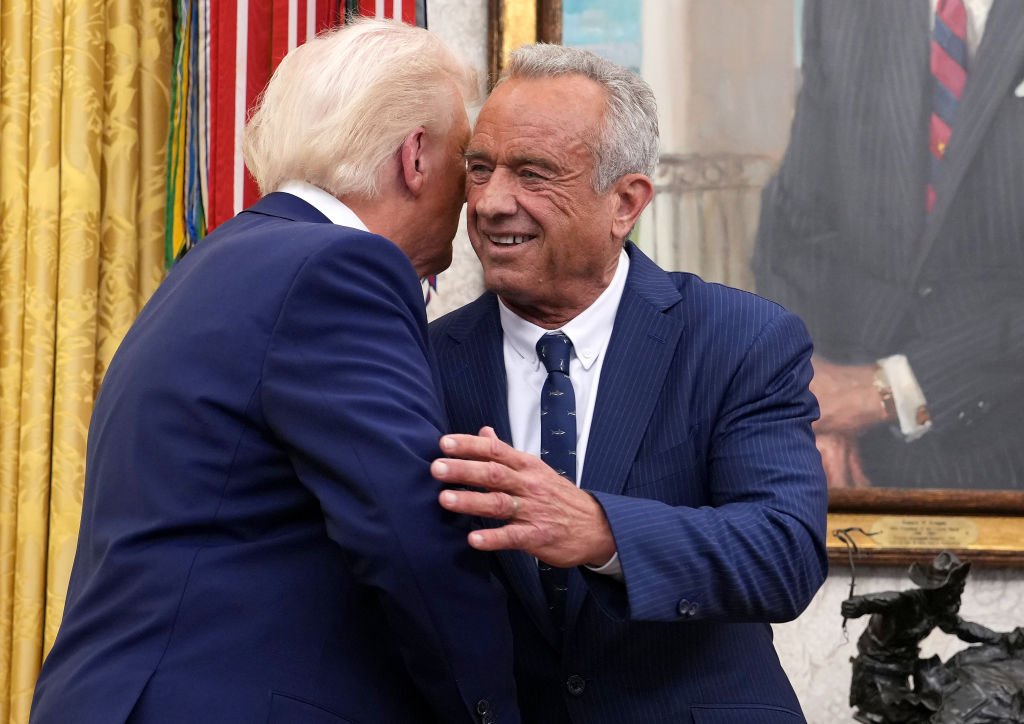
In a particularly controversial move last June, Health and Human Services Secretary Robert F. Kennedy Jr. unilaterally dismissed all 17 members of the CDC’s Advisory Committee on Immunization Practices (ACIP). This expert panel, established by the surgeon general in 1964, had long served as the nation’s authoritative source on immunization guidelines.
Public health researchers point to a troubling trend where Americans increasingly make health decisions based on political affiliation rather than medical evidence. A peer-reviewed study published in the American Journal of Public Health found that during the COVID-19 pandemic, “states with Republican governors experienced significantly higher death rates than states with Democratic governors” and that “increasing Republican representation was associated with higher excess death rates.”
The consequences of declining vaccination extend well beyond measles. Researchers at Johns Hopkins report that immunization rates for diphtheria, tetanus, pertussis, polio and varicella are decreasing among kindergarteners, with vaccination exemptions reaching an all-time high.
These developments have prompted the American Academy of Pediatrics to issue its own childhood immunization guidance, diverging from federal recommendations in an unprecedented step that highlights the growing divide between political influence and scientific consensus.
Prior to the development of the measles vaccine in 1963, the disease infected approximately four million Americans annually. The CDC reports that in the first decade of tracking the disease, an average of 6,000 measles-related deaths occurred each year. Nearly 50,000 Americans were hospitalized annually, with 1,000 suffering from encephalitis, or brain swelling. Even “mild” cases caused serious conditions including bronchitis, laryngitis, and pneumonia. Pregnant women faced increased risks of miscarriage, stillbirth and maternal death.
The disease is particularly dangerous because it remains highly contagious both through airborne transmission and on surfaces. Even years after initial infection, the measles virus can cause severe neurological damage through a condition known as measles inclusion body encephalitis (MIBE).
The introduction of widespread vaccination in the 1960s dramatically reduced infection rates throughout the 20th century. For more than two decades, the United States maintained its measles elimination status, a public health achievement now under threat.
Health policy experts Allison Whelan and Michele Goodwin note in a recent article published by the University of Chicago Legal Forum that while vaccine hesitancy has a long history in America, the intensifying politicization of public health responses has accelerated vaccine skepticism with dangerous consequences.
Public health advocates argue that protecting national health requires rejecting the spread of misinformation and disinformation while acknowledging that political grievances make poor substitutes for rigorous science. As measles cases continue to climb, they stress the urgent need for collaboration across political divides to prevent further outbreaks of preventable diseases.
With childhood vaccination rates continuing to decline across multiple diseases, health officials warn that the measles resurgence may represent just the beginning of a broader public health challenge that puts vulnerable populations, especially children, at unnecessary risk.
Fact Checker
Verify the accuracy of this article using The Disinformation Commission analysis and real-time sources.

5 Comments
It’s alarming to see measles cases spiking after being largely eliminated. Vaccines are critical for protecting vulnerable populations. I hope the administration can work to rebuild trust in the CDC and evidence-based medical guidance.
The measles resurgence is deeply troubling. Vaccines have been one of our most effective public health tools. I worry the politicization of this issue is putting children’s health at risk. Clear, consistent messaging from health authorities is needed.
The measles resurgence is very concerning. Vaccination is a proven public health success. I worry the politicization of this issue is putting children’s health at risk. Clear, science-based leadership is needed now more than ever.
This is a concerning trend. Vaccination is crucial for public health, especially for vulnerable children. I hope the administration takes steps to address the decline in vaccination rates and restore trust in science-based medical guidance.
Falling vaccination rates and the measles surge are deeply worrying. Immunizations have saved countless lives. I hope policymakers can find a way to depoliticize this issue and focus on the science and public welfare.