


Listen to the article
In a sharp rebuke to opposition criticism, Union Home Minister Amit Shah has dismissed allegations that India’s recent international trade agreements would adversely impact the country’s agricultural sector, calling such claims “laughable” and misleading.
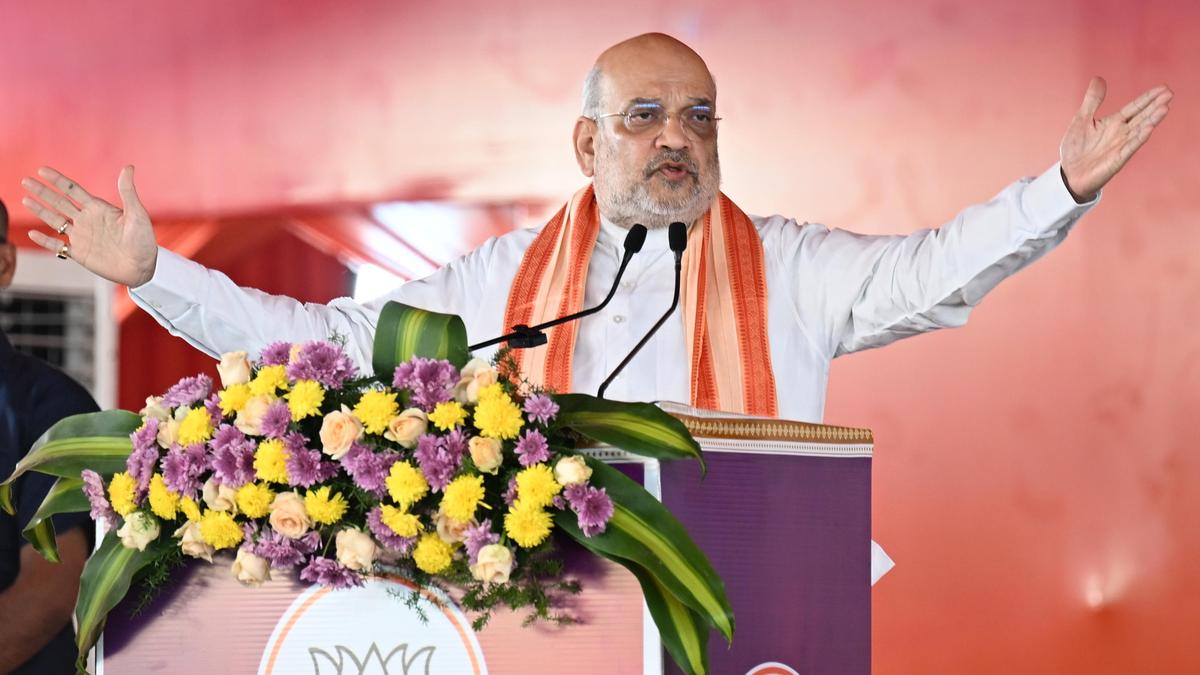
Speaking at the launch of India’s first Central Bank Digital Currency-based Public Distribution System in Gandhinagar on Sunday, Shah directly challenged Congress leader Rahul Gandhi over his statements about the trade pacts with the United States, United Kingdom, and European Union.
“I feel like laughing when Congress’s Shahzada Rahul Gandhi stands in Parliament and talks about protecting farmers. The Congress has a long history of misleading the country and now they are spreading lies about trade deals,” Shah told the gathering.
The Home Minister’s comments come amid growing political debate over India’s trade negotiations, particularly following the recent breakthrough in U.S.-India trade relations. Last month, after a phone conversation between Prime Minister Narendra Modi and U.S. President Donald Trump, both countries announced a significant reduction in U.S. tariffs on Indian goods from 50% to 18%, a move aimed at balancing bilateral trade.
Shah emphatically defended the Modi government’s approach to international trade, insisting that agricultural interests have been fully protected in all agreements. “I want to assure the farmers, cattle-rearers and fishermen of this country that in every trade deal signed with the European Union, England and America, Narendra Modi has safeguarded your interests completely. There is no need to worry,” he stated.
The dairy sector has become a particular flashpoint in the debate, with opposition leaders suggesting it could be undermined by foreign competition. Shah countered this narrative directly: “Rahul Gandhi is spreading a lie that PM Modi has finished India’s dairy sector by signing these deals. We are the people who expanded the dairy sector, not weakened it. In all the agreements, full protection has been given to the dairy sector.”
India’s dairy industry, the world’s largest milk producer, employs millions and forms a crucial part of the rural economy. Protecting it from subsidized foreign imports has been a long-standing policy position across political lines, making it a sensitive issue in trade negotiations.
In what appeared to be an attempt to shift the discussion from defense to offense, Shah issued a public challenge to the Congress leader: “Rahul Gandhi ji, decide any platform. Even the president of the BJP Yuva Morcha can come and debate with you on who has harmed farmers and who has worked for their welfare.”
The controversy comes at a significant moment in India’s international trade relationships. Beyond the U.S. deal, India and the European Union recently concluded negotiations for a proposed free trade agreement that, according to Commerce Secretary Rajesh Agrawal, will boost two-way commerce between the regions. These developments represent important milestones in India’s efforts to expand its global trade footprint.
Trade agreements typically involve complex compromises, with each sector receiving varying levels of protection or exposure to international competition. Agricultural sectors in many countries often receive special consideration due to their political sensitivity and importance to food security.
Market analysts note that while trade agreements generally boost economic activity overall, the impact on specific sectors can vary widely, creating inevitable political tension. The current debate reflects broader questions about balancing economic growth through international trade with protection for vulnerable domestic industries.
As the implementation of these agreements progresses, the true impact on Indian farmers and agricultural industries will become clearer, potentially reshaping both economic outcomes and political narratives around trade policy.
Fact Checker
Verify the accuracy of this article using The Disinformation Commission analysis and real-time sources.

17 Comments
The claims and counterclaims around the trade agreements reflect the high stakes involved. I’m curious to see how the government plans to balance the interests of farmers, businesses, and the broader economy.
Agreed. Striking the right balance will require careful consideration of all perspectives and a willingness to compromise. Maintaining open communication will be key.
As a supporter of the government, I appreciate the Home Minister’s robust defense of the trade agreements. However, I agree that a more nuanced discussion with the opposition could help address their concerns more effectively.
This debate underscores the importance of transparent, evidence-based policymaking when it comes to trade agreements. I hope all sides can set aside political posturing and work together to find the best solutions for India’s farmers and economy.
Absolutely. Constructive dialogue and a focus on facts rather than rhetoric will be essential for reaching a balanced and sustainable outcome.
The claims and counterclaims highlight the complexity of these negotiations. I’m curious to see how the government plans to safeguard farmers’ interests while still reaping the benefits of expanded trade.
Valid point. Striking the right balance will be a challenge, but open communication and compromise could lead to a positive outcome for all.
The political debate around these trade agreements highlights the complexity of modern economic policymaking. I hope the government and opposition can engage in a constructive dialogue to find solutions that work for all stakeholders.
Well said. Reaching a consensus will likely require compromise and a willingness to listen to different perspectives. Maintaining a focus on the greater good will be crucial.
The claims and counterclaims around these trade agreements highlight the need for careful analysis and inclusive discussions. I hope the government can provide clear, data-driven explanations about the potential impacts on the agricultural sector.
Interesting to see the political debate around India’s trade agreements. It’s important to balance economic interests while protecting farmers’ livelihoods. Fact-based analysis from all sides is needed to ensure fair outcomes.
Agreed, transparency and open dialogue are crucial when negotiating complex trade deals. Careful consideration of all stakeholders’ concerns is key.
As someone with a background in agriculture, I’m concerned about the potential impacts of these trade deals on farmers. I hope the government can provide clear, evidence-based assurances about how their interests will be protected.
This debate highlights the importance of protecting India’s agricultural sector while also pursuing economic opportunities through trade. I hope the government can find a way to achieve both objectives.
As a supporter of the current government, I appreciate the Home Minister’s robust defense of the trade agreements. However, I agree that a more nuanced discussion with the opposition would be beneficial to address all relevant issues.
Well said. Transparency and inclusive dialogue are essential for building trust and finding the best solutions, even when there are political differences.
It’s good to see the government defending its position, but I hope they’re also willing to engage constructively with the opposition’s concerns. Dismissing criticism as ‘lies’ may not be the most productive approach.