


Listen to the article
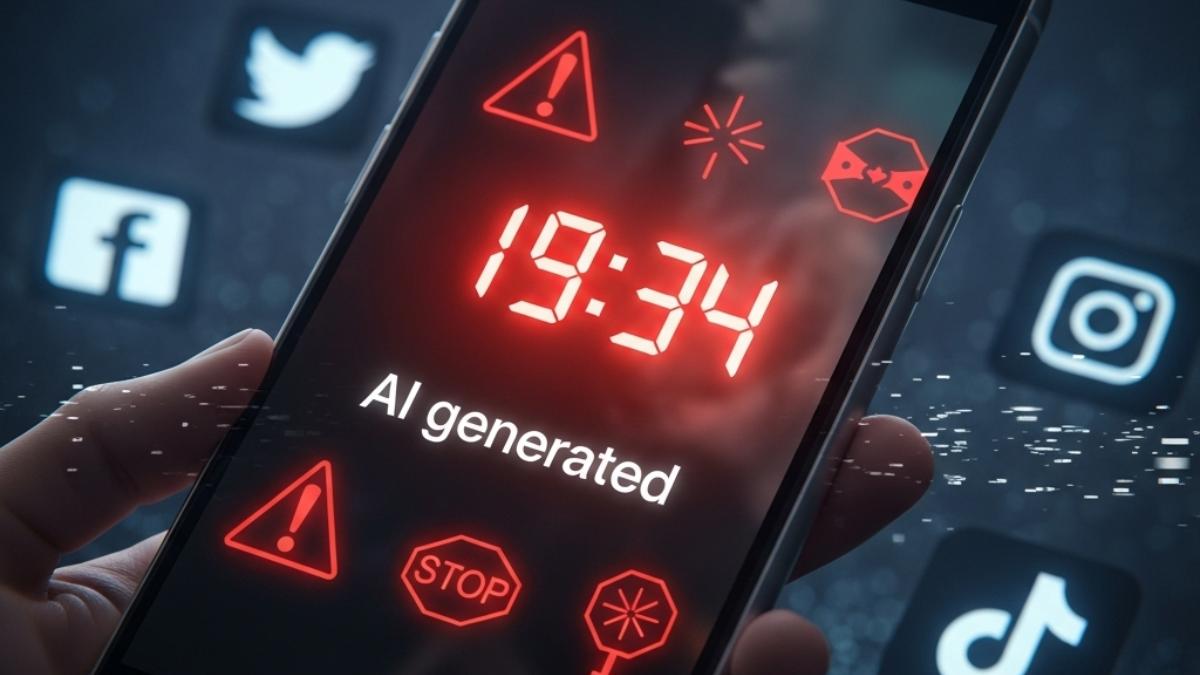
A widespread social media phenomenon centered around an alleged “19-minute viral video” of an Instagram couple has triggered a significant response across South Asia, particularly in India, Pakistan, and Bangladesh. Despite millions of users searching for this content, authorities have confirmed the video doesn’t exist and is entirely AI-fabricated.
The Haryana Police Cyber Cell issued an official warning about the deceptive nature of the trending video. Cyber officer Amit Yadav clarified in a public statement that the footage being widely discussed online was created using artificial intelligence tools rather than being an authentic recording of real individuals.
“What people are searching for and discussing simply doesn’t exist in any verified form,” Yadav explained. “We’re also seeing supposed ‘Part 2’ and ‘Part 3’ versions circulating, which follow the same pattern of AI fabrication.”
Law enforcement officials have urged the public to immediately cease any downloading, uploading, or forwarding of the alleged video. Many users, authorities cautioned, are unknowingly engaging in illegal activity by sharing what amounts to unverified and misleading content. Yadav suggested that tools like Sightengine could help individuals determine whether videos have been manipulated or created using AI, encouraging people to verify content before sharing it.
The legal consequences for distributing such material in India are severe. Under Section 67 of the Information Technology Act, circulating obscene material can result in imprisonment for up to three years and fines reaching ₹5 lakh for first-time offenders, with escalating penalties for repeat violations. Even more stringent punishment exists under Section 67A, which can lead to five-year prison terms and ₹10 lakh fines. Additional provisions under IPC Sections 292, 293, and 354C, covering obscene and intrusive content, may also apply.
Digital behavior experts note that this incident closely mirrors previous viral hoaxes, including the “5 minute 39 second viral video link” that similarly lacked any verifiable content. In both cases, no original video materialized, identities remained unconfirmed, and no credible source validated the content’s existence.
“There’s a psychological component to how these hoaxes spread,” explains Dr. Meenakshi Sharma, a digital media researcher at Delhi University. “Specific timestamps like 19:34 create a sense of authenticity and exclusivity. It’s essentially social engineering at scale—people believe something must exist because such precise details are mentioned, driving curiosity despite the absence of evidence.”
What users actually encounter when searching for this content are reaction videos, memes, misleading “link in bio” posts, and hashtags that lead nowhere. The viral cycle is self-perpetuating, with WhatsApp forwards and influencer commentary amplifying rumors without providing authentic source material.
The phenomenon highlights growing concerns about AI technology’s potential to create convincing but fabricated content that can rapidly spread across social media platforms. As advanced AI tools become more accessible, distinguishing between real and artificially created media grows increasingly challenging for average users.
Cybersecurity professionals emphasize that while the trends and conversations about these videos are real, the videos themselves are not. They advise users to maintain skepticism about viral content without clear origins, report suspicious material to authorities, and exercise heightened caution in an era where the line between reality and digital fabrication continues to blur.
“This incident serves as an important reminder of how quickly misinformation can spread in the digital age,” said Rajesh Kumar, a cybersecurity expert with the Internet and Mobile Association of India. “The combination of AI capabilities and social media virality creates perfect conditions for hoaxes to flourish.”
Fact Checker
Verify the accuracy of this article using The Disinformation Commission analysis and real-time sources.

7 Comments
I’m curious to learn more about the AI tools used to fabricate this video. What capabilities do they have, and how can we better detect these kinds of synthetic media in the future? Responsible development and use of these technologies is crucial.
Great point. As AI capabilities advance, the risks of misinformation will only grow. Proactive steps by tech companies, governments, and the public will be vital to stay ahead of these emerging threats.
It’s concerning to see how quickly unverified content can spread online and the potential for real harm. Kudos to the authorities for quickly shutting this down and warning people. Cybersecurity education for the public is so important in the digital age.
Artificial intelligence is a powerful tool, but it can also be misused to create deceptive media. I’m glad the police are taking this seriously and advising people not to engage with the alleged video. We need more transparency and accountability around AI-generated content.
As someone interested in the latest tech advancements, I find this case quite intriguing. The ability to fabricate believable video footage using AI is both fascinating and concerning. I hope more information comes to light about how this was done and what can be done to prevent such misinformation in the future.
This is a good example of how quickly misinformation can spread online, especially when it plays into people’s curiosity. I’m glad the authorities are taking action to warn the public and shut down the spread of this fabricated content. Verifying sources is so crucial in the digital age.
Fascinating how easily misinformation can spread nowadays, even about something as simple as a viral video. Glad the authorities are on top of this and warning the public not to engage with unverified content. Really highlights the importance of verifying information before sharing.