


Listen to the article
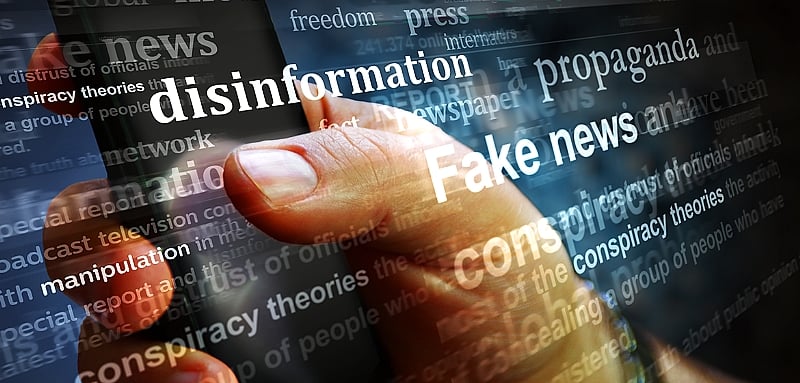
The digital battlefield has become as critical as the physical one in the ongoing conflict between the United States, Israel, and Iran, with information warfare playing a pivotal role in shaping global perceptions of events. This parallel war of narratives sees governments, media networks, and online communities vying for control of the information space, often at the expense of factual accuracy.
Military operations are now accompanied by sophisticated information campaigns designed to influence public opinion, justify actions, and undermine opponents. Experts observe that all parties involved actively deploy propaganda and disinformation, treating public attention as a strategic asset comparable to traditional military resources.
These information campaigns target multiple audiences simultaneously: domestic populations, Middle Eastern regional observers, global public opinion, and political decision-makers. The rapid spread of information in the digital age means that false narratives often gain significant traction before fact-checkers can respond.
Social media platforms have emerged as the primary battlegrounds for this information warfare. X (formerly Twitter), Telegram, and TikTok serve as distribution channels for misleading content that can reach millions within hours. Common tactics include recycling footage from unrelated conflicts, such as presenting a 2015 warehouse explosion in China as a recent attack in Tel Aviv, or repurposing 2003 Iraq War footage to suggest new strikes on U.S. military installations.
The manipulation extends beyond repurposing old content. In some instances, footage from military simulation video games has been presented as authentic combat documentation, further blurring the line between reality and fiction for viewers.
Artificial intelligence has dramatically increased both the volume and believability of propaganda. Researchers report widespread circulation of AI-generated imagery depicting fictional scenes of urban destruction, missile strikes, and battlefield scenarios. These fabrications claim to show military victories or destruction that never occurred, creating a parallel reality that serves specific narrative objectives.
“The technology makes it possible to produce convincing fake content at unprecedented speed and scale,” notes one digital forensics expert who requested anonymity. “This creates significant challenges for verification during rapidly evolving situations.”
Government actors have developed sophisticated propaganda strategies tailored to their strategic interests. Iranian state media and affiliated networks consistently promote narratives emphasizing their military successes, highlighting civilian casualties from Western operations, and claiming that Western powers are orchestrating misinformation campaigns. Iranian authorities have also restricted domestic internet access, creating an environment where state-approved narratives face limited competition.
Conversely, U.S. and Israeli messaging frameworks center on preventing Iran’s nuclear capabilities, asserting their right to self-defense against missile or drone attacks, and positioning themselves as protectors of regional stability. Intelligence services reportedly employ deception campaigns designed to mislead adversaries, sometimes creating false perceptions of security before planned military operations.
Another concerning development is the impersonation of legitimate news organizations. Investigations have uncovered sophisticated fake news websites and videos that mimic the branding and presentation style of established media outlets. These fabrications circulate through coordinated networks to amplify false claims about military developments, enhancing credibility while undermining trust in legitimate journalism.
The conflict has generated competing accusations of disinformation, with U.S. officials claiming Iran deploys AI-generated propaganda to fabricate military successes, while Iranian leaders accuse the U.S. and Israel of spreading falsehoods about Iran’s military and nuclear programs. These reciprocal allegations themselves become elements of the broader geopolitical struggle.
The consequences of this information warfare extend beyond confusion about battlefield realities. The proliferation of competing narratives deepens political polarization internationally, with audiences often selecting information that confirms existing biases. Perhaps most dangerously, false reports of attacks or casualties can heighten tensions and potentially trigger retaliatory responses based on misinformation.
The erosion of trust in media institutions and governments represents another significant casualty of this information war. As audiences are repeatedly exposed to contradictory claims and later-debunked reporting, skepticism about all information sources increases, making consensus on basic facts increasingly difficult.
The U.S.-Israeli conflict with Iran thus illustrates how modern warfare extends well beyond conventional combat. The strategic deployment of social media, artificial intelligence, and coordinated propaganda networks has transformed information into a weapon as potent as traditional military hardware.
For citizens attempting to understand the conflict, the challenge now involves not just following military developments but also critically evaluating the narratives circulating online, recognizing that the battle for perception has become as crucial as physical confrontations.
Fact Checker
Verify the accuracy of this article using The Disinformation Commission analysis and real-time sources.

8 Comments
This highlights the need for robust fact-checking and media literacy efforts to help the public navigate the misinformation landscape. Governments and platforms will have to work hard to maintain trust and credibility.
You raise a good point. Balancing security concerns with transparency is an ongoing challenge. Finding the right approach will be crucial.
The article touches on an important issue. The proliferation of disinformation poses risks to democratic discourse and decision-making. Fact-based reporting and critical thinking will be essential going forward.
Curious to see how the different parties involved in this conflict will try to shape the narrative and public opinion. Information warfare can have significant real-world consequences.
Agreed. It will be interesting to see how governments, media, and social platforms respond to manage the spread of false narratives and maintain credibility.
Interesting to see how information warfare has become such a critical part of modern conflicts. It’s a complex challenge to balance transparency, factual reporting, and managing narratives in the digital age.
Absolutely, the rapid spread of information makes it tough to counter false narratives quickly. Social media has become a key battleground for these information campaigns.
This is a concerning development, as the blurring of fact and fiction can undermine public trust and decision-making. Upholding journalistic integrity and digital literacy will be crucial.