


Listen to the article
Misinformation Spread After Trump’s Iran Soccer Team Claims
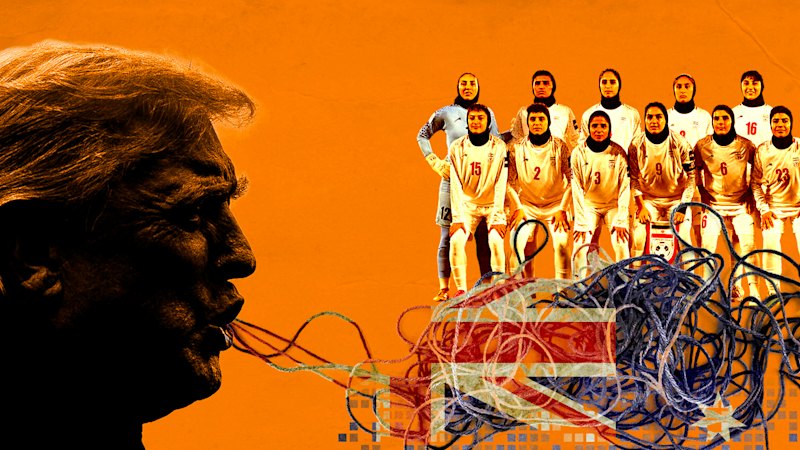
When Donald Trump posted on social media about the Iranian women’s soccer team, he inadvertently triggered a wave of misinformation that swept across social platforms and even into mainstream media coverage. The US president claimed Australian Prime Minister Anthony Albanese was “making a terrible humanitarian mistake” by allegedly forcing the team back to Iran, offering them asylum in America if Australia wouldn’t act.
What Trump didn’t know was that five Iranian players had already been granted visas to remain in Australia.
The misunderstanding was quickly corrected when Trump called Albanese around 2am Tuesday, Canberra time. Trump promptly updated his followers, acknowledging the Prime Minister was handling what he called a “rather delicate situation” appropriately.
While the two leaders resolved the miscommunication without incident, the damage was already spreading across social media, particularly on Elon Musk’s X platform. A narrative took hold that Australia had been forcing women back to Iran against their will—and only reversed course after Trump’s intervention.
Australian internet activist Drew Pavlou played a key role in amplifying this story. His earlier post complaining about Australia’s alleged inaction was screenshotted and reshared by Trump’s account, reaching hundreds of thousands of viewers. Pavlou later shared footage of Iranian players being led onto airport buses and photos of a woman in the window of a Qantas plane bound for Sydney.
International accounts with substantial followings further pushed the misleading claims. A UK-based account under the name Nioh Berg told their 417,000 followers that the Qantas plane photo would “live in infamy,” claiming “suffering, torture and possibly execution awaits them for defying the regime. And Australia allowed it.” By Thursday morning Australian time, that post had amassed 1.4 million views.
Another account called Persian Jewess used the same image in a post that garnered nearly one million views and was amplified by prominent hedge fund manager Bill Ackman, a Trump associate. Ackman tagged the president, suggesting a post from him “could save their lives.”
The misinformation continued to spread through far-right circles. British anti-Islam activist Tommy Robinson told his 1.9 million followers that “Australian leaders will send young Iranian women to their almost certain deaths by plane.” Even journalists contributed to the confusion, with Australian-born UK presenter Will Kingston accusing NSW police of standing by while the soccer players were “falsely imprisoned.”
Several US news outlets framed the story as Australia granting asylum only after Trump’s intervention. The Washington Post reported Australia made the decision “after Trump pressure,” while Republican Senator Lindsey Graham credited Trump’s phone call for prompting the government to grant asylum.
In reality, the Australian government had been “preparing for this for some time,” as Albanese later revealed. Home Affairs Minister Tony Burke had flown to Queensland multiple times in the preceding days to handle the necessary paperwork. The government deliberately kept its support offer to the athletes behind the scenes to avoid endangering them or their families—a sensitive approach Albanese said was respected by media who held back reporting certain details.
Seven Iranian team members ultimately accepted Australia’s asylum offer, though one later changed her mind.
When contacted, Pavlou moderated his earlier claims but remained critical of the Australian government for what he called a “slow” response. He suggested the government should have made a public offer of asylum earlier, though such a public declaration could have put the players and their families at greater risk.
The incident highlights how easily misinformation can spread internationally, even when quickly corrected at the source, and demonstrates how social media amplification can distort diplomatic conversations into perceived political victories.
Fact Checker
Verify the accuracy of this article using The Disinformation Commission analysis and real-time sources.

15 Comments
The role of social media activists in amplifying the misinformation is concerning. While freedom of speech is important, we need better ways to counter the spread of false narratives online.
I agree. Social media platforms have a responsibility to implement more robust fact-checking and content moderation measures to limit the virality of misinformation, especially around high-stakes political issues.
The rapid spread of misinformation around this issue highlights the challenges we face in the digital age. Responsible reporting, fact-checking, and better platform moderation will be crucial to addressing the problem of online misinformation.
Well said. Ensuring the accuracy and integrity of information shared online should be a top priority for media outlets, social media platforms, and policymakers alike. Only through a coordinated effort can we effectively combat the spread of misinformation.
Interesting to see how quickly misinformation can spread, even on high-profile social media platforms. It’s a good reminder to always fact-check claims, especially those involving political figures and sensitive issues like asylum policy.
Absolutely. The speed at which false narratives can take hold is concerning. Responsible reporting and fact-checking are crucial to combat the spread of misinformation.
This story is a sobering reminder of how quickly false information can gain traction, even when it contradicts the facts. It’s crucial that public figures and media outlets exercise caution and verify information before sharing it.
This story serves as a reminder of the need for greater digital media literacy and the importance of verifying information, especially when it involves high-profile political figures and sensitive policy issues.
This incident highlights the need for greater transparency and accountability when it comes to political communication, especially on sensitive issues like immigration. Leaders must be held responsible for the accuracy of their statements.
The rapid spread of misinformation around this issue is worrying, but it’s good to see the leaders involved were able to clear up the misunderstanding. Improved media literacy and fact-checking efforts will be crucial to prevent similar incidents in the future.
I agree. Equipping the public with the tools to critically evaluate information, especially on social media, is essential to combating the spread of misinformation. Collaborative efforts between platforms, educators, and policymakers will be key.
It’s good to see that the miscommunication was quickly resolved between Trump and Albanese. However, the broader issue of misinformation on social media remains a significant challenge that needs to be addressed.
Absolutely. Tackling the spread of misinformation online requires a multi-faceted approach involving platforms, policymakers, and the public. Ongoing efforts to improve digital literacy and fact-checking are important steps in the right direction.
This story highlights the importance of leaders communicating clearly and resolving issues directly, rather than relying on social media. It’s good to see Trump and Albanese were able to clear up the misunderstanding quickly.
You make a fair point. Direct communication between leaders can go a long way in preventing the spread of misinformation, especially on sensitive topics like immigration and asylum policy.