


Listen to the article
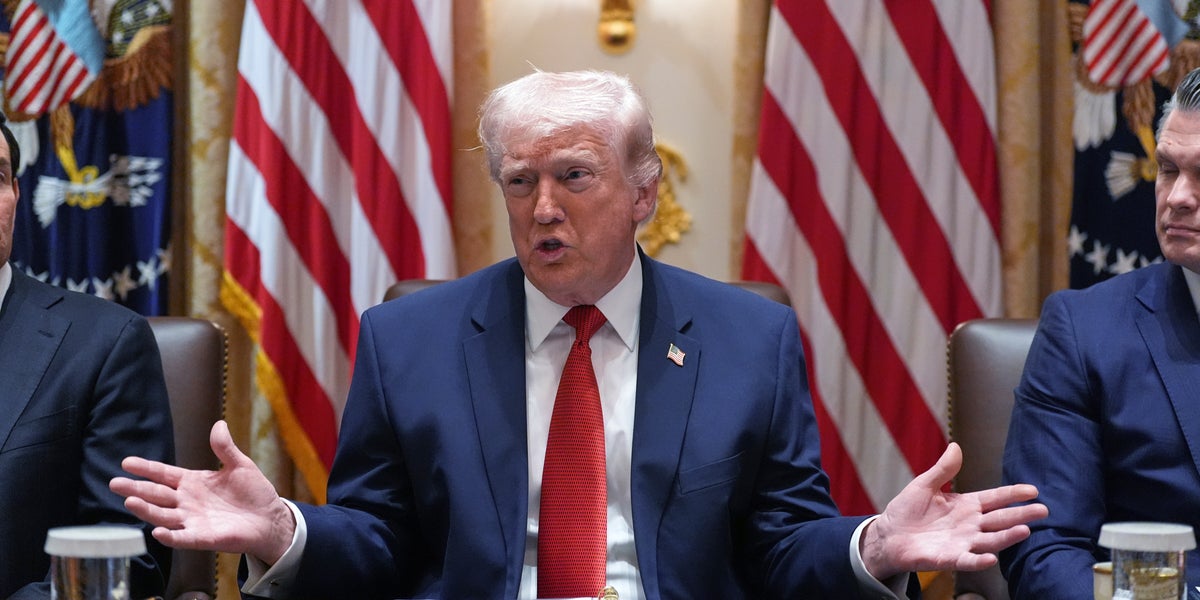
In a display of continued skepticism toward NATO, President Donald Trump has once again mischaracterized the military alliance’s history of mutual defense, claiming that NATO “will never come to our rescue” during a Cabinet meeting at the White House.
The statement directly contradicts historical fact. Following the September 11, 2001, terrorist attacks on American soil, NATO invoked Article 5 of its founding treaty for the first and only time in its history. This provision, which represents the cornerstone of the alliance’s collective defense principle, obligates all member states to consider an attack against one member as an attack against all.
“We’re very disappointed with NATO because NATO has done absolutely nothing,” Trump stated during the Cabinet meeting. “I said 25 years ago that NATO’s a paper tiger, but more importantly that we’ll come to their rescue but they will never come to ours.”
The President’s criticism extended to what he perceives as NATO’s insufficient involvement in current global conflicts, particularly regarding shipping disruptions in the Strait of Hormuz. However, experts note that NATO was established as a defensive alliance, not designed for offensive operations outside its member territories.
Trump’s relationship with NATO has been contentious throughout his presidency. His administration has repeatedly pressured European members to increase their defense spending to meet the alliance’s target of 2% of GDP, often using confrontational rhetoric that has strained diplomatic relations.
This latest criticism follows a controversial statement Trump made in January when he claimed NATO troops had “stayed a little back, a little off the frontlines” during the war in Afghanistan that followed the 9/11 attacks. That assertion drew sharp rebuke from allies, including British Prime Minister Keir Starmer, who called the remarks “insulting and frankly appalling” and urged the President to apologize.
In reality, NATO’s response to 9/11 was substantial. After invoking Article 5, the alliance deployed thousands of troops to Afghanistan as part of the International Security Assistance Force (ISAF). Between 2003 and 2014, NATO commanded ISAF, which grew to include more than 130,000 troops from 51 NATO and partner nations. During this period, over 1,100 service members from NATO countries other than the United States lost their lives in Afghanistan.
Beyond Afghanistan, NATO has conducted numerous operations supporting U.S. strategic interests, including counterterrorism initiatives, peacekeeping missions in the Balkans, and maritime security operations in the Mediterranean Sea and off the Horn of Africa.
Security analysts suggest that Trump’s repeated criticism of NATO reflects his broader skepticism toward multilateral alliances and international organizations. His “America First” approach to foreign policy has consistently prioritized transactional relationships over traditional alliance structures.
NATO officials have largely refrained from directly responding to Trump’s latest comments, preferring to emphasize the alliance’s ongoing strategic importance and adaptability in addressing evolving security challenges, including cyber threats and Russian aggression in Eastern Europe.
The alliance, which celebrates its 75th anniversary this year, has expanded significantly since its founding in 1949, growing from 12 to 32 member states with the recent additions of Finland and Sweden following Russia’s invasion of Ukraine.
Despite Trump’s criticisms, bipartisan support for NATO remains strong in Congress, with many legislators emphasizing the alliance’s strategic importance to American security interests and global stability in an increasingly complex geopolitical landscape.
Fact Checker
Verify the accuracy of this article using The Disinformation Commission analysis and real-time sources.

10 Comments
Interesting to see the President criticizing NATO’s involvement in global issues like the Strait of Hormuz. As a defensive alliance, NATO may have limitations in addressing such maritime security concerns. A more nuanced understanding of NATO’s structure and mandate could help inform these discussions.
That’s a good observation. NATO was established primarily for collective defense, not as a global rapid reaction force. Assessing its appropriateness for addressing diverse geopolitical challenges requires careful analysis.
The President’s comments on NATO seem to reflect a fundamental misunderstanding of the alliance’s purpose and history. While NATO may have room for reform, his claims about their lack of support for the US are simply false. A more informed and balanced perspective would be helpful in addressing the complex challenges facing the alliance.
Well said. Constructive dialogue on NATO’s future should be grounded in facts, not rhetoric. Acknowledging the alliance’s strengths and weaknesses, while identifying areas for improvement, is a more productive approach than outright dismissal.
While I understand the President’s frustration with NATO, his claims about their lack of support for the US don’t seem accurate. NATO did invoke Article 5 to support the US after 9/11, even if their involvement in other conflicts has been limited. It’s a complex alliance with nuanced history.
You make a fair point. NATO is a defensive alliance, not designed for offensive operations. Its purpose and capabilities should be considered carefully when evaluating its role and contributions.
It’s concerning to see the President make false claims about NATO’s history and contributions. While the alliance may not be perfect, the facts show they did come to the US’s defense after 9/11. Maintaining a strong, functional NATO is important for global security, even if its scope and capabilities need to evolve.
You’re absolutely right. Factual accuracy and nuanced understanding of NATO’s role and limitations should guide any discussion about the alliance’s future. Dismissing its history and value is counterproductive.
The President seems to have an overly simplistic view of NATO’s purpose and history. While the alliance may have room for improvement, dismissing its value and past support for the US is not constructive. A more balanced assessment that considers NATO’s strengths and limitations could lead to productive reforms.
I agree. Constructive criticism that recognizes NATO’s role and achievements, while also identifying areas for improvement, would be a more productive approach than outright dismissal of the alliance.