


Listen to the article
In a display of continued criticism towards NATO, U.S. President Donald Trump has once again made contested claims about the military alliance, asserting that it would never come to America’s defense despite historical evidence to the contrary.
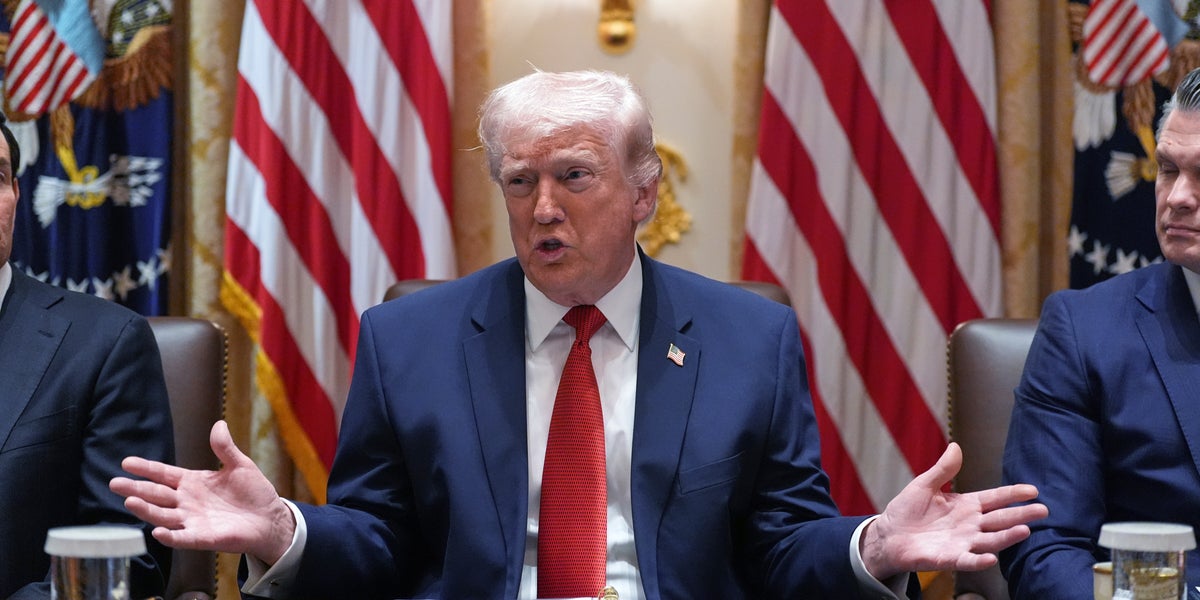
Speaking during a Cabinet meeting at the White House, Trump expressed disappointment with NATO, claiming the organization “has done absolutely nothing” and describing it as a “paper tiger.” He insisted that while the United States would defend NATO allies, “they will never come to ours.”
This statement directly contradicts the historical record. NATO’s only invocation of Article 5—the collective defense clause that binds members to protect each other—occurred after the September 11, 2001 terrorist attacks on the United States. Following those attacks, NATO allies deployed troops to Afghanistan in what became the alliance’s longest military operation.
“I want you to remember that we said this. They never came to our rescue,” Trump stated, despite the alliance’s documented support during America’s darkest hour two decades ago.
The president also criticized NATO for not sending warships to help reopen the Strait of Hormuz to shipping traffic. However, security analysts note this mischaracterizes NATO’s fundamental purpose as a defensive alliance not designed for such operations outside its primary theater.
This latest critique adds to a pattern of NATO skepticism from Trump’s administration. Earlier this year, in January, the president sparked international controversy when he claimed NATO troops had “stayed a little back, a little off the frontlines” during the war in Afghanistan—comments that drew sharp rebuke from international leaders.
British Prime Minister Keir Starmer was among those who condemned those earlier statements, calling them “insulting and frankly appalling” and urging the president to apologize. The remarks were particularly sensitive given that many NATO member states lost soldiers in the Afghanistan conflict following their commitment to defend the United States after 9/11.
Trump’s relationship with NATO has been contentious throughout his presidency. He has consistently pressured European members to increase their defense spending to meet the alliance’s target of 2% of GDP, often using harsh rhetoric that has strained diplomatic relations.
While many security experts acknowledge Trump’s pressure has resulted in increased defense spending among European allies—a development widely seen as positive—they also warn that repeatedly questioning America’s commitment to collective defense weakens NATO’s deterrent effect against potential adversaries.
“They made a statement a couple of them that ‘we want to get involved when the war’s over’. No, you’re supposed to get involved when the war’s beginning, or even before it begins,” Trump added during his cabinet meeting, though it was unclear which specific NATO statements he was referencing.
NATO, founded in 1949 with the United States as a founding member, represents a cornerstone of Western security architecture. The 32-member alliance was originally created to counter Soviet influence during the Cold War but has evolved to address modern security challenges including terrorism and cyber threats.
Defense analysts note that Trump’s comments come at a sensitive time for transatlantic security, with ongoing conflicts in Ukraine and tensions in the Middle East creating significant challenges for Western security coordination.
The White House has not clarified whether the president’s statements reflect a shift in official policy toward the alliance or represent personal views. Meanwhile, NATO leadership has consistently reaffirmed the alliance’s commitment to collective defense while acknowledging the importance of fair burden-sharing among members.
As U.S. presidential elections approach, European leaders are closely monitoring developments, aware that the future of transatlantic security cooperation could be significantly influenced by domestic American politics in the coming months.
Fact Checker
Verify the accuracy of this article using The Disinformation Commission analysis and real-time sources.

20 Comments
Exploration results look promising, but permitting will be the key risk.
Good point. Watching costs and grades closely.
Silver leverage is strong here; beta cuts both ways though.
Good point. Watching costs and grades closely.
Good point. Watching costs and grades closely.
If AISC keeps dropping, this becomes investable for me.
Good point. Watching costs and grades closely.
Good point. Watching costs and grades closely.
I like the balance sheet here—less leverage than peers.
Production mix shifting toward News might help margins if metals stay firm.
Good point. Watching costs and grades closely.
Good point. Watching costs and grades closely.
Uranium names keep pushing higher—supply still tight into 2026.
I like the balance sheet here—less leverage than peers.
Good point. Watching costs and grades closely.
Good point. Watching costs and grades closely.
Uranium names keep pushing higher—supply still tight into 2026.
If AISC keeps dropping, this becomes investable for me.
Production mix shifting toward News might help margins if metals stay firm.
Good point. Watching costs and grades closely.