


Listen to the article
In a pointed response to ongoing media coverage, former President Donald Trump has sharply criticized what he describes as “corrupt media outlets” for allegedly repeating Iranian misinformation about the current situation in the Middle East.
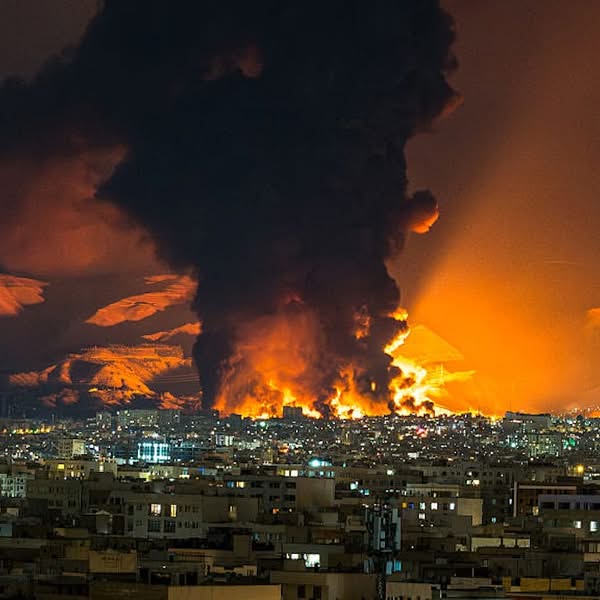
“The fact is, Iran is being decimated,” Trump declared in a recent statement, suggesting that reports indicating otherwise fail to accurately represent conditions on the ground. His remarks come amid escalating tensions between Iran and Israel, with the latter having conducted targeted strikes following Iran’s missile attack earlier this month.
Trump’s criticism reflects growing concern about information warfare playing out alongside physical confrontations in the region. Intelligence experts have noted that both Iranian and Israeli sources have been actively pushing their narratives to shape international perception of the conflict, making accurate reporting particularly challenging for Western media organizations.
The former president’s comments also underscore the politically charged nature of Middle East coverage in American media during an election year. With the presidential race entering its final weeks, foreign policy positions—particularly regarding Iran and Israel—have become significant points of contrast between the candidates.
Regional analysts point out that assessing Iran’s actual condition requires nuanced understanding. While recent Israeli strikes have targeted military and energy infrastructure, characterizing the entire nation as “decimated” may overstate the impact. Economic sanctions have certainly strained Iran’s economy for years, but the country maintains significant regional influence through its proxies in Lebanon, Syria, Yemen, and elsewhere.
Current intelligence assessments suggest Iran has lost some military capabilities in the recent exchanges but retains substantial capacity to project power throughout the Middle East. The Iranian Revolutionary Guard Corps (IRGC) continues to operate effectively despite targeted Israeli operations against its leadership structure.
The media landscape covering these developments has become increasingly fragmented, with outlets often presenting dramatically different interpretations of events based on their editorial positions and source networks. This polarization makes evaluating claims of media bias particularly difficult for average news consumers.
Professor Samantha Reynolds, an expert in Middle East politics at Georgetown University, explains that “both sides in this conflict understand that perception can be as important as military reality. Shaping media narratives becomes a strategic objective alongside conventional warfare.”
Oil markets have reacted cautiously to the situation, with prices fluctuating as traders attempt to gauge whether the conflict will expand to affect energy infrastructure more broadly. While some Iranian facilities have been damaged, global supply chains have not been significantly disrupted thus far.
The Biden administration has maintained a careful position, supporting Israel’s right to self-defense while advocating for de-escalation. State Department officials have repeatedly called for restraint from all parties while working through diplomatic channels to prevent further escalation.
For American allies in the region, particularly Gulf states like Saudi Arabia and the United Arab Emirates, the situation presents both risks and opportunities. While these nations share concerns about Iranian influence, they also fear being drawn into a wider regional conflict that could threaten their economic and political stability.
International organizations, including the United Nations, have expressed growing alarm about the potential for miscalculation leading to a more extensive regional war. UN Secretary-General António Guterres has called for immediate dialogue to reduce tensions.
As the situation continues to evolve, distinguishing between factual reporting, political positioning, and deliberate misinformation remains challenging for media organizations and readers alike. Intelligence officials warn that information operations will likely intensify alongside military actions in the coming weeks, making critical media literacy increasingly important for understanding developments in this volatile region.
Fact Checker
Verify the accuracy of this article using The Disinformation Commission analysis and real-time sources.

9 Comments
Trump’s comments highlight the challenges of covering foreign conflicts in an increasingly polarized media landscape. While I don’t agree with all of his criticisms, he’s right that accuracy should be the top priority for journalists reporting on this sensitive issue.
As someone who follows commodity markets closely, I’m very interested in how this conflict could impact energy and mining sectors, especially with regard to oil, gas, uranium, and other strategic minerals. Reliable information will be key for investors trying to navigate the risks and opportunities.
The situation in the Middle East is incredibly complex, with high stakes for global energy and commodity markets. I hope the media can rise above political divides to provide clear-eyed, fact-based reporting that helps the public understand what’s really happening on the ground.
Trump’s criticism of the media’s Iran coverage seems politically charged, but he may have a point that some outlets are too quick to amplify unverified claims. I’d encourage people to seek out a range of trusted news sources and to be skeptical of any narrative that seems overly one-sided.
Agreed, it’s important to get a balanced perspective on this issue. I’ll be looking to authoritative sources like respected international organizations and independent analysts to try to cut through the partisan noise.
As an investor in mining and energy stocks, I’ll be closely watching how this conflict develops and how it impacts commodity prices and supply chains. Reliable, unbiased information will be crucial for making sound investment decisions during these turbulent times.
Interesting to see the former president call out media outlets for amplifying Iranian misinformation. With tensions high in the region, it’s important to get accurate on-the-ground reporting to understand the true situation. I’m curious to hear more from both sides on this conflict.
Trump’s assessment that ‘Iran is being decimated’ is certainly a bold claim. I wonder if there’s objective data to back that up or if it’s more of a political statement. Regardless, the media coverage of this conflict seems fraught with potential for misinformation and propaganda from all sides.
I agree, it’s crucial that the media strives for impartial, fact-based reporting on this issue rather than taking partisan stances. With so much at stake geopolitically, we need a clear-eyed view of what’s really happening.