


Listen to the article
Trump Claims Iran Using AI as “Disinformation Weapon” in Military Conflict
Former U.S. President Donald Trump has accused Iran of deploying artificial intelligence to spread false information about its military capabilities, citing fabricated videos that allegedly showed American vessels under attack.
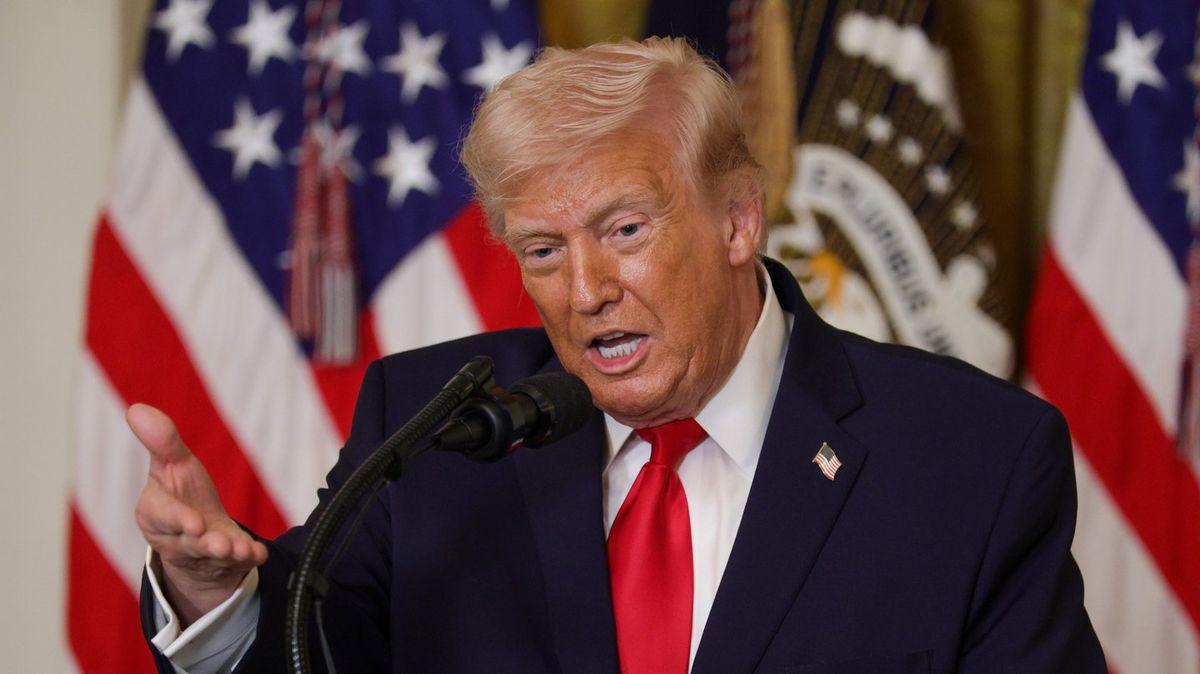
Speaking at the Trump-Kennedy Center on Monday, the 79-year-old Republican described his recent encounter with what he believes was AI-generated propaganda showing the USS Abraham Lincoln aircraft carrier engulfed in flames.
“They are a country that, for years, I didn’t know this until recently, they’re a country based on disinformation,” Trump said about Iran. “And now they’re using disinformation plus AI. And that’s a terrible situation.”
The former president recounted how he had called a military general after seeing the alarming footage, asking, “General, what’s with the Abraham Lincoln? It looks like it’s burning down.” According to Trump, the general assured him, “No, it’s not burning down. Not a bullet was ever fired at it, sir. They know better.”
Trump described this as his “first glimpse of AI” and expressed concern about the technology’s potential for manipulation. “They showed buildings in Tel Aviv burning to the ground, high rises burning. They showed buildings in Qatar. They showed buildings in Saudi Arabia burning, and they weren’t burning. They weren’t hit. It was all AI, AI-based. Terrible,” he added.
The accusations come amid heightened tensions in the Middle East. Reuters has verified images from the Iraqi port of Basra showing explosive-laden Iranian boats attacking two fuel tankers, resulting in at least one crew member’s death. Iranian state media did claim to have struck the USS Abraham Lincoln, though Western outlets largely did not report this claim.
On Sunday, while aboard Air Force One, Trump reiterated his concerns about AI technology. “AI can be very dangerous; we have to be very careful with it,” he told reporters shortly after posting on his Truth Social platform about the issue.
In his lengthy Truth Social post, Trump wrote: “Iran has long been known as a Master of Media Manipulation and Public Relations. They are Militarily ineffective and weak, but are really good at ‘feeding’ the very appreciative Fake News Media false information.”
He elaborated that Iran was using AI as “another Disinformation weapon,” creating images of “phony ‘Kamikaze Boats'” and falsely portraying buildings and ships on fire. “For instance, Iran, working in close coordination with the Fake News Media, shows our great USS Abraham Lincoln Aircraft Carrier, one of the largest and most prestigious Ships in the World, burning uncontrollably in the Ocean,” Trump wrote.
The former president went on to claim that media outlets knowingly spreading such content should “be brought up on Charges for TREASON for the dissemination of false information.”
Sky News US correspondent Mark Stone noted that Trump’s comments “raise serious questions about the sort of content the president is absorbing and believing on social media.”
These accusations highlight growing concerns about the role of artificial intelligence in modern information warfare. As AI technology becomes more sophisticated, distinguishing between genuine and fabricated content grows increasingly challenging, particularly in geopolitically sensitive contexts.
Trump’s statements also reflect his ongoing criticism of mainstream media outlets, which he has repeatedly accused of bias throughout his political career. In his Truth Social post, he mentioned Brendan Carr, the Chairman of the Federal Communications Commission (FCC), “looking at the licenses of some of these Corrupt and Highly Unpatriotic ‘News’ Organizations.”
The White House has not yet responded to requests for comment on the former president’s claims regarding Iran’s alleged use of AI in disinformation campaigns.
Fact Checker
Verify the accuracy of this article using The Disinformation Commission analysis and real-time sources.

14 Comments
Interesting that Trump is calling out Iran’s use of AI-generated videos as a form of disinformation. The ability to create fabricated footage is certainly a growing concern, especially in military and geopolitical contexts.
I wonder what steps can be taken to combat the spread of AI-generated ‘fake news’ and propaganda. Improved detection and verification methods may be key.
Trump’s claims about Iran’s use of AI for propaganda are certainly alarming, if true. The ability to create highly realistic, fabricated footage is a serious threat that merits further investigation and a coordinated, international response.
While I’m skeptical of some of Trump’s past claims, his concerns about Iran’s use of AI for disinformation seem legitimate. The threat of state-sponsored propaganda amplified by emerging technologies is a growing global challenge that warrants serious attention.
The prospect of AI-generated ‘fake news’ being weaponized for geopolitical ends is deeply concerning. Effective strategies to combat this will require collaboration between governments, tech companies, and media organizations to strengthen verification, fact-checking, and public awareness.
Agreed. Combating the spread of AI-powered disinformation will be a complex, multi-faceted challenge. But it’s one we can’t afford to ignore given the potential ramifications for national security and democratic discourse.
The use of AI-generated videos for military/political propaganda is a disturbing development. It speaks to the need for greater transparency and accountability around the use of these technologies, to prevent abuse and manipulation.
Agreed. With the rapid pace of AI advancement, international cooperation and robust governance frameworks will be essential to mitigate the risks and ensure these powerful tools are not misused.
Trump’s claims about Iran using AI for disinformation are serious. If true, it underscores the growing threat of state-sponsored propaganda efforts leveraging emerging technologies. Fact-checking and media literacy will be key to combating this.
This is a complex issue without easy solutions. On one hand, the potential for AI-powered disinformation campaigns is alarming. On the other, we must be cautious about overstating the threat or rushing to heavy-handed responses. Balanced, evidence-based approaches will be key.
Absolutely. Maintaining a level-headed, nuanced perspective on the risks and challenges will be critical as policymakers and tech leaders work to develop appropriate safeguards and mitigation strategies.
While I’m no fan of Trump, his concerns about Iran’s potential use of AI for disinformation seem warranted. The ability to fabricate highly realistic footage is a serious threat that needs to be addressed proactively.
This highlights the double-edged nature of AI technology. While it can be a powerful tool, it’s also ripe for abuse by bad actors seeking to mislead and manipulate. Rigorous oversight and safeguards will be crucial going forward.
It’s concerning to see how rapidly AI capabilities are advancing, and the potential national security implications. Governments will need to stay vigilant and proactive in this space.