


Listen to the article
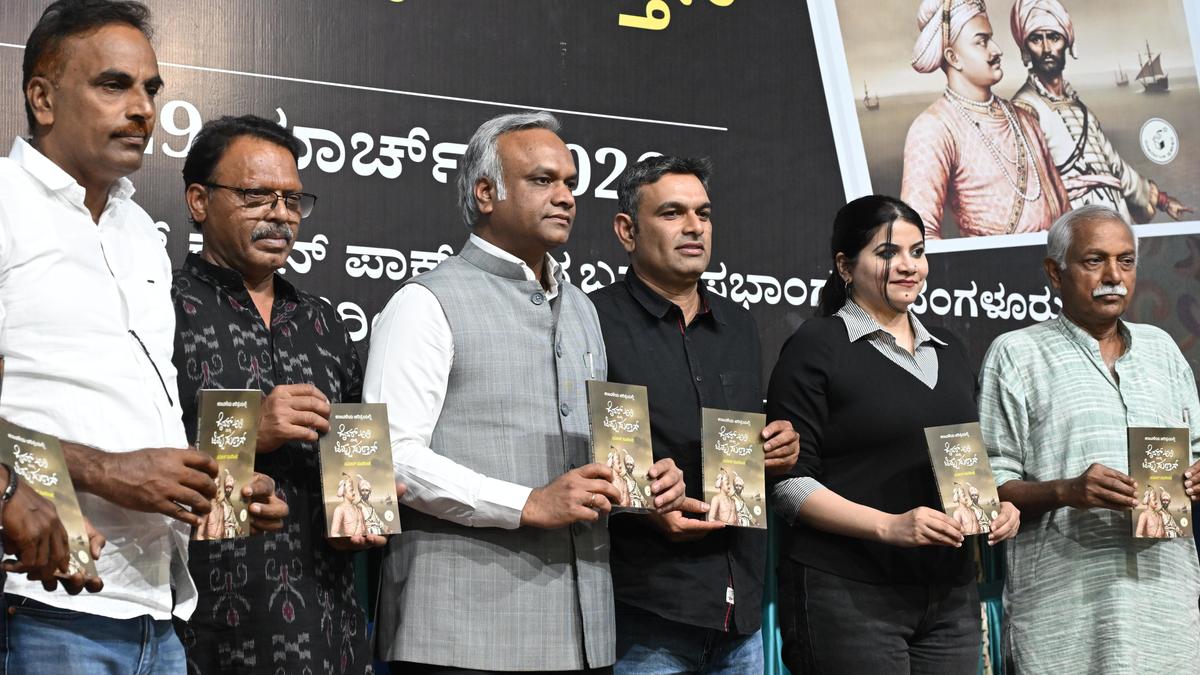
In a significant literary event that underscores the importance of regional language historical works, author and journalist Naveen Soorinje’s new book “Karavaliya Charitreyalli Hyder Ali Mattu Tippu Sultan” (Hyder Ali and Tipu Sultan in the History of Coastal Karnataka) was released in Bengaluru on Sunday.
The book launch featured prominent historian Ruchika Sharma, who emphasized the critical role translations of historical works into regional languages play in combating misinformation. “While translations speak in the language of the people, propaganda, too, spreads most effectively in the language people consume daily,” Sharma noted during the event. She stressed that making well-researched historical accounts available in regional languages is essential for challenging distorted narratives at the grassroots level.
The event drew notable attendees including Priyank Kharge, Karnataka’s Minister of Rural Development and Panchayat Raj, and cultural thinker Banjagere Jayaprakash, highlighting the intersection of politics, culture, and historical scholarship in contemporary India.
Soorinje’s book examines the legacies of Hyder Ali and his son Tipu Sultan specifically within the context of coastal Karnataka, an approach that brings regional nuance to the broader historical narrative of these controversial 18th-century rulers of Mysore.
The publication comes at a time when historical interpretations of Tipu Sultan continue to be a subject of intense debate in Karnataka’s political and cultural spheres. Often referred to as the “Tiger of Mysore,” Tipu Sultan has been variously portrayed as a freedom fighter who resisted British colonialism and as a tyrannical ruler who persecuted certain communities. These competing narratives have made him a polarizing figure in contemporary political discourse.
Historical scholarship in regional languages has gained increased recognition as an important counterbalance to both colonial historiography and contemporary political narratives that often simplify complex historical figures for ideological purposes. By focusing on coastal Karnataka, Soorinje’s work adds geographic specificity to the historical record, examining how the policies and actions of these rulers affected this particular region.
Karnataka has witnessed heated debates over Tipu Sultan’s legacy in recent years, with political parties taking opposing stances on commemorating him. The previous Congress government in the state had instituted annual “Tipu Jayanti” celebrations, which were subsequently canceled when the BJP came to power. Such polarization makes scholarly works that provide nuanced historical analysis particularly valuable.
The publication of this book also highlights the growing market for regional language historical works in India. While English-language academic texts often dominate historical discourse at the national level, regional language publications reach broader audiences and contribute to more inclusive historical conversations.
Sharma’s comments during the event point to a recognition among historians that the battle against historical misinformation must be fought in multiple linguistic arenas. As social media and messaging platforms facilitate the rapid spread of simplified or distorted historical narratives, the availability of well-researched regional language works becomes increasingly important.
The event underscored how historical scholarship, particularly when made accessible through regional languages, can serve as a crucial tool for civic education and informed public discourse in India’s diverse linguistic landscape.
As debates over historical figures continue to influence contemporary politics in Karnataka and across India, works like Soorinje’s contribute to a more nuanced understanding of the past, potentially offering common ground in otherwise polarized discussions about India’s complex history and the legacies of its historical figures.
Fact Checker
Verify the accuracy of this article using The Disinformation Commission analysis and real-time sources.
