


Listen to the article
Schools Navigate Complex Transgender Guidelines Amid Mental Health Crisis
Schools across Ireland are grappling with how to properly support transgender students, a situation complicated by conflicting guidance and limited resources. A recent controversy erupted when a guide titled “Know Your Rights,” jointly produced by the Irish Council for Civil Liberties, the Transgender Equality Network Ireland, and ShoutOut, claimed schools were legally obligated to use students’ preferred pronouns and allow access to single-sex spaces based on gender identity.
The Department of Education swiftly rejected these claims, clarifying that no such legal obligations exist. The department’s rare public intervention highlights the sensitivity surrounding the issue and the pressure schools face to navigate it correctly.
The €18,500 guide, funded by the Irish Human Rights and Equality Commission, has drawn criticism for potentially misleading educators who are already struggling with limited resources. Many education experts have noted that this funding could have been better used to directly support schools, particularly at the primary level where budgets are often stretched thin.
Adding to the complexity is the absence of updated guidelines from the Department of Education since 2016. While Maynooth University is reviewing these guidelines, the landscape has dramatically shifted, particularly following the UK’s comprehensive Cass Review—which the “Know Your Rights” guide notably omitted.
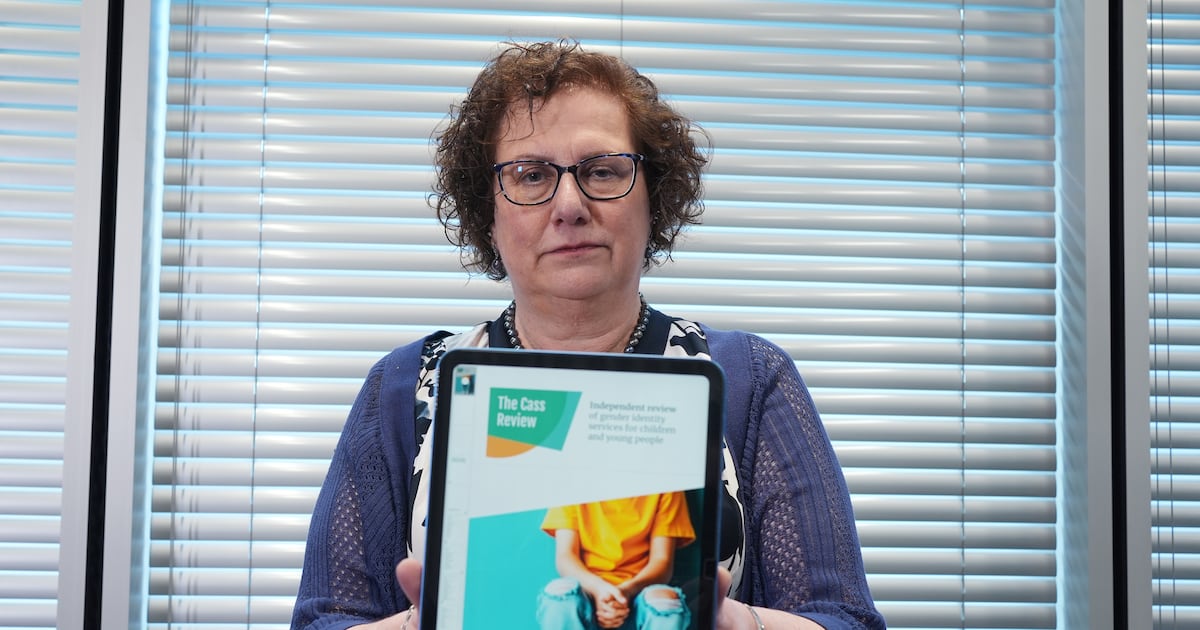
The Cass Review, commissioned by NHS England to evaluate gender identity services for young people, documented an exponential increase in referrals, predominantly among adolescent girls. It revealed significant overlap between gender distress and other conditions, finding transgender and gender-diverse youth are three to six times more likely to be autistic than the general population.
Crucially, the review cautioned that social transitioning—including name and pronoun changes—is not a neutral action but “an active clinical intervention with potential long-term psychological effects.” This finding directly contradicts the approach advocated in the Irish guide.
School administrators report they desperately want to support students experiencing gender distress but lack the qualifications and resources to address the complex underlying issues that may be involved. While transgender students remain a particular concern, they represent a relatively small portion of the student population.
The controversy comes amid a broader mental health crisis among Irish youth. Schools are witnessing substantial increases in anxiety, depression, eating disorders, and body dysmorphic disorder among students. This deteriorating mental health situation manifests in concerning behaviors like chronic absenteeism, which the Economic and Social Research Institute reports is particularly prevalent in disadvantaged communities, with over 25% of students in DEIS post-primary schools missing 20 or more days.
Educators are simultaneously confronting new challenges like “shipping”—where students create and vote on fictional romantic relationships on social media platforms—which can quickly evolve into cyberbullying. The proliferation of deepfake technology and unsolicited sexual imagery compounds these problems.
Meanwhile, Ireland’s Child and Adolescent Mental Health Services (CAMHS) is overwhelmed. The system received 15,257 referrals through November last year, a 10.8% increase over the same period in 2024. As of November, 4,375 children were on waiting lists, with 590 waiting more than 12 months for care. Advocacy group Families for Reform of CAMHS recently told an Oireachtas Health Committee that children with suicidal ideation are being turned away without evaluation.
Teachers themselves are not immune to this mental health crisis. Research from Dublin City University involving 1,000 teachers found that 28% rated their mental health as “poor” or “very poor” over the previous year, and 42% couldn’t envision continuing in the profession long-term.
This perfect storm of challenges—transgender student support, broader mental health concerns, new social media threats, and curriculum reforms—is creating unsustainable pressure on schools. Education experts emphasize that in this context, it becomes particularly damaging when well-funded organizations issue inaccurate guidelines that erode teacher trust rather than providing the evidence-based support that Ireland’s education system urgently needs.
Fact Checker
Verify the accuracy of this article using The Disinformation Commission analysis and real-time sources.

19 Comments
The mental health challenges faced by many students, including transgender individuals, are concerning. Ensuring schools have the necessary resources and support to address these issues should be a top priority for policymakers.
This situation highlights the need for policymakers to engage in meaningful dialogue with all stakeholders, including educators, to develop inclusive, legally sound policies that balance the needs of transgender students and the broader school community.
While the protection of transgender students’ rights is important, it’s concerning that the guidance provided may have overstepped legal obligations and created more challenges for already overwhelmed educators. A more balanced, collaborative approach is needed.
While the intent behind the guide may have been good, providing misleading information to already overwhelmed educators is counterproductive. Schools require clear, legally grounded direction to meet their students’ needs effectively.
You make a fair point. Transparent, evidence-based guidance from the government would go a long way in helping schools navigate this sensitive issue.
While the intent behind the guide may have been well-meaning, providing inaccurate information to schools can create more problems than solutions. Transparent, evidence-based guidance is essential to support educators in this sensitive area.
I agree. Allocating resources directly to schools, rather than producing questionable materials, would likely be a more effective way to address the challenges they face.
This highlights the need for policymakers to work closely with education experts to develop inclusive, realistic guidelines that support both transgender students and the broader school community. A balanced approach is key.
It’s a complex issue for schools to navigate, balancing the needs of transgender students with legal realities and limited resources. Guidance from authoritative sources could help provide clarity and support for educators.
You’re right, schools need clear, consistent guidelines from the government to handle this sensitively and fairly.
Transgender rights are important, but the guidance provided seems to have overstepped legal obligations, causing more problems than solutions. Schools need practical, evidence-based support, not misleading claims.
Agreed. Allocating resources directly to schools, especially at the primary level, would likely be more helpful than producing questionable guidance materials.
This situation underscores the need for clear, consistent communication and collaboration between policymakers, educators, and the broader community. Developing practical, evidence-based solutions should be the priority, not misleading claims.
Agreed. Providing direct support and resources to schools, especially at the primary level, would likely be more beneficial than producing questionable guidance materials.
This situation highlights the complexity of the issues facing schools when it comes to supporting transgender students. Clear, evidence-based guidance from policymakers, developed in close consultation with education experts, is essential to help schools navigate this sensitive area effectively.
You make a good point. Providing direct assistance and resources to schools, rather than publishing potentially misleading materials, seems like a more constructive way to address the challenges they face.
Navigating the complex issue of transgender rights in schools is a delicate balance. Policymakers should work closely with education experts to develop inclusive, legally sound guidelines that support all students and the broader school community.
The mental health challenges facing many students, including transgender individuals, are concerning. Ensuring schools have the necessary resources and support to address these issues should be a top priority.
Absolutely. Providing direct assistance to schools, rather than publishing potentially misleading materials, seems like a more constructive approach.