


Listen to the article
Japan’s political landscape is witnessing a significant shift as social media-savvy young voters emerge as a crucial demographic ahead of Sunday’s general election. Amid concerns about the spread of misinformation, digital platforms are stepping up efforts to educate Generation Z on identifying fake news and disinformation.
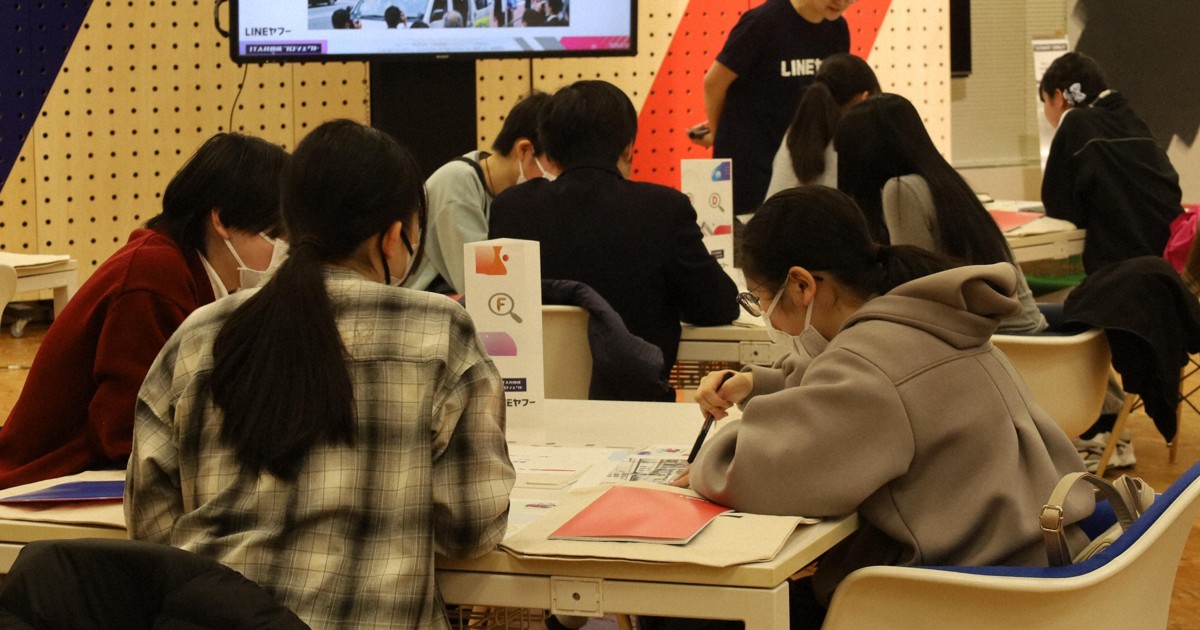
In Tokyo last week, approximately 20 junior high and high school students gathered for a workshop focused on developing critical media literacy skills. The event, organized by LY Corp., operator of the Line messaging app, aimed to equip young people with the tools to verify information sources and recognize manipulated content in an era where deepfakes have become increasingly sophisticated.
Working collaboratively, participants analyzed real-world examples, including AI-generated images, composite photos, and misleading edits. One exercise challenged students to identify abnormalities in what appeared to be an authentic image of a political candidate delivering a speech near Shinjuku Station. The image, entirely created by generative AI, contained subtle errors including a misspelled station name and fabricated banners.
“I couldn’t find any errors in those AI-generated images. It made me realize I may have overestimated my ability to spot fake news,” admitted an 18-year-old high school senior who will cast her ballot for the first time in the upcoming election. “With the election approaching, I want to sort through information while fact-checking it.”
The workshop highlighted a concerning trend revealed in LY Corp.’s recent survey: 87 percent of young participants reported exposure to disinformation or misinformation, while 54 percent acknowledged potentially being influenced by such content. Furthermore, 88 percent noted insufficient awareness-raising efforts and educational resources on the topic.
Japan’s political landscape has evolved significantly since 2016 when the voting age was lowered from 20 to 18. Despite this expansion of the electorate, voter turnout among teenagers has consistently lagged behind other age groups. Political parties are now intensifying efforts to engage with younger voters through social media platforms, recognizing their potential influence in the 465-seat House of Representatives election.
Current polling suggests the ruling coalition of the Liberal Democratic Party and the Japan Innovation Party is positioned to secure at least a majority, while opposition parties struggle to expand their support base. In this environment, capturing the attention of unaffiliated young voters has become a strategic priority.
The Ministry of Internal Affairs and Communications has proactively addressed the dark side of social media by requesting platform operators to act swiftly in removing harmful content during the election period. This reflects growing concerns about the potential impact of disinformation on electoral outcomes.
“Fake news has become a social issue,” said Narumichi Oyama, a manager at LY Corp. “Although younger generations, including junior and senior high school students, appear adept at using social media and AI, it remains quite questionable whether education has kept pace with the growing influence of social media and the evolution of AI.”
A 2025 survey by the communications ministry revealed that approximately half of respondents aged 15 to 39 who encountered fake or false information admitted to sharing it with others in some form. This statistic underscores the urgent need for improved digital literacy education.
“Most people vaguely know that fake news is terrifying and they need to be careful not to be misled, but relatively few students, particularly those in their teens, pursue the truth and verify the information on their own,” Oyama observed. “As they will soon become voters and are expected to contribute to society, they should do so to filter out various noises and purely benefit from social media, the internet or AI.”
As Japan approaches this crucial electoral test, the intersection of technology, media literacy, and democratic participation has never been more significant, highlighting the evolving challenges facing modern democracies in the digital age.
Fact Checker
Verify the accuracy of this article using The Disinformation Commission analysis and real-time sources.

8 Comments
With the growing sophistication of deepfakes and other AI-generated content, digital media literacy is an essential life skill. These Japanese students are getting a head start, which will serve them well as engaged, informed citizens.
Kudos to the organizers for equipping these Japanese youth with the tools to combat misinformation. Hands-on workshops to identify deepfakes and other misleading content are exactly what’s needed to empower the next generation of digital citizens.
Proactive steps to educate young voters on identifying manipulated media and dodgy information sources are vital. Well done to the organizers for giving these Japanese teens the critical thinking skills to navigate the digital landscape.
Fascinating how teens are leveraging digital skills to tackle misinformation in elections. Verifying information sources and spotting manipulated content is crucial, especially with the rise of deepfakes. Kudos to the organizers for empowering young voters.
Digital literacy is so important these days. It’s great to see young people being trained to critically analyze online content and identify potential disinformation. Honing these skills early will serve them well in the digital age.
Couldn’t agree more. Teaching kids how to discern fact from fiction online is a vital life skill in the 21st century.
I’m impressed by the Japanese students’ ability to spot AI-generated images and other manipulated media. Developing that level of media literacy at a young age will be a huge advantage as they navigate the digital landscape.
In an era of rampant online misinformation, it’s heartening to see young people taking an active role in verifying the accuracy of political content. Their digital skills could make a real difference in upholding the integrity of elections.