


Listen to the article
South Sudan’s military forces have released new evidence to support their claim of recapturing a strategic outpost in Jonglei State, while opposition forces continue to dispute the assertion, highlighting the ongoing military and information conflict in the region.
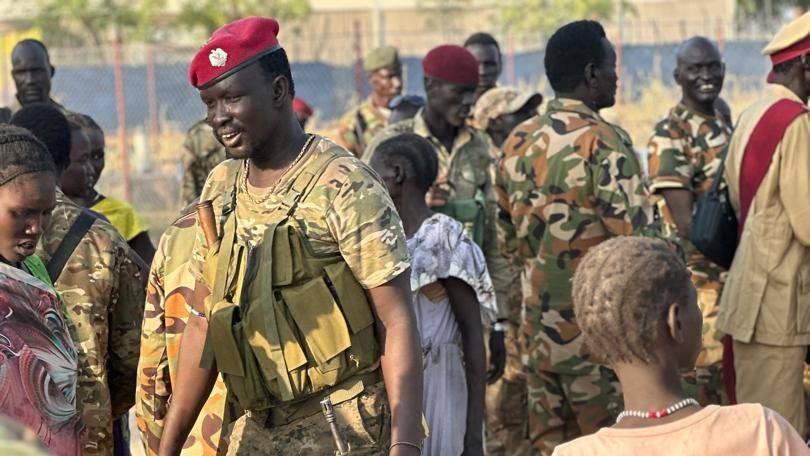
In a detailed statement issued on January 27, South Sudan People’s Defence Forces (SSPDF) spokesperson Major General Lul Ruai Koang announced that government troops had successfully recaptured the Pathai military outpost from Sudan People’s Liberation Army in Opposition (SPLA-IO) forces following what he described as “a brief but decisive battle” that concluded at 6:00 PM that day.
According to Koang, government forces conducted “mopping operations” and “battlefield searches” after securing the area, discovering six bodies of opposition fighters who had been killed in the confrontation. The military also reportedly seized significant quantities of ammunition, including rounds for 14.5mm and 12.7mm weapons, PKM light machine guns, and mortar shells.
The SSPDF statement highlighted a humanitarian aspect to the operation, claiming that over 20 women, children, and girls had been found at the site, allegedly “abandoned by fleeing rebel fighters following intense heat and chaos of battle.” The military asserted that these civilians were temporarily taken into “protective custody” in accordance with their Rules of Engagement before being transferred to local authority the following day.
“The civilians that were caught up in the battle were taken into protective custody overnight, and today in the afternoon, they were handed over to Mr. Khor Deng Chop, Paramount [Chief] of freshly recaptured Payam Pathai,” the SSPDF statement read. The army also claimed to have provided food assistance, including maize flour and cooking oil, to the civilians before they departed to reunite with their families.
To bolster their account, the SSPDF released video footage on January 28 showing the Paramount Chief apparently confirming receipt of the civilians. In the video, the chief states that he received “a group of over 20 women, girls and children that were abandoned by fleeing SPLA-IO rebels after its recapture,” adding that they were received “in peace and good health.”
The SPLA-IO has forcefully rejected these claims. Opposition spokesperson Colonel Lam Paul Gabriel issued a contradictory statement on social media, stating: “Disregard the misinformation from SSPDF. Yuai is still under the full control of the SPLA-IO.” The reference to Yuai, rather than Pathai specifically, may reflect differing terminologies for the area or strategic positioning in the information battle.
The conflicting narratives highlight the multifaceted nature of South Sudan’s ongoing conflict, where control of territory carries both military and political significance. The war of words between government and opposition forces has become an integral component of the broader struggle, with each side attempting to shape public perception of battlefield outcomes.
Jonglei State has long been a flashpoint in South Sudan’s complex civil conflict, which has displaced millions and caused severe humanitarian crises since the country’s independence in 2011. The remote location of Pathai and limited access for independent observers makes verification of either side’s claims extremely difficult, a common challenge in monitoring South Sudan’s fluid conflict dynamics.
Military analysts note that such contested narratives often reflect the strategic importance of the locations in question, with both sides seeking to demonstrate control over territories that may serve as bases for future operations or represent symbolic victories in the broader conflict landscape.
As the situation continues to evolve, humanitarian organizations remain concerned about the impact of ongoing hostilities on civilian populations in Jonglei and other contested regions throughout South Sudan.
Fact Checker
Verify the accuracy of this article using The Disinformation Commission analysis and real-time sources.

7 Comments
The dispute over information and allegations of misinformation highlights the challenge of getting reliable, impartial reporting in conflict zones. Fact-checking from independent sources will be crucial to assess the veracity of the claims made.
This seems like a complex and evolving situation in South Sudan. It will be important to monitor the competing claims and evidence from both the government and opposition forces to get a clearer picture of what’s happening on the ground.
The discovery of ammunition and civilian casualties raises concerning humanitarian issues that deserve further investigation. Ensuring the safety of all civilians should be the top priority.
This situation underscores the fragility of the peace process in South Sudan. Continued violence and lack of consensus on key events risks undermining efforts towards a lasting political settlement.
You make a good point. Sustained diplomatic pressure and engagement from regional and international actors will likely be needed to help stabilize the situation.
Agreed. A durable peace in South Sudan requires compromise and good-faith negotiations between all parties involved. Escalating tensions through military means is counterproductive.
I’m curious to hear more details on the military tactics and strategic importance of the Pathai outpost. Understanding the context behind the clashes could help shed light on the broader conflict dynamics.