


Listen to the article
Jammu and Kashmir Assembly Speaker Calls for Comprehensive Legal Framework to Combat Fake News
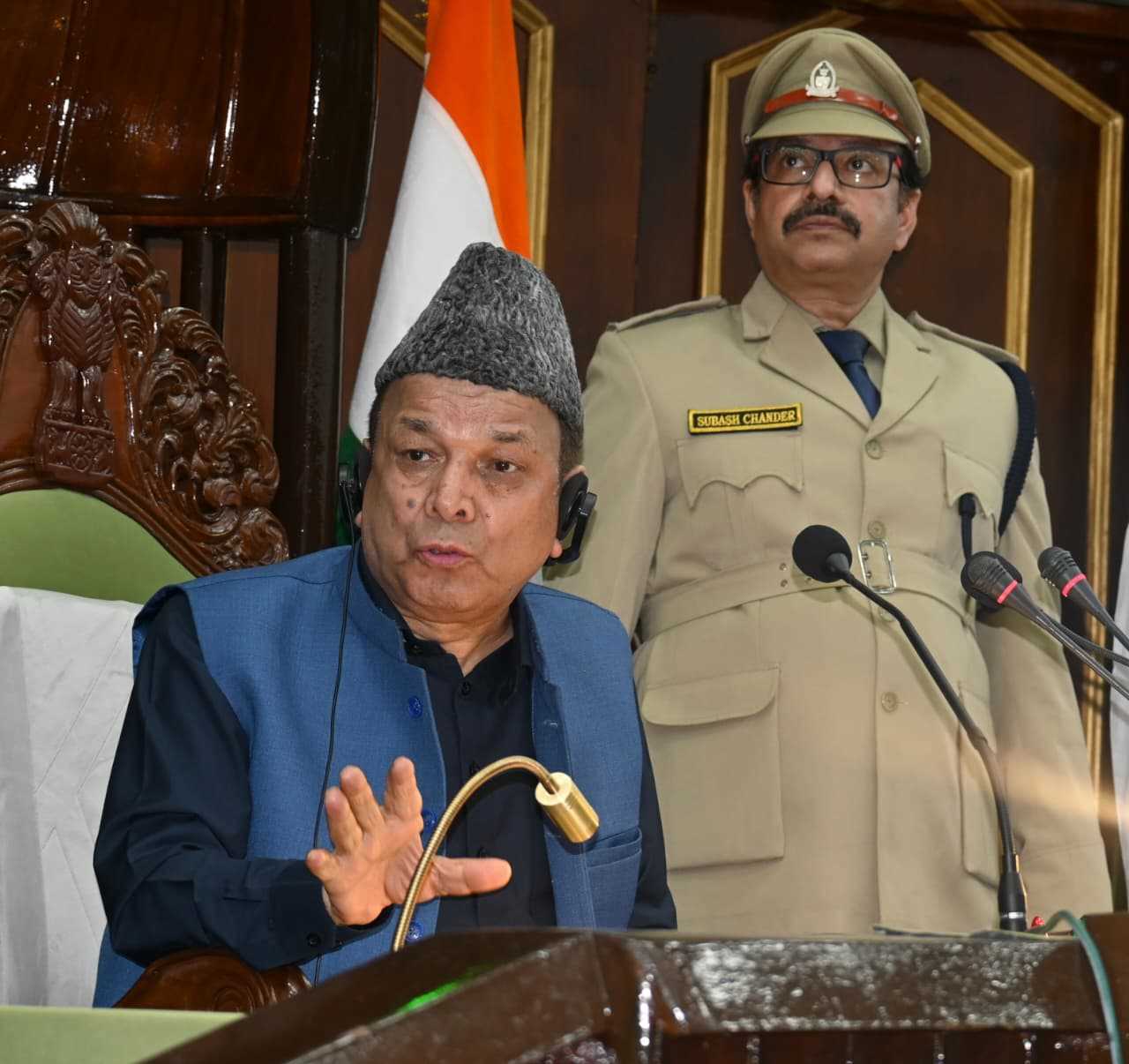
Advocate Abdul Rahim Rather, Speaker of the Jammu and Kashmir Legislative Assembly (JKLA), has called for urgent action to develop a comprehensive legal framework addressing the proliferation of fake news and misinformation across the region.
Speaking during a Short Duration Discussion in the Legislative Assembly on Thursday, Rather emphasized the growing challenge posed by misinformation and its detrimental effects on public trust and social cohesion in Jammu and Kashmir.
“The spread of fake news represents one of the most pressing challenges to our democratic institutions today,” Rather said during the session focused specifically on measures to combat misinformation in the union territory.
The Speaker stressed that any proposed legislation must strike a delicate balance between effectively countering false information and preserving democratic values. He advocated for a methodical, evidence-based approach that would examine existing legal frameworks and successful models implemented in other states and jurisdictions.
“We cannot address this issue with hastily drafted rules,” Rather noted. “Our approach must be comprehensive, considering both the unique circumstances of Jammu and Kashmir and the broader legal landscape of India regarding information regulation.”
The call comes amid growing concerns about the role of misinformation in exacerbating tensions in the politically sensitive region. Jammu and Kashmir, which was reorganized into a union territory in 2019 following the abrogation of Article 370, has witnessed significant political and social changes in recent years. These transformations have created a fertile environment for the spread of misleading information.
Media experts in the region have previously documented how misinformation campaigns have complicated public discourse on critical issues ranging from security matters to development initiatives. The problem has been amplified by growing internet penetration and widespread use of social media platforms in both urban and rural areas of Jammu and Kashmir.
Rather’s call for legislation reflects a growing trend across India, where several states are considering or have implemented measures to combat fake news. The central government has also amended IT rules to address misinformation on digital platforms, though these changes have sparked debates about freedom of expression.
“The legislation we envision must create a robust mechanism that can effectively counter fake news while simultaneously safeguarding responsible communication,” Rather emphasized. “It should protect legitimate journalism and free speech while providing tools to identify and address deliberate misinformation.”
The discussion in the Assembly also touched on the need for digital literacy programs and public awareness campaigns as complementary measures to any legal framework. Legislators acknowledged that legal remedies alone would be insufficient without corresponding efforts to educate the public about identifying reliable information sources.
The JKLA’s initiative comes at a time when global democracies are grappling with the challenges posed by misinformation. Studies have shown that fake news can significantly impact public opinion, electoral outcomes, and community relations, making it a matter of national security in many contexts.
Media associations in Jammu and Kashmir have cautiously welcomed the discussion, though some have expressed concerns about ensuring that any new regulations don’t inadvertently restrict press freedom or legitimate criticism of government policies.
As the Assembly moves forward with these deliberations, Rather has called for contributions from diverse stakeholders including journalists, legal experts, civil society organizations, and digital rights advocates to ensure a balanced and effective approach to tackling the challenge of misinformation in the region.
Fact Checker
Verify the accuracy of this article using The Disinformation Commission analysis and real-time sources.

16 Comments
Tackling fake news and misinformation is certainly a critical issue. It’s good to see the Speaker calling for a well-thought-out legal framework to address this challenge while preserving democratic values. A balanced approach that draws on successful models elsewhere could be promising.
Agreed. Misinformation can have serious consequences, so developing an effective yet measured response is important. I’m curious to learn more about the specific proposals and how they aim to strike that balance.
The Speaker raises a valid concern about the growing threat of misinformation. Developing a comprehensive legal response is understandable, but it will be critical to ensure any such framework preserves democratic principles and individual liberties. I look forward to seeing the specifics of the proposal.
This is an important and complex issue. Fake news can undermine public trust, but any legal response must be carefully crafted to avoid infringing on free speech. I’m interested to see the details of the proposed framework and how it plans to address this challenge.
Absolutely. Misinformation is a growing problem, but the solutions need to be well-considered. Looking forward to seeing the specifics of the proposal and how it aims to effectively counter fake news while upholding democratic principles.
Combating the spread of fake news and misinformation is undoubtedly a pressing challenge. The Speaker’s emphasis on developing a comprehensive legal framework is understandable, but the details will be crucial. I hope the proposed measures can effectively address this problem while preserving democratic values and individual liberties.
The Speaker is right to highlight the growing challenge of fake news and misinformation. Developing a comprehensive legal response is a worthy goal, but it will be critical to ensure any such framework preserves the fundamental rights and freedoms that underpin a healthy democracy. I’m curious to learn more about the specifics of the proposed measures.
Fake news is a serious problem that deserves attention, but any legal solution must be meticulously crafted. The Speaker’s call for a balanced approach that draws on successful models elsewhere is encouraging. It will be interesting to see the details of the proposed framework and how it aims to effectively counter misinformation while upholding free speech.
That’s a good point. A well-considered, evidence-based approach is essential. I’m curious to learn more about the specific measures the Speaker has in mind and how they plan to strike that delicate balance.
Addressing the proliferation of fake news is undoubtedly a pressing challenge. The Speaker’s call for a comprehensive legal response is understandable, but the devil will be in the details. I hope the proposed framework can effectively counter misinformation while upholding democratic values and free speech.
Fake news is a serious threat that can’t be ignored, but any legal response must be thoughtful and proportionate. I’m curious to learn more about the Speaker’s vision for a ‘comprehensive legal framework’ and how it would work in practice to combat misinformation while protecting free expression.
That’s a good point. Developing an effective yet balanced approach is crucial. It will be interesting to see the details of the proposed framework and how it aims to strike that delicate balance.
This is a complex issue that requires a nuanced response. While the proliferation of fake news is concerning, any legal measures must be carefully crafted to avoid infringing on free speech and other fundamental rights. I’m interested to see the specifics of the Speaker’s proposed framework and how it aims to strike that delicate balance.
Absolutely. Addressing misinformation is important, but the solutions must be well-considered and proportionate. I look forward to seeing the details of the Speaker’s proposal and how it plans to effectively counter fake news while upholding democratic principles.
This is a complex issue without easy solutions. Fake news can have serious consequences, but any legal measures must be carefully crafted to avoid overreach. I’m curious to learn more about the Speaker’s vision for a balanced approach that tackles misinformation while protecting fundamental rights.
Agreed. It’s a fine line to walk. Tackling fake news is important, but not at the expense of free expression. The details of the proposed framework will be crucial in determining how well it navigates this challenge.