


Listen to the article
Virginia Governor Spanberger Defends Policies, Addresses Budget Impasse
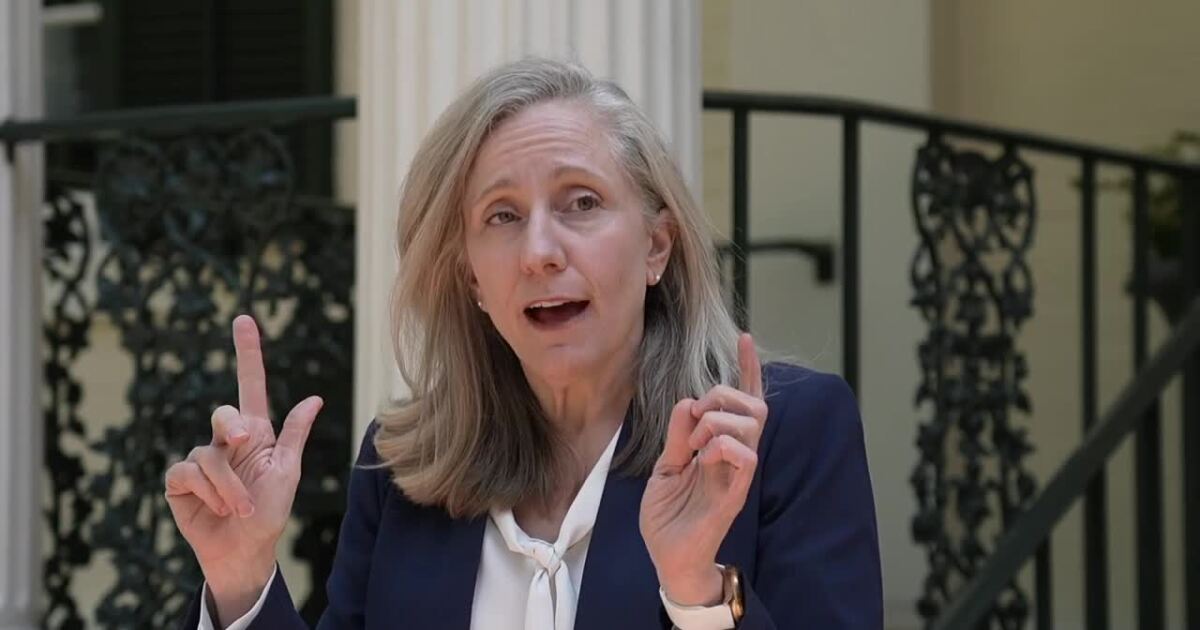
Virginia Governor Abigail Spanberger defended her administration’s policies during a question-and-answer session at Capital Square in Richmond on Wednesday, tackling issues ranging from budget negotiations to immigration enforcement and her current approval ratings.
Spanberger announced she has signed hundreds of bills in recent days focused on student and school safety, as well as measures addressing the rising costs of housing, healthcare, and utilities across the Commonwealth. These new laws will take effect on July 1, providing relief to Virginians struggling with cost-of-living challenges.
The governor has called for a special legislative session on April 23 to finalize Virginia’s budget, which has been a point of contention between the House and Senate. She characterized ongoing budget negotiations as “bumpy” but expressed confidence they would meet the deadline.
“It’s a bumpy road, certainly, but in speaking with the chairwoman of the Senate Finance Committee today, she assures me that we are on path towards getting that budget to me on the 23rd,” Spanberger said.
A significant sticking point in budget discussions involves data center tax policy. The Senate version eliminates the current sales and use tax exemption for data centers, which costs Virginia approximately $1.6 billion in lost revenue annually. This comes despite Virginia’s status as the data center capital of the world. The House version, however, maintains the exemption, creating a substantial gap that lawmakers must resolve.
Spanberger indicated she remains actively engaged with key legislators while respecting the process. “I am endeavoring to be very engaged. But I still need them to reach a conclusion on the bill that they want to send to my desk,” she explained. “They both know where I stand on a variety of issues and certainly what my priorities are.”
The governor also reiterated her support for public sector collective bargaining, stating it would provide public employees the same choice to join or not join a union that private sector workers currently have. This position aligns with broader Democratic priorities but has faced opposition in Virginia’s historically business-friendly legislative environment.
On immigration, Spanberger firmly rejected characterizations of Virginia as a “sanctuary state.” She clarified that her executive orders maintain appropriate levels of cooperation between Virginia State Police and federal immigration authorities.
“Virginia is not a sanctuary state. Full stop,” she emphasized. “My executive orders [specify that] Virginia state agencies, principally state police as the largest of the state law enforcement agencies, would no longer put their police officers, their troopers, under the supervision and direction of ICE agents.”
The governor noted that Virginia State Police continue to coordinate with Immigration and Customs Enforcement (ICE) on warrant-related activities, saying, “If ICE comes to Virginia State Police and says, ‘Here’s a warrant. We need your support on something,’ yes, they’re going to support them.”
When asked about a recent Washington Post poll showing her 47% approval rating—which trails the average Virginia governor’s approval by 13 points—Spanberger downplayed the significance, focusing instead on her electoral mandate.
“When I was elected, really, frankly, that’s the only poll that mattered. My election, a 17-point swing,” she said, referring to her victory margin.
Regarding high gas prices, which have climbed above $4 per gallon in parts of the Commonwealth, Spanberger attributed the increase to federal policies, specifically criticizing what she characterized as the Trump administration’s confrontational stance toward Iran.
Virginia faces several economic challenges as the Spanberger administration approaches its first budget cycle. The governor’s ability to navigate the divide between House and Senate Democrats while addressing rising living costs for Virginia residents will likely shape public perception of her leadership in the coming months.
As the April 23 special session approaches, attention will focus on whether lawmakers can bridge their differences on tax policy, particularly regarding data centers, which represent both a significant economic driver and a potential source of tax revenue for the Commonwealth.
Fact Checker
Verify the accuracy of this article using The Disinformation Commission analysis and real-time sources.

10 Comments
Tackling budget negotiations during a campaign season must be challenging. The governor’s confidence in meeting the deadline is reassuring, but I’m interested to see how the final budget allocations unfold.
Immigration enforcement is a delicate balance. I hope the governor can find ways to address public safety concerns while also showing compassion for migrant communities.
Kudos to the governor for signing bills focused on student safety and cost-of-living relief for Virginians. These seem like important priorities given the current challenges. Interested to learn more about the specifics of these new laws.
The budget impasse between the House and Senate is understandable, but I’m glad to hear they’re making progress. Hopefully they can find common ground and deliver a budget that supports Virginians.
The governor’s focus on student and school safety is commendable. Investing in these areas can have a meaningful impact on communities. I look forward to seeing the details of the new laws.
Cost-of-living challenges are a major issue for many Virginians. The new laws addressing housing, healthcare, and utilities could provide much-needed relief. Curious to learn more about the specifics.
Immigration enforcement is a sensitive and complex issue. I’m curious to hear more about the governor’s specific policy proposals and how she plans to balance public safety with compassion for migrant communities.
Misinformation is a growing concern in political campaigns. Glad to see the governor addressing this challenge head-on. Transparency and factual communication will be crucial.
Interesting to see the governor address both budget and immigration issues in her campaign. Curious to hear more about her policy positions and how she plans to balance these complex challenges.
The budget negotiations sound like they’ve been tricky, but good to hear she’s confident they’ll meet the deadline. Curious to see how the final budget allocations play out.