


Listen to the article
South Carolina’s Measles Outbreak Highlights National Vaccination Concerns
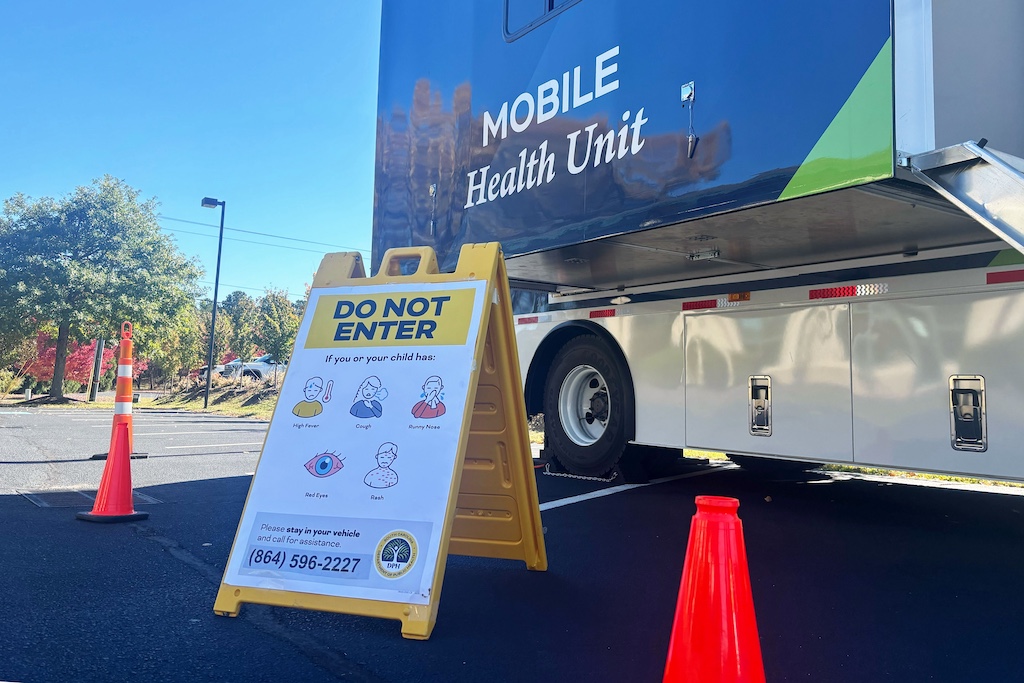
A nearly empty parking lot greeted South Carolina health officials at a recent pop-up measles vaccination clinic in Boiling Springs. Despite Spartanburg County battling a measles outbreak since October with over 50 cases identified, only one person arrived for a free shot at the mobile clinic.
“It’s progress. That progress is slow,” said Linda Bell, South Carolina’s state epidemiologist, during a press briefing. “We had hoped to see a more robust uptake than that in our mobile health units.”
This tepid response in Spartanburg reflects a broader national crisis. The Centers for Disease Control and Prevention has documented more than 1,700 measles cases and 45 outbreaks in 2025, with the largest occurring in Texas, where hundreds were infected and two children died.
For the first time in over two decades, the United States risks losing its measles elimination status—a designation indicating outbreaks are rare and quickly contained.
While South Carolina’s outbreak isn’t yet as extensive as those in New Mexico, Arizona, and Kansas, it demonstrates how national trends have converged to create vulnerable communities. Historically low vaccination rates, pandemic-fueled skepticism, misinformation, and “health freedom” ideologies promoted by conservative politicians have contributed to the resurgence of this preventable disease.
“Everyone talks about it being the canary in the coal mine because it’s the most contagious infectious disease out there,” said Josh Michaud, associate director for global and public health policy at KFF. “The logic is indisputable that we’re likely to see more outbreaks.”
Spartanburg’s vaccination rate ranks among South Carolina’s lowest, a situation that predates COVID-19, according to Chris Lombardozzi, senior vice president with Spartanburg Regional Healthcare System. Nearly 6,000 children in Spartanburg County schools—10% of total enrollment—either received exemptions from required vaccinations or failed to meet requirements last year.
Lombardozzi attributes the county’s low vaccination rate to misinformation spread not only on social media but also by “a variety of nonmedical leaders over the years.”
The pandemic exacerbated existing skepticism. “COVID threw gasoline on the fire of people’s vaccine skepticism,” Michaud explained, noting that concerns about COVID-19 vaccines often transferred to previously less controversial childhood vaccines. In Spartanburg, the percentage of students with required immunizations fell from 95.1% to 90% between the 2020-21 and 2024-25 academic years—below the 95% threshold public health officials deem necessary to prevent significant measles spread.
Religious exemptions for school vaccine requirements in South Carolina have increased dramatically, particularly in the Upstate region, where they’ve grown sixfold over the past decade. During the 2013-14 school year, 2,044 Upstate students received religious exemptions; by fall 2024, that number exceeded 13,000.
Some schools face greater risks than others. The current outbreak was largely linked to Global Academy of South Carolina, where only 17% of the 605 enrolled students provided documentation showing they had received required vaccinations.
The national conversation has been complicated by mixed messaging from health authorities. Health and Human Services Secretary Robert F. Kennedy Jr. wrote on social media in April that the “most effective way to prevent the spread of measles is the MMR vaccine.” However, this statement conflicts with his previous claims questioning vaccine safety and falsely linking vaccines to autism. Under his leadership, the CDC now claims such links “have been ignored by health authorities.”
Kennedy’s championing of “health freedom” regarding vaccines has resonated with Republicans, creating what Michaud described as a “chilling effect” that has made some leaders hesitant to discuss the threat of measles outbreaks or the safety of the MMR vaccine.
South Carolina Governor Henry McMaster, a Republican, has stated that measles “is a dangerous disease, but in terms of diseases, it’s not one that we should panic about.” He has also firmly opposed vaccine mandates, saying, “We’re not going to have mandates, and I think we are responding properly.”
The South Carolina Department of Public Health’s measles vaccine outreach has been notably more subdued than its COVID-19 efforts. In 2021, the agency partnered with breweries statewide for a “Shot and a Chaser” campaign offering free beer or soda to those who got COVID-19 vaccines. By contrast, the recent measles vaccine clinic featured no prominent signage or incentives.
Edward Simmer, interim director of the Department of Public Health, has faced political obstacles. In April, Republican state lawmakers voted against his permanent confirmation due to his past support for COVID-19 vaccines and masking.
Despite these challenges, there are signs of progress. The Department of Public Health had administered 44 doses of the MMR vaccine through its mobile health unit from October to mid-November, and tracking shows providers across Spartanburg County administered more than twice as many measles vaccines in October as they did a year earlier.
As of mid-November, more than 130 people remained in quarantine, most of them students at local schools. Cases have also been linked to a church and the Greenville-Spartanburg International Airport.
“We’re reminding people that travel for the upcoming holidays increases the risk of exposures greatly,” said Bell. “Due to that risk, we’re encouraging people to consider getting vaccinated now.”
Fact Checker
Verify the accuracy of this article using The Disinformation Commission analysis and real-time sources.

12 Comments
The threat of losing measles elimination status is a wake-up call. Policymakers and health authorities must take decisive action to reverse this dangerous trend and protect public health.
Agreed. Measles is a highly contagious disease that can have serious, even fatal, consequences. Maintaining high vaccination rates is crucial to prevent outbreaks and safeguard vulnerable populations.
This situation highlights the need for a renewed focus on vaccine education and outreach, particularly in communities where misinformation has taken hold. Proactive steps are essential to prevent further measles spread.
You’re right. Rebuilding trust in vaccines and the scientific process will be key to overcoming this challenge. Health authorities must engage with the public and address concerns in a transparent, empathetic manner.
It’s concerning to see the tepid response to the vaccination clinic in Spartanburg. More must be done to educate the public and address the root causes of vaccine hesitancy in affected communities.
You raise a good point. Reaching those who are hesitant or misinformed will require a multifaceted approach, including building trust, dispelling myths, and making vaccines accessible and affordable.
The low turnout at the vaccination clinic is worrying. Clearly, more needs to be done to encourage and facilitate vaccination, especially in areas affected by outbreaks.
Absolutely. Making vaccines accessible and affordable, while also addressing the root causes of hesitancy, will be crucial to improving vaccination rates and preventing future outbreaks.
This outbreak in South Carolina is just the latest example of the dangers posed by the spread of vaccine misinformation. Maintaining measles elimination status should be a national priority to safeguard public health.
Absolutely. Vaccination is one of the most effective public health interventions we have. Ensuring high rates of coverage is essential to preventing the resurgence of preventable diseases like measles.
Vaccine hesitancy is a concerning issue that requires a balanced, evidence-based approach. Public health officials must work to address misinformation and build trust through transparent communication and community engagement.
Agreed. Measles outbreaks highlight the real health risks posed by declining vaccination rates. Promoting science-based information and making vaccines accessible are crucial steps to protect vulnerable populations.