


Listen to the article
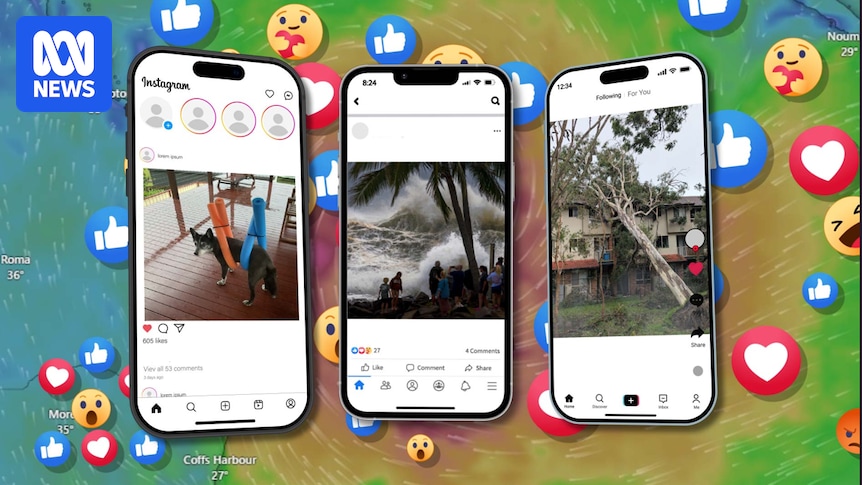
Social Media’s Dual Role in Queensland Cyclone Crisis
The dramatic rescue of 18 people stranded on the roof of the Lion’s Den Hotel during Tropical Cyclone Jasper in Far North Queensland highlights the complex relationship between emergency services and social media during natural disasters.
When local emergency services couldn’t be reached as floodwaters rose around the historic pub, desperate patrons turned to social media posts and a backpacker’s satellite phone to call relatives in Scotland for help. According to residents who spoke to Queensland’s Office of the Inspector-General of Emergency Management (IGEM), the group “would have perished” without these alternative communication methods.
Cyclone Jasper, categorized as a category two system, is considered possibly the wettest cyclone in Australian history. It unleashed record-breaking rainfall, devastating floods, and landslides across Far North Queensland in 2023, according to the IGEM’s severe weather season review.
The report highlighted social media’s vital role in warning communities but also identified a significant challenge: the spread of misinformation on these platforms. This issue became particularly apparent when southeast Queensland faced Tropical Cyclone Alfred in March 2024, its first cyclone in more than 50 years.
“There was evidence on social media that some people thought the weather event was ‘media hype,'” the IGEM report stated. When Alfred lingered offshore longer than anticipated, social media comments suggested many residents “felt the crisis had passed,” creating a dangerous complacency that emergency services had to overcome.
Griffith University communication lecturer Susan Grantham identified TikTok as a particularly challenging platform for official government messaging. Her research, which analyzed algorithmically delivered TikTok videos during Tropical Cyclones Jasper, Kirrily, and Alfred, found no official government accounts among the 50 videos collected during Jasper.
“When it comes to official messaging, the big problem is actually reaching the audience,” Dr. Grantham explained. Government accounts had temporarily ceased using TikTok due to data security concerns, creating an information vacuum during critical events.
Instead, many local residents posted humorous content “which was really posting for posting’s sake, as opposed to providing specific information about the event.” More concerning were videos showing people engaging in dangerous behaviors in floodwaters and edited content that provided “a false sense of security.”
By the time Tropical Cyclone Kirrily hit in 2024, government accounts had been reinstated, with then-Premier Steven Miles appearing in the trending data. Dr. Grantham also noted the emergence of local TikTokers creating “extremely educational videos” about cyclone preparedness.
When Tropical Cyclone Alfred threatened in early 2024, Premier David Crisafulli took a more direct approach, live streaming disaster briefings on his TikTok account. One such broadcast drew 35,000 viewers—an impressive figure for what Dr. Grantham described as content that is “not the most exciting thing to watch.”
The data revealed a potential opportunity for collaboration between government agencies and content creators. “There’s a fantastic opportunity emerging for politicians and government agencies to work with ethical content creators who want to use their platforms for good,” Dr. Grantham said. She suggested influencers might be more effective at spreading emergency information because “they’ve got that existing audience.”
A spokesperson for Queensland Reconstruction Authority (QRA), the state’s lead agency for disaster recovery, acknowledged that social media’s “ever-evolving landscape required an agile approach.” The agency currently posts on Facebook, Instagram, X, YouTube, and LinkedIn during disaster events.
“The use of alternative platforms is being considered and will be determined by a number of criteria, including reach, the ability to engage new audiences, and resourcing,” the spokesperson stated. They added the agency is “open to adopting” influencer partnerships but emphasized the need for “a careful approach to ensure alignment of values.”
During Alfred, the QRA’s messaging was amplified by influencers, the Bureau of Meteorology, the Prime Minister, the Governor of Queensland, and even the NRL’s Penrith Panthers, demonstrating the potential reach of coordinated social media strategies.
Queensland Police, as the lead agency for disaster response, emphasized their multi-channel approach, including regular media conferences, live streams, social media graphics, and direct warning posts.
As Queensland faces future severe weather events, Emergency Services Minister Dan Purdie affirmed the government’s commitment to “always provide accurate and timely information to allow Queenslanders to make informed decisions”—a mission that increasingly requires navigating the complex world of social media.
Fact Checker
Verify the accuracy of this article using The Disinformation Commission analysis and real-time sources.

10 Comments
A stark reminder of social media’s double-edged nature during natural disasters. While it can be a vital lifeline for communication, the spread of misinformation is a serious concern that needs to be addressed.
Absolutely. Emergency services must find ways to leverage social media effectively while combating the proliferation of false information.
This is a timely and important story. Social media’s role in natural disasters is a double-edged sword that deserves close attention from policymakers and emergency responders.
Social media’s dual nature as both a vital communication tool and a breeding ground for misinformation is a complex challenge. Tackling this issue will require innovative solutions from emergency services and tech companies.
The report’s findings underscore the importance of disaster preparedness and communication planning that incorporates social media. Balancing its benefits and risks will be crucial for saving lives.
Absolutely. Developing robust protocols to verify information and counter misinformation on social platforms should be a top priority for crisis management.
The rescue of those stranded at the Lion’s Den Hotel highlights how social media can be a critical tool when traditional communication channels fail. But the challenges posed by misinformation are equally concerning.
Agreed. Striking the right balance between harnessing social media’s benefits and mitigating its risks will be crucial for disaster response going forward.
This is a fascinating case study on the nuanced role of social media during natural disasters. The ability to rapidly spread information can be a lifesaver, but the potential for misinformation is worrying.
Effective strategies are needed to verify information and counter false claims on social platforms. A collaborative effort between authorities and the public could be key.