


Listen to the article
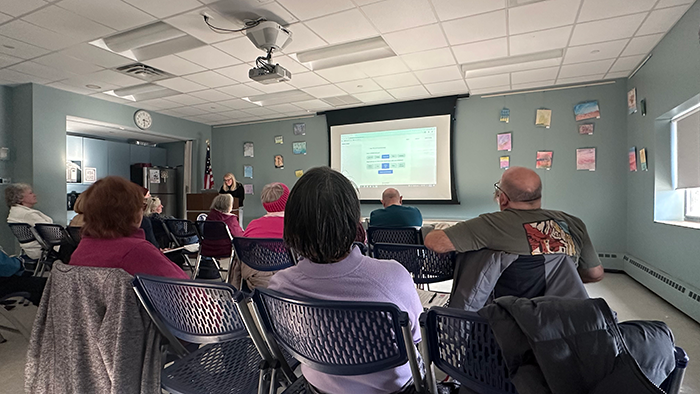
Local seniors gathered at the Brick Township Library this week to learn critical skills in distinguishing artificial intelligence-generated content from authentic information, part of an educational initiative designed to protect vulnerable populations from emerging digital threats.
Sarah Spellman, an AARP volunteer who specializes in technology education for elderly communities, led the informative session focused on recognizing AI-generated deepfakes, voice cloning, and various online scams that increasingly target seniors.
“The technology is evolving rapidly, and scammers are quick to adopt these tools,” Spellman explained to the attentive audience. “Understanding how to identify AI-generated content has become an essential skill, particularly for older adults who may not have grown up with this technology.”
During her presentation, Spellman provided practical advice for detecting deepfake images, which have become increasingly sophisticated but still contain telltale signs of artificial creation. She advised attendees to look for overly airbrushed features, particularly around the eyes, and blurred hair textures. She emphasized examining details like hands and fingers, which AI typically struggles to render accurately.
“AI often gets the number of fingers wrong or creates unnatural-looking muscle lines,” Spellman noted, highlighting how these small imperfections can reveal manipulated content. For nature images, she suggested scrutinizing tree lines, flower petals, and grass textures that frequently appear artificially smooth in AI creations.
Voice cloning technology represents another growing concern, especially as scammers increasingly use mimicked voices of family members in emergency scams. Spellman explained that synthetic voices typically lack natural speech patterns, including breathing sounds, hesitations, and authentic accents.
“Real human speech has imperfections—we pause, we stumble over words, we breathe audibly,” she said. “AI-generated voices sound unnaturally smooth and confident.”
The program distinguished between misinformation—accidentally sharing false content—and the more insidious disinformation, which involves the deliberate spread of falsehoods. This distinction has become increasingly important as AI tools become more accessible to both legitimate users and potential scammers.
Spellman balanced her warnings with a nuanced perspective on artificial intelligence, noting its beneficial applications in law enforcement, including facial recognition in crowded areas and accelerated investigation processes. She explained that AI can be a valuable tool for answering quick questions but cautioned that its pattern-recognition learning methods mean it can perpetuate misinformation found online.
“AI isn’t inherently good or bad—it’s a tool, and like any tool, it depends on how people use it,” she emphasized.
The presentation included practical advice for evaluating online content, particularly information designed to provoke emotional reactions. Spellman stressed the importance of fact-checking before sharing content and recommended verified, non-partisan resources such as Snopes.com and FactCheck.org.
AARP offers free scam alerts to help people stay informed about current fraud schemes in their area, a service Spellman highlighted as available to everyone regardless of membership status. The organization has expanded its educational offerings in response to the rapid growth of AI-based scams targeting older Americans.
The Brick Township event reflects a growing trend of community-based digital literacy programs across New Jersey and nationwide, as public libraries and senior centers work to equip vulnerable populations with the skills needed to navigate an increasingly complex information landscape.
According to cybersecurity experts, seniors lose an estimated $3 billion annually to scams, with technology-based fraud representing the fastest-growing category. Educational programs like this AARP initiative aim to reduce these losses by empowering older adults with practical knowledge and verification strategies.
Local resident Joan Mercer, who attended the session, found the information eye-opening. “I’ve received those suspicious calls claiming to be my grandson in trouble, but now I know what specific things to listen for to determine if it’s really him or an AI voice.”
Fact Checker
Verify the accuracy of this article using The Disinformation Commission analysis and real-time sources.

16 Comments
This program sounds like a valuable step in protecting vulnerable populations from the dangers of AI-generated content and online scams. Providing seniors with the skills to detect deepfakes and other manipulated media is an essential digital literacy effort.
Absolutely. As AI technology becomes more advanced, educating at-risk groups on the warning signs of disinformation is a critical proactive measure to safeguard their wellbeing in the digital age.
The emphasis on practical detection techniques, such as looking for overly airbrushed features and blurred hair textures in deepfake images, is an excellent approach. Providing seniors with concrete skills to scrutinize online content will be invaluable in the fight against disinformation.
Agreed. Equipping the elderly with tangible, hands-on methods to spot AI-generated fakes is a smart way to bolster their digital literacy and safeguard them from emerging online risks.
This is a timely and much-needed program. As AI-generated content becomes increasingly sophisticated, it’s critical that vulnerable populations like seniors are empowered to identify manipulated media and protect themselves from digital threats.
I’m glad to see this type of digital literacy program being offered to seniors. As AI technology becomes more advanced, it’s crucial that vulnerable populations are educated on the risks and learn how to identify manipulated media.
Kudos to the AARP for spearheading this important educational initiative. Empowering seniors to navigate the rapidly evolving digital landscape and identify AI-driven disinformation is crucial, especially as scammers continue to leverage these technologies.
The advice on detecting deepfake images, like looking for overly airbrushed features and blurred hair textures, seems very practical and useful. Equipping seniors with these concrete detection skills is key to combating the rise of AI-generated fakes.
Agreed. The focus on teaching tangible techniques, rather than just abstract concepts, will empower seniors to actively scrutinize online content and protect themselves.
Excellent initiative to help seniors navigate the rapidly evolving digital landscape and protect themselves from emerging AI-driven threats. Equipping the elderly with the skills to identify deepfakes and other forms of disinformation is crucial as scammers continue to leverage these technologies.
I agree, teaching critical thinking around AI-generated content is an important step in digital literacy for vulnerable populations. The emphasis on practical detection techniques is particularly valuable.
Recognizing AI-generated content is an essential skill in today’s digital landscape, and I commend the AARP for spearheading this important educational initiative for seniors. Helping the elderly navigate emerging threats like deepfakes is a valuable service.
Absolutely. Proactive measures to equip seniors with the knowledge and tools to discern authentic information from AI-driven fakes are crucial in the fight against online scams and misinformation.
This educational initiative sounds like a smart and timely response to the growing threat of AI-enabled disinformation campaigns targeting the elderly. Kudos to the AARP volunteers for taking on this important work.
It’s heartening to see community outreach programs focused on empowering seniors to safely engage with technology. As AI becomes more sophisticated, educating at-risk groups on the warning signs of manipulation is an essential proactive measure.
Absolutely. Providing seniors the tools to discern authentic information from AI-driven fakes will go a long way in shielding them from online scams and misinformation.