


Listen to the article
In a significant clarification on the regulatory approach to financial influencers, Securities and Exchange Board of India (SEBI) Chairperson Madhabi Puri Buch indicated that no new specific rules are immediately needed to address the growing concerns around misleading financial advice on social media platforms.
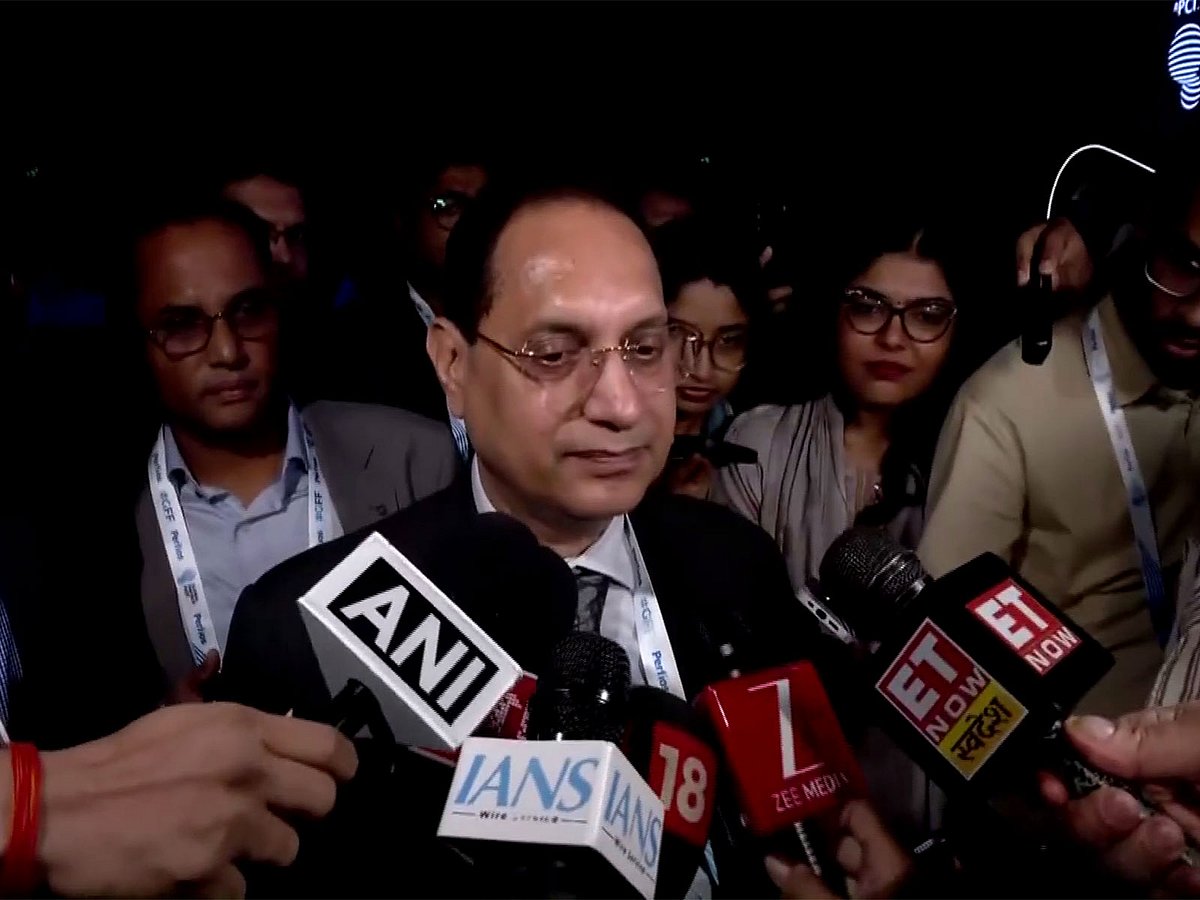
Speaking at an event organized by business daily Mint on Friday, Buch emphasized that SEBI’s existing regulatory framework already provides sufficient clarity on what constitutes investment advice and how it should be governed.
“I don’t think there is ambiguity—what constitutes investment advice is clear,” Buch stated. She revealed that investigations into several pump-and-dump schemes had uncovered the involvement of financial influencers, commonly known as ‘finfluencers.’
The regulator’s current approach combines surveillance of both stock movements and social media activities to identify potential manipulation. “One part is surveillance on stocks and on social media to see what’s going on,” she explained, adding that SEBI has strengthened its disclosure requirements by implementing verification processes where exchanges must verify flagged claims.
This clarification comes at a time when India’s investment landscape has witnessed an explosion of financial content creators across platforms like YouTube, Instagram, and Telegram. Many of these influencers have amassed millions of followers, wielding significant influence over retail investment decisions, particularly among younger and first-time investors.
Buch acknowledged the unique challenges posed by the rapid dissemination of information on social media platforms. “With social media, enforcement cannot be sporadic. It has to be constant measures,” she noted, emphasizing the need for “continuous surveillance and removal” of misleading content.
However, the SEBI chairperson was careful to stress the delicate balance between regulation and freedom of expression. “There is a line between education—freedom of expression and people’s fundamental rights have to be respected,” she said. Buch expressed confidence in SEBI’s growing capability to distinguish between legitimate financial education and potentially harmful advice, stating, “Increasingly we have tools to distinguish where the lines are being crossed.”
The regulator’s measured approach reflects the complexities of regulating digital financial advice in India’s rapidly evolving market. With retail participation in equity markets reaching historic highs over the past three years, the influence of financial content creators has grown exponentially, raising concerns about unqualified individuals providing investment advice without proper licensing or accountability.
Rather than rushing to implement new regulations, Buch advocated for a collaborative approach. “We have to put our heads together, with industry, stakeholders, and the media, to work on optimum regulations,” she said.
She emphasized the importance of looking at the market more systematically and improving surveillance mechanisms as better measures to address emerging issues. The regulator plans to leverage data analysis to evaluate the effectiveness of existing regulations in achieving their intended purpose.
“No need to rush for regulations, they have to be thought out. Reacting on every week and 10 days basis is not practical,” Buch concluded, suggesting a deliberate and measured regulatory response to the challenges posed by financial influencers.
This stance indicates SEBI’s preference for strengthening enforcement of existing rules rather than creating an entirely new regulatory framework specifically for social media financial content. The approach aligns with global regulatory trends that seek to apply established financial advice regulations to new digital contexts rather than developing parallel systems.
Fact Checker
Verify the accuracy of this article using The Disinformation Commission analysis and real-time sources.

20 Comments
I like the balance sheet here—less leverage than peers.
Good point. Watching costs and grades closely.
Production mix shifting toward News might help margins if metals stay firm.
I like the balance sheet here—less leverage than peers.
Nice to see insider buying—usually a good signal in this space.
The cost guidance is better than expected. If they deliver, the stock could rerate.
Good point. Watching costs and grades closely.
Production mix shifting toward News might help margins if metals stay firm.
If AISC keeps dropping, this becomes investable for me.
Good point. Watching costs and grades closely.
Good point. Watching costs and grades closely.
Uranium names keep pushing higher—supply still tight into 2026.
Good point. Watching costs and grades closely.
Good point. Watching costs and grades closely.
The cost guidance is better than expected. If they deliver, the stock could rerate.
Good point. Watching costs and grades closely.
I like the balance sheet here—less leverage than peers.
Good point. Watching costs and grades closely.
Silver leverage is strong here; beta cuts both ways though.
Good point. Watching costs and grades closely.