


Listen to the article
New Games Offer “Psychological Vaccine” Against Health Misinformation
Scientists are pioneering an innovative approach to combat health misinformation through games designed to act as a “psychological vaccine” against fake news and manipulative content.
The concept works similarly to traditional vaccines—exposing people to weakened doses of misinformation teaches them to recognize and resist misleading tactics when encountered in real life. Early research suggests this approach could significantly reduce vaccine hesitancy worldwide.
John Cook, Senior Research Fellow at the Melbourne Centre for Behaviour Change, is leading the development of “Cranky Uncle Vaccine,” an online game being tested across Ghana, Kenya, Pakistan, Rwanda, Tanzania, and Uganda with UNICEF funding.
“The game places players in the role of misinformers, teaching them firsthand how fake news spreads,” explains Cook. “It’s like pulling back the curtain on a magician’s tricks—once you understand how the deception works, you’re far less likely to be fooled.”
Players learn to identify common manipulation techniques such as cherry-picking data, citing fake experts, and setting impossible scientific standards. By understanding these tactics from the inside, participants develop a critical awareness that carries over when they encounter similar manipulation in real-world contexts.
The results have been striking. According to published research, approximately half or more participants who were vaccine-hesitant before playing the game shifted toward pro-vaccine attitudes afterward—a remarkable conversion rate for any public health intervention.
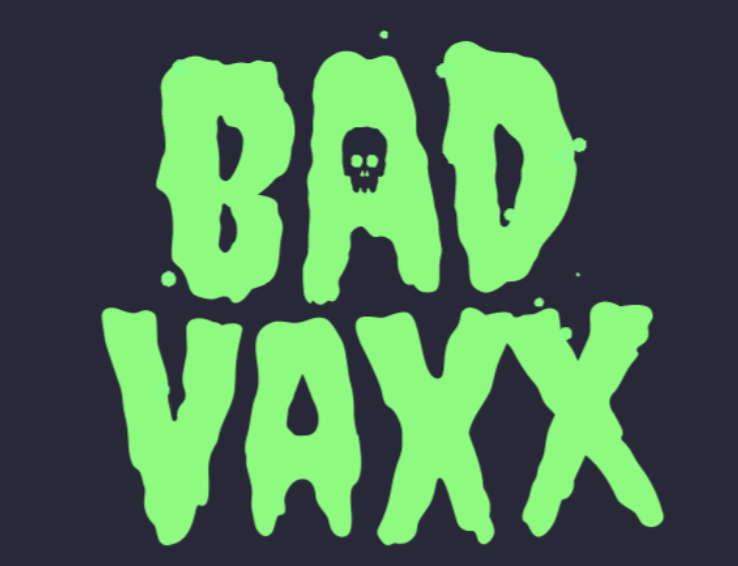
Another game making headway in this field is “BadVaxx,” developed by Sander van der Linden, professor of Social Psychology at the University of Cambridge. This social media simulation exposes users to the strategies employed by “online grifters” to manipulate public opinion about vaccination.
“BadVaxx allows players to choose between villain and hero roles,” van der Linden explains. “Even those who select the hero pathway gain valuable insights into how truths can be manipulated on social media to generate engagement, how medical credentials can be misused to promote pseudoscience, and how concepts like ‘natural’ or ‘organic’ lifestyles can be weaponized against vaccines.”
A 2025 study published in Nature validated the game’s effectiveness, showing that players demonstrated improved ability to detect manipulative information and assess content quality after playing.
Both researchers emphasize that “prebunking”—inoculating people before they encounter misinformation—is as crucial as debunking existing falsehoods. This proactive approach has gained traction with major health organizations.
“During the pandemic, we partnered with the UK government and the World Health Organization on the ‘stop the spread’ campaign aimed at flattening the curve of misinformation,” van der Linden notes. “We reached approximately 200 million people globally.”
The potential for these gamified interventions extends beyond individual players. “People who develop resistance to misinformation can pass on the cognitive vaccine to friends and family,” says van der Linden. “The psychological protection travels across social networks, creating the possibility for community-wide immunity against falsehoods.”
This peer-to-peer transmission offers a promising pathway for scaling up the impact of these interventions, especially in regions where misinformation has contributed to vaccine hesitancy and other public health challenges.
As digital misinformation continues to evolve in sophistication, these gamified approaches provide a scalable, engaging method to build critical thinking skills across diverse populations. By turning the mechanics of manipulation into educational gameplay, researchers are equipping the public with cognitive tools to navigate an increasingly complex information landscape.
The success of these early initiatives suggests that psychological vaccination could become an essential component of public health communication strategies worldwide, potentially saving lives by ensuring evidence-based health decisions aren’t undermined by misleading content.
Fact Checker
Verify the accuracy of this article using The Disinformation Commission analysis and real-time sources.

10 Comments
Pulling back the curtain on misinformation tactics seems like a smart way to inoculate people against fake news. Teaching critical thinking skills and media literacy is crucial in the age of online information overload.
Agreed. Equipping people, especially in developing regions, with the tools to identify manipulative content is an important step in the fight against misinformation.
Interesting approach to combat misinformation. Exposing people to weakened doses of false claims and teaching them to recognize manipulation tactics could be an effective ‘psychological vaccine’. Curious to see how this plays out in practice across different countries.
Yes, the idea of learning to spot misinformation through interactive games is intriguing. It’s good to see international organizations like UNICEF funding such innovative solutions.
Combating health misinformation through ‘weakened doses’ of false claims is a fascinating idea. Giving people firsthand experience identifying manipulation techniques could inoculate them against the real thing. I hope this approach proves successful in trials across Africa and Asia.
Anything that can reduce vaccine hesitancy worldwide is worth exploring. This ‘psychological vaccine’ concept seems promising, though the proof will be in how effectively it translates to real-world behavior change. Still, teaching critical thinking around online information is a valuable goal.
Absolutely. Fostering media literacy and the ability to spot misinformation is a crucial life skill in the digital age. Interactive games could be a more engaging way to build those crucial analytical capabilities.
Kudos to the scientists developing this ‘Cranky Uncle Vaccine’ game. Exposing people to manipulation tactics in a controlled setting, then teaching them to recognize those techniques, is a clever approach. I’m hopeful it can make a real impact on vaccine hesitancy and mistrust of science.
A ‘psychological vaccine’ against misinformation – what an innovative concept! I’m curious to see the results from the trials in Ghana, Kenya, Pakistan, and other countries. Proactive education could be key to building resilience against the spread of fake news.
This type of interactive, game-based approach sounds much more engaging and effective than traditional fact-checking methods. Exposing the tricks of the misinformation trade is a clever way to empower people.