


Listen to the article
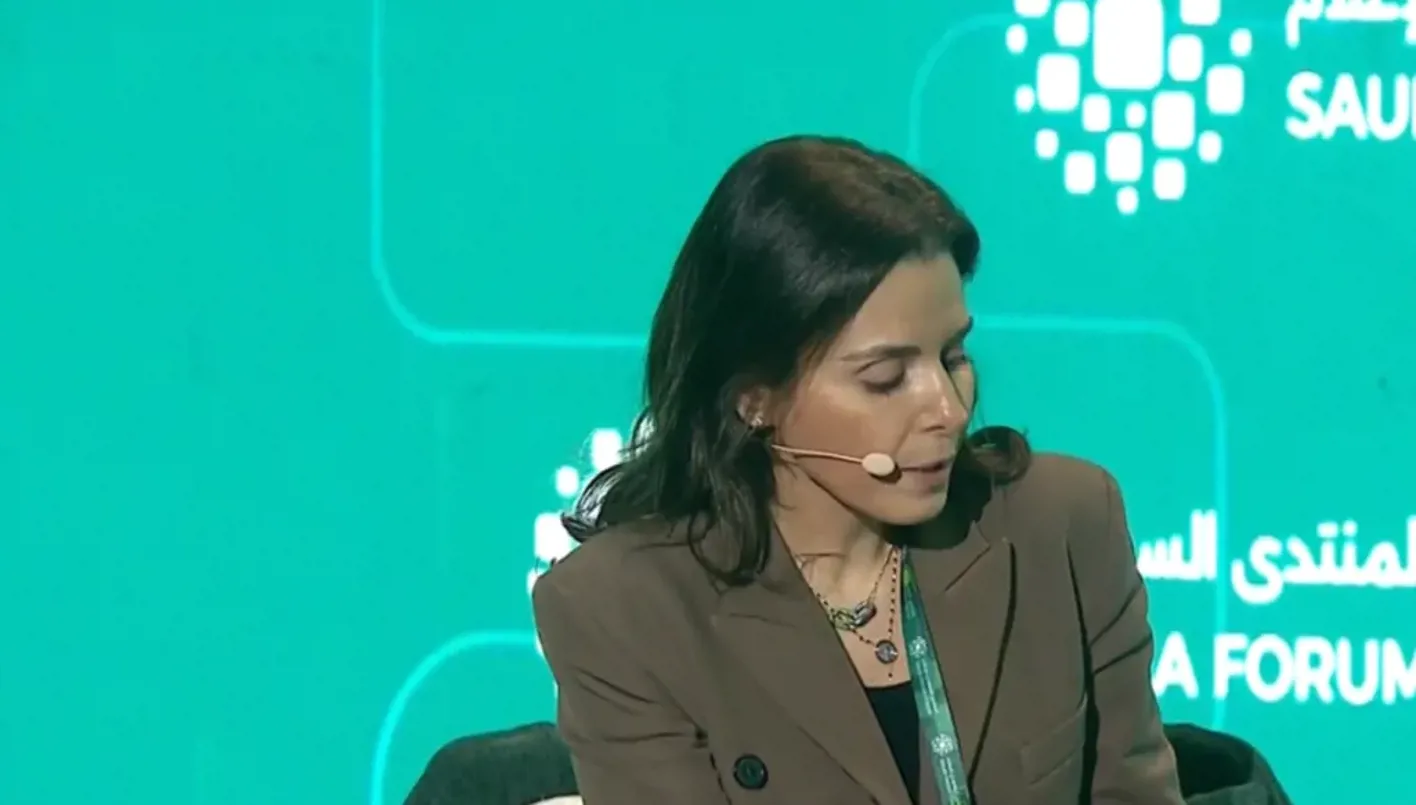
Media leaders convened at the Saudi Media Forum in Riyadh on Monday to tackle one of journalism’s most pressing challenges: surviving in an era of rampant misinformation.
Annahar’s Chief Executive Officer and Editor-in-Chief Nayla Tueni moderated a high-profile panel discussion titled “How can the media survive the misinformation trap?” The session brought together distinguished media figures including Karen Elliott House, former publisher of The Wall Street Journal; Tony Gallagher, editor of The Times; and Andrew Hoskins, journalist and former BBC News correspondent.
Tueni opened the discussion by addressing a fundamental dilemma facing modern newsrooms: the tension between speed and accuracy. She questioned whether today’s saturated media landscape forces news agencies to prioritize breaking news over thorough verification, potentially compromising journalistic integrity.
Karen Elliott House emphasized that reliable information remains journalism’s cornerstone despite evolving challenges. “The essence of journalism lies in gathering reliable information,” House stated. “The audience wants to know what is true and be able to distinguish between fact and falsehood.”
House, drawing on her extensive experience at The Wall Street Journal, stressed that trust between media outlets and readers must be foundational. Her advice to emerging journalists was straightforward but powerful: focus on reality and adhere to facts, regardless of external pressures or competing priorities.
Tony Gallagher of The Times offered historical perspective, noting that current media challenges didn’t emerge overnight. “Priorities have changed since the 1990s, but the goal remains the same: seeking accuracy,” Gallagher explained. He highlighted how contemporary newsrooms have adapted by adopting sophisticated verification tools to combat misinformation, representing both technological evolution and commitment to journalistic principles.
Andrew Hoskins directed attention to the visual components of news reporting, highlighting “the importance of fighting media misinformation, especially by verifying images and sources before publication.” In an era where manipulated images and deepfakes can spread rapidly across social media platforms, Hoskins characterized meticulous verification as “a daily duty at the core of a journalist’s responsibility.”
The panel discussion marks the beginning of the three-day Saudi Media Forum, which runs until February 4 in Riyadh. Now in its 26th edition, the forum has established itself as a premier regional and international platform for exploring the media industry’s future trajectory.
This year’s forum operates under the theme “Media in a Shaping World,” focusing on transformative issues reshaping journalism and information dissemination globally. Key topics include artificial intelligence’s growing influence on content production, regulatory frameworks for digital platforms, and escalating cybersecurity threats.
The forum also examines media’s broader societal role in promoting regional and international stability—particularly relevant in the Middle East, where media narratives can significantly impact diplomatic relations and public opinion.
The Saudi Media Forum comes at a critical juncture for the industry, as traditional news organizations worldwide grapple with digital transformation, declining revenue models, and competition from social media platforms that often operate with different verification standards.
The concentration of media leaders in Riyadh highlights Saudi Arabia’s growing influence as a regional media hub and its interest in shaping discussions about information integrity and journalistic standards. The kingdom has made significant investments in media infrastructure and technology in recent years as part of its broader economic diversification initiatives.
As the forum continues, participants will explore practical strategies for maintaining journalistic standards while adapting to technological change—balancing innovation with the enduring values of accuracy, fairness, and public service that distinguish professional journalism from the wider information ecosystem.
Fact Checker
Verify the accuracy of this article using The Disinformation Commission analysis and real-time sources.

10 Comments
As a regular news consumer, I appreciate the panel’s focus on audience needs. Reliable information should always take precedence over speed or sensationalism.
Interesting discussion on a critical issue facing the media industry. Restoring public trust through a renewed commitment to accuracy and transparency will be crucial going forward.
Well said. Maintaining journalistic integrity in the face of misinformation is vital for the health of our democratic institutions.
The media’s role as a bulwark against the spread of false information has never been more important. I’m eager to hear the panelists’ insights on navigating this complex landscape.
Absolutely. Protecting the integrity of journalism is critical for an informed citizenry and a functioning democracy.
I’m curious to hear the panelists’ views on leveraging new technologies and platforms to combat misinformation while still upholding traditional journalistic standards. This is a complex issue with no easy solutions.
That’s a great point. Innovative approaches will be key, but they must be carefully balanced against the need for trusted, high-quality reporting.
The media landscape has undoubtedly evolved, but the core mission of journalism – providing the public with truthful, unbiased information – should remain unchanged. I hope this panel can offer some practical strategies for navigating these challenges.
This panel discussion on mitigating misinformation in journalism is timely and crucial. Maintaining journalistic integrity in the digital age is a constant battle, but the audience deserves reliable, verified information above all else.
Agreed. The tension between speed and accuracy is a major challenge, but upholding rigorous fact-checking should be the top priority, even if it means slowing down the news cycle.