


Listen to the article
Media industry leaders gathered at the Saudi Media Forum in Riyadh on Monday to tackle one of journalism’s most pressing challenges: surviving in an era of rampant misinformation.
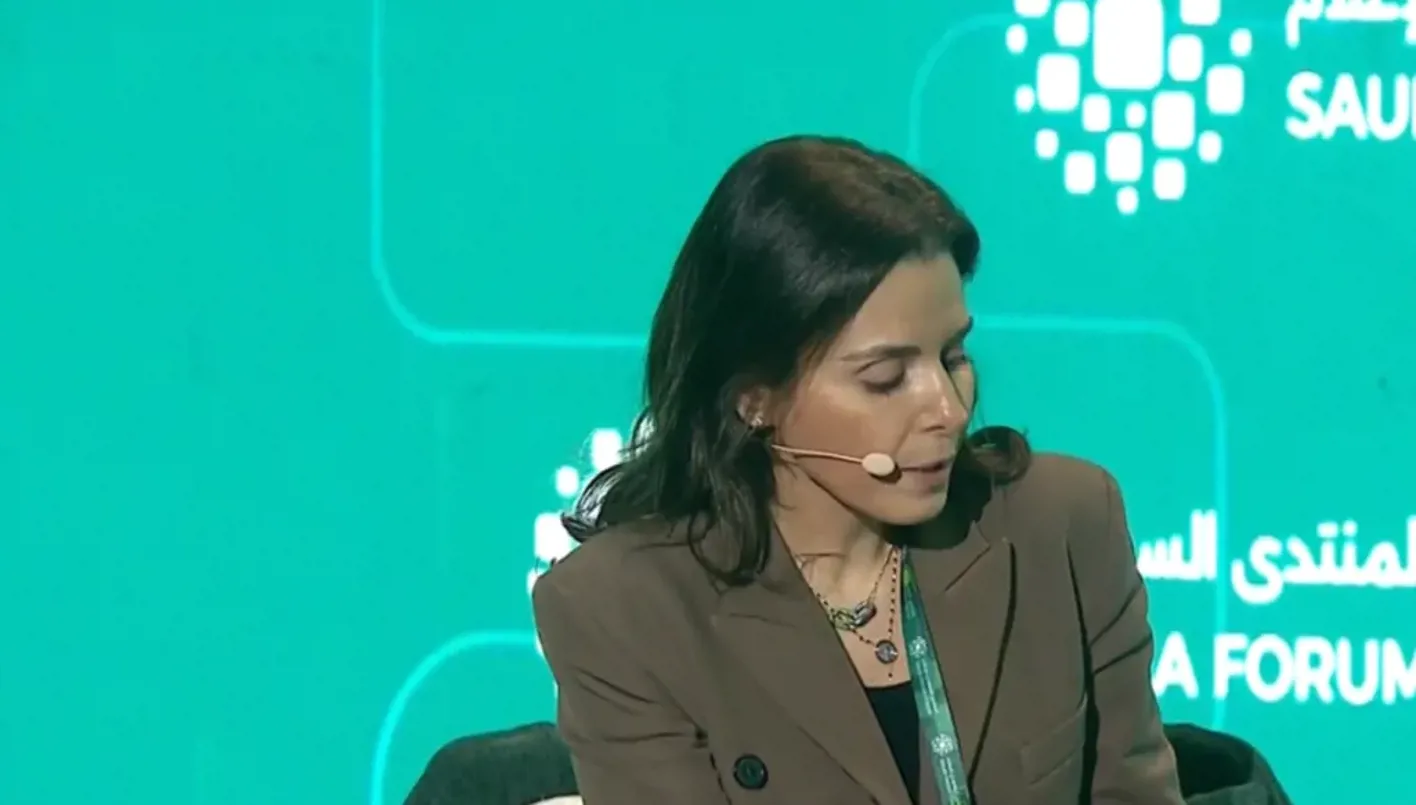
Annahar’s Chief Executive Officer and Editor-in-Chief Nayla Tueni moderated a high-profile panel featuring Karen Elliott House, former publisher of The Wall Street Journal, Tony Gallagher, editor of The Times, and Andrew Hoskins, a journalist and former BBC News correspondent.
The discussion, titled “How can the media survive the misinformation trap?” addressed fundamental concerns about journalism’s integrity amid growing pressures to publish quickly in today’s saturated media landscape. Tueni posed critical questions about whether news organizations are sacrificing verification for speed as they compete with the flood of unverified content circulating online.
Karen Elliott House emphasized that journalism’s core purpose remains unchanged despite technological disruptions. “The essence of journalism lies in gathering reliable information,” she said, adding that audiences fundamentally “want to know what is true and be able to distinguish between fact and falsehood.”
House, drawing on her extensive experience at The Wall Street Journal, stressed that building trust with readers remains the foundation of quality journalism. Her advice to emerging journalists was straightforward but powerful: focus on reality and adhere to facts regardless of external pressures or the temptation to publish unverified information quickly.
Tony Gallagher of The Times provided historical context to the current challenges, noting that today’s media landscape didn’t deteriorate overnight. “The challenges facing the media today did not arise out of nowhere,” he explained. “Priorities have changed since the 1990s, but the goal remains the same: seeking accuracy.”
Gallagher highlighted how newsrooms have evolved to meet these challenges, now employing sophisticated technological tools specifically designed to verify information and combat the spread of misinformation. This represents a significant shift in how traditional media outlets operate, adapting their processes while maintaining commitment to journalistic principles.
Andrew Hoskins focused on practical aspects of verification, particularly for visual content. He emphasized “the importance of fighting media misinformation, especially by verifying images and sources before publication.” In an era where manipulated images and deepfakes are increasingly sophisticated, Hoskins characterized thorough verification as “a daily duty at the core of a journalist’s responsibility.”
The three-day Saudi Media Forum, which continues until February 4, has established itself as one of the region’s premier platforms for discussing the future of media. Operating under the theme “Media in a Shaping World,” this 26th edition brings together industry leaders to explore transformative forces affecting journalism and content production.
Beyond misinformation, the forum’s agenda addresses several critical areas reshaping the media landscape. These include artificial intelligence’s growing role in content creation, the regulatory challenges surrounding digital platforms, escalating cybersecurity threats, and media’s responsibility in fostering regional and international stability.
The timing of the forum is particularly significant as media organizations worldwide grapple with maintaining journalistic integrity while adapting to technological disruptions. Saudi Arabia’s hosting of the event reflects the kingdom’s increasing influence in regional media discourse and its ambitions to play a larger role in shaping the future media landscape.
As traditional business models continue to face pressure and audience trust becomes increasingly fragmented, the insights shared by Tueni, House, Gallagher, and Hoskins underscore a common theme: while tools and platforms evolve, commitment to accuracy and verification remains the bedrock of journalism’s value and survival in an increasingly complex information ecosystem.
Fact Checker
Verify the accuracy of this article using The Disinformation Commission analysis and real-time sources.

10 Comments
Journalism’s core purpose – providing reliable, verified information – remains unchanged, despite technological disruptions. Audiences crave truth over speed, and media organizations must find ways to uphold standards while competing in the digital landscape.
Agreed. Rebuilding public trust in media is essential, and can only be achieved by a relentless focus on accuracy, impartiality and transparency.
The misinformation crisis poses an existential threat to journalism. Implementing robust fact-checking protocols and educating the public on identifying reliable sources will be crucial for media survival.
Interesting panel discussion on a critical issue facing media today. Maintaining journalistic integrity while adapting to the digital age is a delicate balance. Fact-checking and truth-telling must remain the top priorities, even as the pace of news accelerates.
The panel’s emphasis on journalism’s core purpose – gathering and disseminating reliable information – is a timely reminder amidst the noise of the digital age. Maintaining this fundamental mission will be paramount for media survival.
Kudos to the Saudi Media Forum for tackling this pressing issue head-on. Fostering open discussions between industry leaders is a constructive step towards addressing the misinformation crisis impacting journalism worldwide.
Nayla Tueni’s leadership in moderating this important discussion is commendable. Bringing together industry veterans to tackle the challenges of the ‘misinformation trap’ demonstrates much-needed collaboration within the media sector.
Agreed, Tueni’s experience and expertise make her well-suited to facilitate this critical dialogue. Fostering cross-industry cooperation is key to developing effective solutions.
The panel’s insights on balancing speed and verification in the digital age are crucial. While audiences demand timely news, upholding journalistic standards must take precedence to maintain credibility and public trust.
Distinguishing fact from falsehood is the paramount challenge facing media today. Audiences deserve trustworthy sources they can rely on, and news organizations must rise to meet this need, even as the competitive landscape evolves.